

one exception, concerned his business. The exception was support he gave in 1787 to a petition by Canadians asking that the Jesuit college, in use as a barracks, be once again consecrated to the
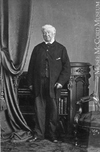
Alicia Hamilton; d. at Picton, Ont., 28 March 1874.
Hamilton Hartley Killaly graduated from Trinity College, Dublin
ensure order and prosperity. Education was also essential. Thus he supported the building of a local school in 1815, subscribed to the newly established Queen’s College in 1840, and served as treasurer of
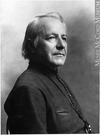
-known missionaries in the history of western Canada, attended the Collège de L’Assomption and continued his theological studies at the bishop’s palace in Montreal. It was there that he met George-Antoine
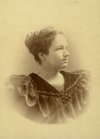
convent in Hochelaga, the College du Mont-Saint-Louis, and the Académie Sainte-Marie, among others, welcomed her as an instructor or guest lecturer, as did a few anglophone
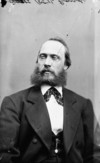
Christian Association and Literary Institute, a member of the Board of Education, and a governor of Prince of Wales College. His first foray into elected office was as a city councillor. On 29 June
encouraging farming.”
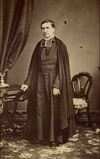
A similar concern for rural life prompted Langevin’s dealings with the Collège de Rimouski, which he raised to the status of diocesan
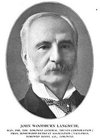
in North America. Designed by Kivas Tully* to look more like a college than a prison, it was premised on Langmuir’s belief, again gained from
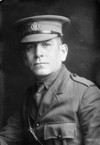
he returned to school. He received a full scholarship to study bookkeeping at the Ontario Business College in Belleville. On graduating, he could not find employment as a bookkeeper, a setback that led
.
Though his father intended him to study medicine at Queen’s College in Kingston, Mair left after one year (1856–57) to help with the family’s troubled businesses in Lanark. He worked as a clerk for
Paris in 1635. Since that date he had developed his plan and obtained the approval of the Jesuits, his former masters at the Collège of La Flèche. In 1639, his efforts led to the founding of the
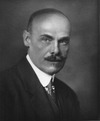
introduced him to architecture by having him reproduce, along with the future architects Ludger Lemieux and Joseph-Honoré MacDuff, the plans of the Collège du Mont-Saint-Louis. Around 1888 Marchand was
, “Le collège Masson de Terrebonne,” BRH, 53 (1947): 249–52. “Le manoir seigneurial de Terrebonne,” BRH, 30 (1924): 409. Henri Masson, “Gilles Masson (1630–1716), ‘faux seigneur de la
family. His father, a surgeon in Chalamont, sent him to a Jesuit college in nearby Lyons. Despite the outbreak of the French revolution in 1789, Merle began studies for the priesthood, apparently intending
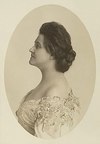
Albert College in Belleville with Mary and had shared the platform with Flora at Lily Dale, the spiritualist summer camp in New York State.) He declared the book “in all essential features
confidential dispatches of the lieutenant governor, who considered the Royal Institution a temporary step and who would submit a plan in 1803 to use the income from crown lands to finance colleges and even a
conquer, the lowly of America.” In preparation for this task he attended three colleges. The juniorate at Notre-Dame-de-Sion, which he entered in 1874, provided a three-year grounding in the classics; the
awarded honorary degrees by Bishop’s College in 1955, Dalhousie University in 1956, and the Université de Montréal in 1957. He joined many corporate boards, notably those of the Canadian Pacific Railway and
relations between British Columbia and the dominion of Canada, 1871–1885” (phd thesis, Bryn Mawr College, Bryn Mawr, Pa., [1937]). J. H. Parry and P. M. Sherlock
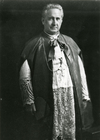
entered St Michael’s College in Toronto, where he pursued a classical education. After graduating in 1878, he remained for a year of theological preparation, during which he won the Dowling Medal for