


Doolittle and a group of local laymen proposed to locate a seminary combined with a liberal arts college at Lennoxville and offered land and money, the bishop’s agreement was quickly obtained. The growing
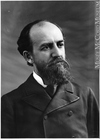
school. He finished his early education under private teachers. In 1865 he entered McGill College where, four years later, he received a ba in natural science with first
novitiate in Paris on 10 Oct. 1735 and had spent two years studying philosophy at the Collège de La Flèche before going to Quebec in 1739. There he taught liberal arts and the third- and fourth-year
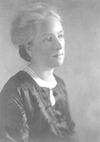
postgraduate studies. The university would not grant degrees to women until 1920; her ba and ma were awarded ad eundem by Trinity College
founding of Wesleyan Female College in Hamilton, and served as president of the board of the college. He was also founder and principal supporter of Centenary Methodist Church, the corner-stone of which was
principal of People’s College, Nottingham. He was a member of the Lothian and Philosophical societies of Glasgow and of the Hunterian Society of Edinburgh. In 1839 he married Marion, eldest daughter of
.
Charles Vincent was educated at Aubenas before entering the Basilian noviciate at Vernoux-en-Vivarais, Ardèche, France, in 1848. He continued his theological studies at the Basilian Collège d’Annonay before
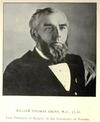
farmer and a devout Wesleyan, James in 1843 sent William, as he did his other sons, to Victoria College, Cobourg. He also paid for the medical training that William began in 1845 or 1846, most likely at Dr
and then for one year at Jefferson Medical College in Philadelphia, where he graduated in 1853. That same year he was licensed by the Medical Board of Upper Canada and started a practice at Peterborough
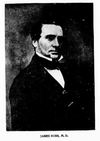
University of Glasgow, he was appointed lecturer at King’s College, Fredericton, and in September 1837 arrived at that institution as its first professor of chemistry and natural history, teaching botany
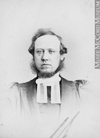
he was appointed principal and “primarius professor of divinity” at Queen’s College in Kingston, Upper Canada, in August 1864, he published A minister’s farewell
Saint-Jean-Baptiste-de-Rouville, Pascal Drogue-Lajoie went on to the Collège de Chambly, where he did his classical studies. He then studied theology for two years at the Grand Séminaire de Montréal. He
life in L’Assomption, where he earned his living as a carpenter. Although he did not know how to write, he was extremely gifted musically and taught violin at the Collège de L’Assomption from 1837 to
Énemond when he became a religious.
After his noviciate he taught at the Collège of Tournon (1597–99), and was also assistant to the bursar; at the same
sisters and his brother Richard, who later followed him to Canada, to the care of a paternal uncle, the Reverend George MacDonnell, rector of Trinity College, Dublin. Robert completed his elementary
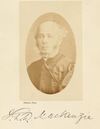
attended schools in Trinidad, in England, and in Toronto (Upper Canada College). In 1839 he was tutor to the family of the Reverend Alexander Neil
of the province of France in Paris on 9 (or 19) Sept. 1706. From 1710 to 1715 he taught grammar and humanities classes at the Collège Louis-le-Grand; then he studied theology there until 1720
.
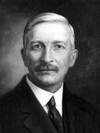
Bell attended the University of Toronto and obtained a ba with distinction in 1886. Hearing of the excellence of the newly formed Manitoba Medical College in Winnipeg, he
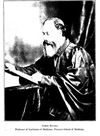
Richard Bright, Thomas Addison, and other distinguished physicians. He later studied pathology at Edinburgh and Glasgow while awaiting admittance into the Royal College of Physicians of London as an extra

Edward Caird reputedly considered him one of his finest students. He graduated in 1877 with first-class honours in mental philosophy. Kilpatrick graduated next in 1881 from the Free Church College in