

Source: Link
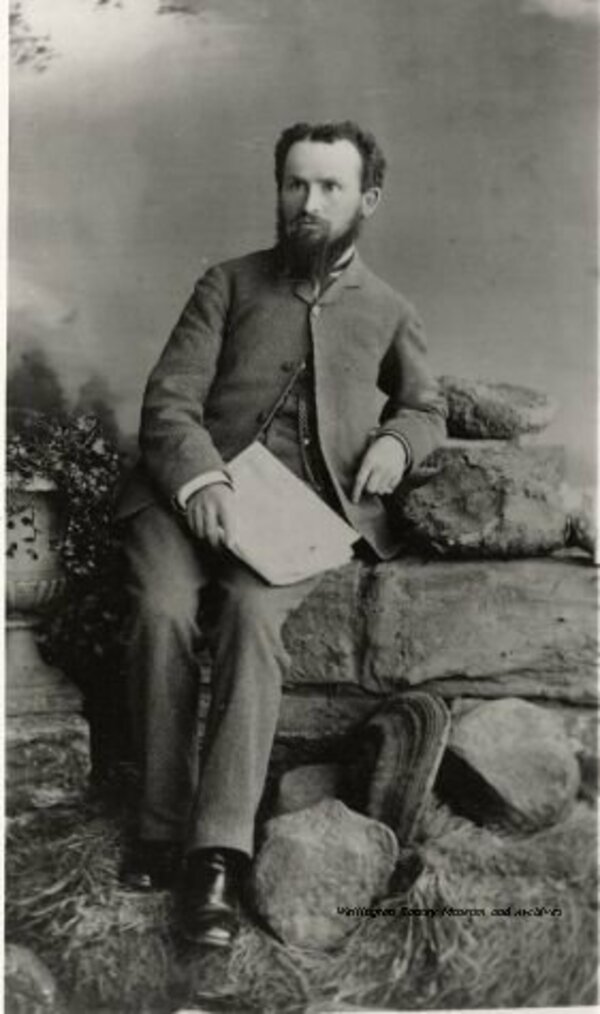
GROVES, ABRAHAM, physician, surgeon, author, businessman, politician, and hospital administrator; b. 8 Sept. 1847 in Peterborough, Upper Canada, son of Abraham Groves and Margaret Gibson; m. first 22 Oct. 1874 Jennie Gibbon (d. 1886) in Elora, Ont., and they had a son and a daughter; m. secondly 26 Jan. 1911 Ethel May Burke (1877–1964) in Toronto; they had no children; d. 12 May 1935 in Fergus, Ont.
Family background
Abraham Groves’s parents were children when they emigrated separately from Ireland with their families. His father, Abraham Sr, was from the parish of Aghowle, County Wicklow, and his mother, Margaret, was from County Down. In 1825 Abraham Sr, his two brothers, a sister, and their widowed mother, Margaret, sailed from Cork on the John Barry as part of the second wave of immigration to Upper Canada led by Peter Robinson*. The petition for emigration records that Margaret Groves “has been all her life accustomed to the agricultural business, and her family is one of the better class of Irish tenantry.” The ship’s notes state: “A very excellent family, Protestants, the mother a worthy kind of woman. Boys are very willing and attentive.” They settled in Emily Township, near Peterborough. Abraham Sr was among the loyalists who opposed the 1837 rebellion led by William Lyon Mackenzie*. In Peterborough Abraham Sr met his future wife, Margaret Gibson, the daughter of a schoolteacher and British army veteran, Gideon Gibson. Gibson had been injured during the War of 1812 at Queenston Heights, near where Isaac Brock* fell, and afterwards returned to Ireland. In 1832 he and his family sailed to Canada, a harrowing voyage during which there was an outbreak of cholera; the first victim died in Margaret’s lap.
Abraham Sr and Margaret married in 1839 and settled in Emily Township. They would have 13 children, of whom Abraham Jr was the second to survive infancy. In 1856 the family moved by ox-drawn sleigh to 200 acres of bushland, purchased for nine dollars per acre, in Wellington County’s West Garafraxa Township, near Fergus. Nine-year-old Abraham Jr and his 12-year-old brother, William John, helped clear the land and worked on the farm. In Fergus Abraham Sr became a school trustee and a warden of St James Anglican Church, and Margaret made clothes for their children with cloth she had spun herself.
Education
Abraham Jr started his education in a one-room log school and then attended Fergus Grammar School, headed by Cyrus Miner. Abraham was deeply impressed by Miner’s refusal to use corporal punishment and his abhorrence of smoking. A commonplace book, in which Groves started writing during this period and which he would keep throughout his life, shows evidence of advanced knowledge of Latin and Greek and an interest in poetry, especially that of Lord Byron. After Groves matriculated in 1867, his family sold a parcel of land so that he could study medicine in Toronto. He initially boarded at Knox College and attended the Toronto School of Medicine. Groves’s class included several students who became prominent physicians, among them Thomas Joseph Workman Burgess* and William Osler*. One reason for their success may have been the Medical Council of Ontario’s new anatomy test, which was introduced in 1870 by its chief examiner, Professor Michael Sullivan. Teachers James Bovell* and William Thomas Aikins* had a deep influence on Osler and Groves. Their schooling was disrupted by the one-year closure of the Toronto General Hospital owing to financial difficulties, and by feuding between the faculties of the city’s three medical schools. Some students, including Osler, transferred to McGill University in Montreal. Groves stayed in Toronto and studied with a local doctor whose practice he intended to join after graduation. In 1871, having expedited his training, Groves passed his Ontario licensing exams and received his mb from the University of Toronto. The total cost of his studies, including board, was estimated at $740. During this period he also completed basic officer training at the city’s School of Military Instruction. In 1873 he received his md, probably by submitting a thesis; if so, it has been lost and its subject is not known.
Early years of practice
After his graduation Groves returned to Fergus because the Toronto doctor with whom he had planned to work died, and he lacked the capital to start his own practice in the city. In Fergus he became a junior partner to Dr John Munro and assisted him for two years while living in a room above Munro’s clinic. Groves then formed a partnership with Dr John Wishart, who moved after one year to London and would later become the University of Western Ontario’s first professor of surgery. After Dr Thomas Chisholm joined him for a year, Groves established a solo practice. Except for one brief partnership with Dr Thomas F. McMahon, he worked alone for 50 years before he was joined by his son, Abraham William. Groves was often consulted by other doctors who had difficult cases, especially if surgery was required. In the 1870s he found himself in rivalry with Dr George Turner Orton, who was the area’s most prominent physician as well as a militia officer and the mp for Wellington Centre. The animosity between the two men, which may have started when Groves corrected a misdiagnosis by Orton, caused problems for Groves until Orton moved to western Canada in the early 1880s.
For most of his career, and particularly before he established his own hospital in 1902, Groves performed operations in patients’ homes, often after travelling long distances either on horseback or by buggy, cutter, or motor car. He would practise in this way throughout his career. (One winter day in 1926, while in his late seventies, he drove a cutter 12 miles to the village of Arthur for a hernia repair, a further 22 miles to Harriston for another hernia operation, and then 34 miles back to Fergus.) Typically he did a procedure on the kitchen table, and if no local doctor or nurse was available to assist, a family member of the patient might be required to hold a light or maintain the anaesthetic. He used hair from a horse’s tail to stitch wounds and incisions. Groves had never seen an abdomen opened during his years of medical schooling, but he quickly proved himself adept at surgery, and his reputation grew during the two years he spent as Dr Munro’s junior partner. During that time he prevented a man from choking to death by performing a tracheotomy and saved a woman from dying of post-partum haemorrhaging by transfusing blood drawn from her husband. These procedures were rare in the 1870s and may have been unprecedented in Canada.
Medical “firsts” and controversies
On 5 July 1873 Groves treated a patient with a massive ovarian cyst that had been aspirated many times. Assisted by Dr Wishart and watched by several local physicians, he anaesthetized her and performed a laparotomy to excise the tumour. This was probably the first time this rare operation was done in Canada. Even more remarkably, Groves was possibly the first physician in the world to take measures to prevent surgical infection that combined asepsis and antisepsis, an approach that remains the standard practice. He suspected that surgical infections were spread in fluids, as typhoid is. Both his theory and his practice are considered more correct today than those of British doctor Joseph Lister, who used antiseptic vapour to prevent transmission of infection through the air.
Groves adopted the techniques of equipment sterilization, handwashing, and surgical irrigation very early in his career. Years later, commenting on a surgery he had performed in 1883, he remarked that by then he was already taking vigorous steps to prevent infection: “Before this time I had begun to devote a good deal of time to cleaning the skin at the site of operation, using soap and water with thorough brushing. To get my hands clean I used six brushes that had been boiled and washed my hands never less than half an hour with water that had been boiled. I had learned and applied the great principle underlying the command ‘to wash and be clean,’ and I have never had better results than when I followed that simple formula.” In 1885 he used sterilized rubber riding gloves to reduce the risk of transmitting infection from one patient to another. This precedent was not reported contemporaneously but was verified by witness accounts many years afterwards.
Buoyed by his early success, Groves continued to develop his practice. He became the first surgeon in Canada, and in some cases North America, to perform several procedures, including suprapubic lithotomy (1878), appendectomy (1883), prostatectomy (1885), and vaginal hysterectomy (1889). Some of his operations were not imitated by other surgeons even though they were successful, such as his performance of a caesarian section by incising the vaginal vault rather than the uterus. He was technically skilled even by 21st-century standards; for example, he once removed bladder stones from a 300-pound man in an operation done in a bedroom.
Groves’s publications, which cover a wide range of surgical topics, are for the most part summaries of lectures he gave to medical societies, particularly the Ontario Medical Association, which he helped found. He published most often in Toronto’s Canada Lancet, Dominion Medical Monthly, and Canadian Practitioner, and Montreal’s Canada Medical and Surgical Journal (known from 1888 as the Montreal Medical Journal). Soon after the German scientist Wilhelm Conrad Röntgen discovered X-rays in 1895, Groves acquired a coil and began to experiment with radiation. His 1903 article in the Canada Lancet was the first report of radiotherapy in Canada.
For all his achievements, Groves was at times a highly controversial figure. In the 1880s his willingness to opt for surgical remedies provoked criticism from doctors in nearby Guelph, who complained of his “too free use of the knife” as physician to the inmates of Wellington County’s House of Industry. On two occasions, in 1879 and 1887, investigations were conducted after Groves was accused of snatching bodies to procure bones for teaching. He avoided prosecution, but the available evidence indicates that while he may not have robbed graves himself, he conspired with others to do so. In the 1887 case Groves’s brother James Oliver, who had just become a physician, and two medical students fled to the United States after they were caught delivering the corpse of a recently buried Fergus woman to an anatomy laboratory in Toronto. Oliver established a practice in Rochester, N.Y.; Abraham not only corresponded with one of the two exiles, but also provided him with money, set him up with a doctor in Detroit, and sent him bones from a previous grave robbery.
Business and politics
As his practice grew, Groves used his wealth to invest locally. In the early 1880s he built a Second Empire–style commercial block on the main street in Fergus and purchased a local flour mill, which he ran with his brother Gibson. In 1890, to support this business, Groves considered developing a pressurized-water system that would help the village fight fires but opted instead for a power-generation plant that he opened the following year. In 1893, the same year that Gibson became manager of the facility, a price dispute with the local council prompted Abraham to start also providing power to nearby Elora, in an early example of electricity transmission from one municipality to another in Canada. Groves provided electricity to Fergus and Elora for more than 20 years. In 1913 Adam Beck* toured Ontario on behalf of the Hydro-Electric Power Commission, advertising cheaper and more reliable power. Groves had taken out several mortgages to establish the plant, which cost an estimated $40,000, but the commission offered him just $2,900 for his transmission system and nothing for his generating system, which was considered outdated and expensive to run. After grudgingly selling his company on these terms in March 1914, Groves suffered a mental breakdown and abruptly left town. After a month’s recuperation with Oliver in Rochester, he returned to Fergus, clean-shaven for the first time in his adult life.
Groves also took part in local politics. He became a councillor in 1882 and was elected reeve three years later. Soon after taking office, he was forced to resign because of the conflict of interest with his position as physician to the House of Industry. He was considered as a potential Tory candidate in Wellington Centre before the federal election of 1891 but did not participate in that contest. Groves did run for parliament in 1896, initially allying himself with the Protestant Protective Association and then deciding to stand as an independent after being embarrassed by the anti-Roman Catholic and nativist statements of PPA members. He finished third among the four candidates in Wellington Centre, garnering 16 per cent of the popular vote.
Personal life
Groves was a romantic character. A lock of hair, evidently from a high-school love interest named “Miss Baxter,” is preserved in the Abraham Groves fonds at the Archives of Ontario. His commonplace book contains tips for courtship as well as tender poems to his first wife, Jennie, some of which were later published in a small volume entitled Stray thoughts. He commented on his parents’ love for each other in notes for his autobiography, and he shared a lifelong affection with his siblings, who supported his young family when Jennie died of tuberculosis in 1886. In 1911 he married Ethel May Burke, who had been a senior nurse in his hospital and was 30 years younger than he was. Their loving union lasted until his death in 1935. During her remaining 29 years Ethel, who never remarried, promoted his memory and projects. In his later years Groves had two unusual pets: an alligator, Alpheus, which vanished one night – its skeleton was eventually found under the floorboards of the barn – and a talking parrot, Polly, which he wrote humorous poetry about and brought with him on rounds to entertain patients.
Royal Alexandra Hospital
Groves had a long-standing dispute with the hospitals in Guelph, which refused him privileges. When in 1901 the Fergus council declined to give him financial assistance to build a hospital, he instead renovated the mansion that had been built by James Webster, co-founder of the village. The following year Groves opened it as the Royal Alexandra Hospital, having received permission from Buckingham Palace to use the royal designation and Queen Alexandra’s name. The hospital was a private facility with operating rooms, an X-ray suite with two machines, electric lighting, and a freight elevator. All doctors in the area were invited to care for their patients there. Groves launched a school of nursing in the hospital, with instruction for medical students and interns as well. Both the hospital and the school were successful until a battle with provincial regulators prompted him to close the school. While running the Royal Alexandra, he also became active in the Ontario Hospital Association, fighting for the interests of small hospitals and against the dominance of large, city-based institutions. In 1932 Groves gave the hospital, debt-free, to the village of Fergus. (The facility, later renamed the Groves Memorial Community Hospital, continues to operate as of the early 21st century.)
Last years and medical legacy
Upon his retirement in 1932, Groves was honoured at a large civic dinner that was described in Toronto newspapers. During his final years he and Ethel undertook several extended holidays overseas. When he died of pneumonia, lengthy obituaries appeared in national and international publications, including the New York Times.
Abraham Groves independently developed a system of aseptic surgery that he maintained throughout his career, and which was closer to modern practice than systems used by his contemporaries. However, because of his small-town location and the restricted circulation of Canadian medical journals at the time, his innovative methods were less well known and less influential than they might otherwise have been. His claim to have done the first appendectomy in North America was made 20 years after the fact, and although he remained consistent about the details for another 30 years, it is not possible to verify his priority. Detailed contemporaneous reports make it reasonable to believe that he was the first surgeon in Canada to perform several other significant operations. He is regarded by 21st-century commentators as an important early figure not only in general surgery, but also in Canadian urology, gynaecology, and radiotherapy.
In 1922, at a colleague’s suggestion, Groves published reminiscences in the Canadian Medical Association (CMA) Journal. He used this article as the basis of his 1934 autobiography, All in the day’s work: leaves from a doctor’s case-book. Copies were forwarded to medical journals in Canada, the United States, and Great Britain, and letters of genuine congratulations were sent by many famous surgeons, including Harvey Williams Cushing, William James Mayo, and Lord Moynihan. The British Medical Journal and the Lancet (London) hailed Groves for his pioneering career, and both noted that had he taken a university chair, he would be remembered as a founder of modern surgery. The CMA Journal praised the autobiography but noted that it was marred by some of Groves’s unusual pronouncements, such as his belief that using tobacco causes cancer.
Abraham Groves is the author of Stray thoughts (Fergus, Ont., 1930) and All in the day’s work: leaves from a doctor’s case-book (Toronto, 1934). In all, 36 articles written by Groves have been located, of which 5 are duplicates (journals of the time often reprinted papers that were published elsewhere). Some of these articles can be consulted online, including his earliest report of aseptic surgery, “Case of ovariotomy,” Canada Lancet (Toronto), 6 (September 1873–August 1874): 345–47, and his reminiscence, “The evolution of surgery as I have seen it in my own practice,” Canadian Medical Assoc., Journal (1922), 12: 527–31. A complete list of his medical publications is given in C. R. Geddes and V. C. McAlister, “A surgical review of the priority claims attributed to Abraham Groves (1847–1935),” Canadian Journal of Surgery (Toronto), 52 (2009): E126–E130.
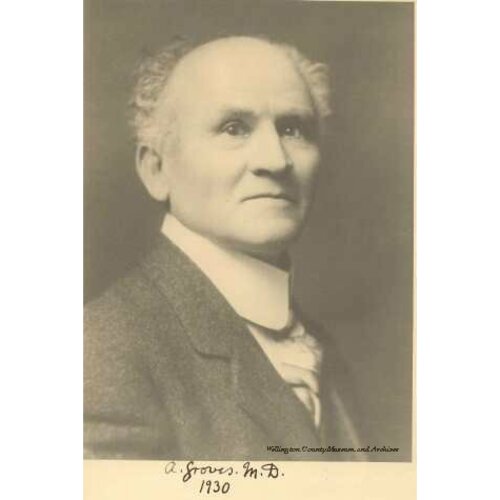
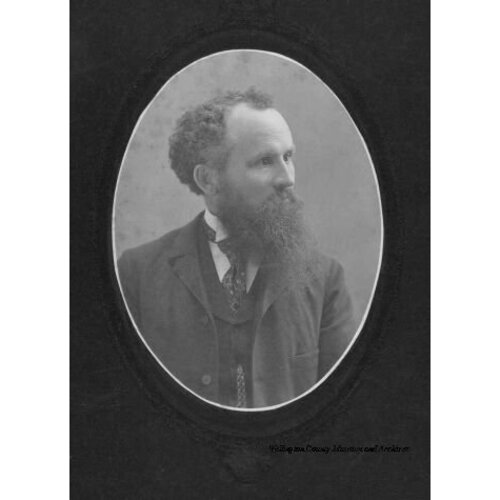
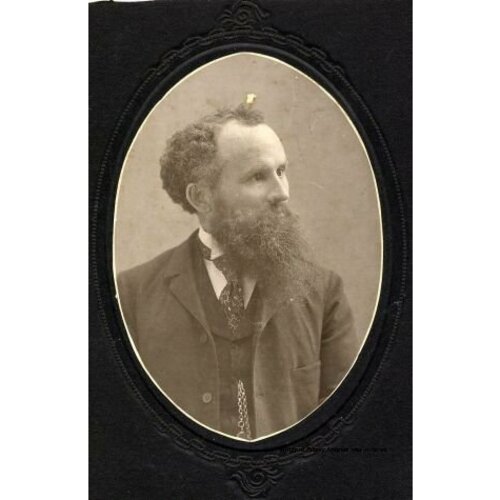
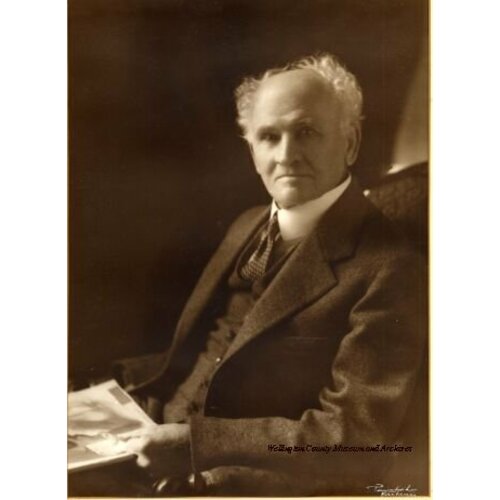
The largest collection of materials and artefacts from Groves’s career is held by the Wellington County Museum and Arch. in Fergus. The museum, located in the former House of Industry where he treated patients, has several digitized photographs of Groves (ph 622, ph 3279, ph 3909, ph 6507, ph 9097), which can be viewed at “Collections catalogue.” His commonplace book, licences, certificates, degrees, autobiographical notes, and public-health materials are held in the Abraham Groves fonds (C 303) at AO. One of his amputation knives is in the collection of the Dittrick Museum of Medical History in Cleveland, Ohio. The museum has verified that the knife, which shows signs of having been boiled frequently, was made in 1870. These details are consistent with Groves’s claim to have performed aseptic surgery in the early 1870s. Various aspects of his life and career are explored in six articles in Wellington County Hist. (Fergus), 16 (2003): 4–118.
Cyclopædia of Canadian biog. (Rose and Charlesworth), vol.2. J. M. Edmonson, “Grove’s amputation knife,” Canadian Bull. of Medical Hist. (Waterloo, Ont.), 8 (1991): 289–91. “The Groves family,” in Historical atlas of the county of Wellington, Ontario (Toronto, 1906), 31. W. B. Spaulding, “Abraham Groves (1847–1935): a pioneer Ontario surgeon, sufficient unto himself,” Canadian Bull. of Medical Hist., 8: 249–62. “An unknown pioneer in surgery,” British Medical Journal (London), 16 March 1935: 530–31.
Image Gallery

Cite This Article
Vivian McAlister, “GROVES, ABRAHAM,” in Dictionary of Canadian Biography, vol. 16, University of Toronto/Université Laval, 2003–, accessed April 20, 2026, https://www.biographi.ca/en/bio/groves_abraham_16E.html.
The citation above shows the format for footnotes and endnotes according to the Chicago manual of style (16th edition). Information to be used in other citation formats:
| Permalink: | https://www.biographi.ca/en/bio/groves_abraham_16E.html |
| Author of Article: | Vivian McAlister |
| Title of Article: | GROVES, ABRAHAM |
| Publication Name: | Dictionary of Canadian Biography, vol. 16 |
| Publisher: | University of Toronto/Université Laval |
| Year of publication: | 2026 |
| Year of revision: | 2026 |
| Access Date: | April 20, 2026 |