

employed to have them build schooners for him during the winter, and chartered other vessels to carry his cargoes to Bordeaux, where he was represented by his brother-in-law, Joseph-Guillaume Lapeire. To
.
Denison was one of the first New England planters elected to the Nova Scotia assembly, taking his seat on 1 July 1761. He supported
. Some time after the adoption in 1801 of a law creating the colony’s first public schools, administered by the Royal Institution for the Advancement of Learning, Fisher’s school was incorporated into its
number of people and probably provided the first opportunity for local residents to observe a Jewish ritual. Following his death, Joseph’s business was continued by his son-in-law Henry Joseph Altman of
. 2 June 1801 Louise Ledroit, dit Perche, at Quebec; d. there 1 April 1829.
By the time Charles Lefrançois was born, his
& broke open his chest & proceeded to the extremity of the law.” “We shall be anxious to hear how it is settled,” added Beardmore, “as this officer is a favorite with us all.” The HBC apparently found
NEALE, PERCY REGINALD, NWMP officer and convicted felon; b. 1851 in England; m. Sarah Champness; d. 1 Feb

.
In 1777 Jacques-Guillaume Roque entered the Séminaire de Saint-Charles in Toulouse, where he did all his theological studies. Subsequently he obtained a doctorate in canon law from the Université de
WATERMAN, ZENAS, farmer, lumberman, justice of the peace, and politician; b. 1 Dec. 1789 at Liverpool, N.S
.
Stewart Campbell received his early education and studied law in England. He completed his legal training in Halifax, probably under William
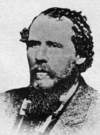
CORNISH, FRANCIS EVANS, lawyer, legislator, civic official; b. 1 Feb
.
Crusoe’s conduct of his domestic affairs nearly brought about his death in 1753. Several years before, he had married his son-in-law’s mother. Then in 1753, when she was about 80, he turned her out and
Charles Le Moyne and his brother-in-law Jacques Le Ber*. In October 1672 he had obtained seigneurial title to Île Sainte-Thérèse
province of New Brunswick before the appointment of the first governor, Thomas Carleton*, in 1785. After studying law in the office of Robert
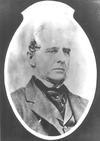
of 18. He received legal training from a practitioner whose name we do not know, and on 24 Dec. 1838 obtained a commission as notary. At this time, when the province was under martial law, he
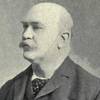
1876 he was called to the English bar but chose instead to practise law in Canada, articling with the Toronto firm Rose, Macdonald, and Merritt. Admission to the Ontario bar followed in 1877, and he
contributed to the teachers’ pension fund (£1 a year). In 1856 a law had authorized the superintendent to deduct from his budget “a sum not exceeding 500 louis to help in forming a fund for the support

.
While working in the department of education, Marling had studied law, graduating from the University of Toronto in 1862. Unfortunately his duties “did not allow his advance to the bar” but he was a

Quebec, which possessed their own highway systems, were not in the jurisdiction of the chief road inspector. According to this law, the chief inspector of a district was assisted in each parish, seigneury
where his wife had been born, a dwelling built at La Tortue by his father-in-law and eventually known as the Manoir Pinsonaut.
Pinsonaut took part