

community by having printed in the Quebec Gazette an opinion of Attorney General Francis Maseres* on bankruptcy laws that gave concern to
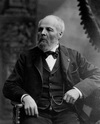
explain why he was enrolled in the Petit Séminaire de Montréal in 1837. Two years later he began articling as a law student with the firm of his brother
Bradstreet, an early governor of Massachusetts, described by some as “the Nestor of New England.” He arrived in Halifax with his loyalist parents early in the American Revolutionary War. A law student in the
” flared up again in 1790 when the assembly impeached Brenton and Deschamps. The Privy Council heard the case early in 1792 and, although it cleared the judges of all but having “mistaken the Law” in a few
a prominent merchant. Three of his five sons were to become merchants, while Charles Rufus and Samuel Prescott* chose the law
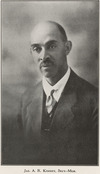
1897 from the Halifax Commercial College after its amalgamation with the Halifax Business College (in which he may have initially enrolled), Kinney worked as a stenographic clerk in the law office of
channels between the islands and the mainland; there hunters stretched nets to trap them. The inheritance from Lafontaine’s father-in-law (who died in 1737) was limited to the mainland concession of Mingan

.
Jonathan McCully attended the usual one-room school until he had exhausted what it offered, then began work on his father’s 150-acre farm. From 1828 to 1830 he taught school to earn money to study law, which
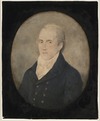
Margaret Robertson in Montreal on 1 Sept. 1781 made him a son-in-law of the British officer Daniel Robertson*, who, as commander at
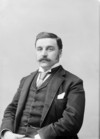
for granted. He was educated at Upper Canada College, Toronto, and was called to the Ontario bar in 1876. From 1877 to 1881 he practised law in Stratford, where he gained his initial political
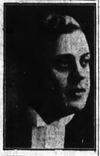
Citizen as “one of the most devout orthodox Jews in the Capital.”
Young Moses attended Osgoode Hall law school in Toronto and settled back in Ottawa
exhibition allowed Hemming to meet his first cousin Christopher Dunkin*, a lawyer living in Montreal, who invited him to join his office as a law

Lexington Papers (8v., London, 1851) for publication.
On 1 July 1854 Manners-Sutton was appointed the eighth lieutenant governor of New Brunswick
community volunteerism.
Over the course of a 49-year career, Hector McInnes developed expertise in the law of such areas as shipping, fisheries
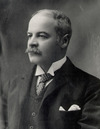
attended King’s College, in Nova Scotia, where he took an arts degree – the precise route that Frederick had followed. After a period in the law office of Edward Jarvis Hodgson in Charlottetown, Arthur
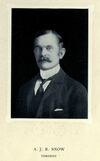
large stone house in Hull. He was educated privately and then at the Ottawa Collegiate Institute, and in 1876 he was admitted as a student-at-law by the Law Society of Upper Canada

York (Toronto) by 1 October, he found the reins of government in the hands of Alexander Grant*, the temporary replacement for Lieutenant
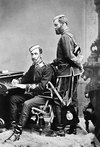
), had left Scotland to avoid a similar fate for his sons. In his master plan for the family, Martin Donald Macleod saw a career in law for his son James and thus in 1851 sent him to Queen’s to obtain his
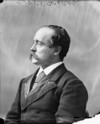
and the young George, after completing his schooling, went to McGill College in Montreal. He read law with John Rose*, and was called to the bars
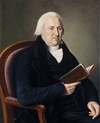
province De Bonne took up the study of law in Montreal, and in January 1780 he asked Governor Haldimand for