

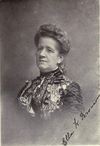
HOBDAY (Bronson), social activist; b. 1 Sept. 1846 in Portsmouth, Va
personal pique, and briefly became their leader, he still expected the law to receive a fair trial. When opposition members tried to weaken it, he returned to the King government benches and on 20 Feb
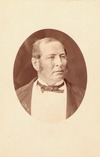
, eldest son of Tiberius Wright and Lois Ricker, and grandson of Philemon Wright*; m. 1 April 1848 Mary Sparks, daughter of Nicholas
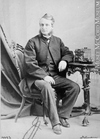
attorney on 2 Nov. 1840 and was called to the bar on 2 Aug. 1841. He was elected a bencher of the Law Society of Upper Canada in 1853 and lectured a term at Osgoode Hall, Toronto, in 1856; the same
year he lent 18,178 livres 4 sols to his brother-in-law, Jean-Baptiste-Nicolas-Roch de Ramezay
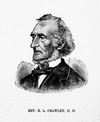
law in James William Johnston*’s Halifax law office and was admitted to the bars of both Nova Scotia and New Brunswick in 1822. He
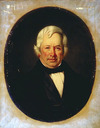
bill. In his pamphlet Hamel cited various conciliar laws, edicts, and canons in support of those who were against the proposal. His argument was based on the fact that the assets and income of a

Canadian Women’s Press Club, Genevieve recognized that “many of the handicaps of women and children could be removed if more public-spirited women understood the laws as they are, and could constructively

these years she worked with and for women of her own class. Both in her business as a law stationer, where women were employed as legal copyists, and through related firms, where others were trained as
Thémis (1879–84), a monthly review of legislation and jurisprudence devoted to theoretical study of law, and he published works on Canadian law. In 1881 the company changed its name. Making partners
Birmingham. He probably then studied law in Birmingham or London. In 1809 he came to Newfoundland, and by the last years of the Napoleonic wars was established in business in St John’s. A sometime
-law. They were taken to Norway House and by August the event had made newspaper headlines. “Dark Deeds of Keewatin Indians – They Strangle and Burn Sick Friends,” announced the Toronto Globe
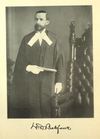
of legislation in 1892 admitting women to the Law Society of Upper Canada and to the practice of law. A Presbyterian and member of the Oddfellows, he was a staunch advocate of temperance legislation
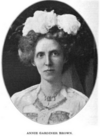
to the North-West Territories, where he and his three brothers homesteaded. Several years later he settled in the territorial capital of Regina and studied law; he was called to the bar in 1892. His
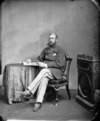
time, attorney general. Young Hewitt was sent to school at Bath, England, and on returning to Jamaica in the 1840s he set up a law practice. After his father’s death from cholera in 1850, he became
first time on 1 May 1666, in the “Registre des confirmations” of the archbishopric of Quebec. In his correspondence with the minister Colbert, Jean

New England family, Hiram Blanchard received his education at Pictou Academy, studied law with William Frederick DesBarres in Guysborough, and was admitted to the bar as attorney in November 1841 and as
Legislative Council. At the time the resolution was passed Brecken sat with two brothers-in-law, Thomas Heath Haviland*, the colonial

.
In 1873, when the federal government was creating the North-West Mounted Police to bring Canadian law to the west [see Patrick

, son of Thomas Carpenter and Margery Sweeney; m. first 1874 Phoebe Gilbert; m. secondly 1896 Clara Trollope, and they had at least six children; d. 1 July 1916 in Banff, Alta