


in Montreal, where he took the courses offered by the school of law that François-Maximilien Bibaud* had set up. Called to the
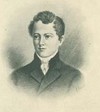
leave Montreal and take up residence at Berthier-en-Haut, where he opened a law office. There, on 14 June 1843, he married Mary Jessy Morrison, a young woman from the American west. From then on
him a commission as half-pay lieutenant, which was confirmed by the king on 1 March 1693. On 1 May 1696 he became lieutenant of one of the companies of colonial regular troops in New
. first 1 June 1842 Susan Tyson; m. secondly 1 Aug. 1854 Mary Hunt, and they had one son and four daughters; d. 20 Nov. 1887 at Hamilton, Ont
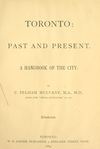
), son of Henry William Mulvany, a barrister-at-law; Elizabeth Mulvany who died in childbirth in July 1880 at Toronto, Ont., was probably his wife; d. 31 May 1885 at Toronto
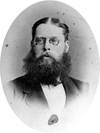
worked in a local law office before coming to Canada in 1861. Between 1864 and 1868 he was employed as a clerk by the Hudson’s Bay Company in the Montreal Department; he then worked in banking in both

. Governor George Simpson* was thoroughly justified in condemning the “club law” enforced by Manson, McLean, and Paul Fraser, but perhaps reasonable
Minas Basin. Eventually he took his son and his son-in-law John M. Blaikie into the firm with him
appears on letters of appreciation or welcome to governors and distinguished visitors. In 1795 he and six other gold- and silversmiths petitioned to be exempted from a law on forge fires [see
been profitable. Pennisseaut also obtained fur-trading rights in the pays d’en haut from his father-in-law and thus secured a solid footing in the colony’s economic system
law and jurisprudence on a regular basis. Thanks to assiduous attendance, he was appointed assessor to the Conseil Supérieur of Quebec on 26 Jan. 1743. He did his work so well that the following
professional life (education, law, and the church). In the fourth volume he deals with the Scottish involvement in the northwest; a final chapter discusses the Scot in journalism. Before the final volume

Owen*. Harris was based in Kingston and during the next two years, until he retired on half pay on 1 Sept. 1817, Amelia presided over domestic affairs at the headquarters of the survey, which
.
Descended from a family of magistrates and lawyers, Charles Savary attended the Lycée Bonaparte in Paris from 1860 to 1863, graduating as a bachelier; he then studied law in Paris, where he obtained

partnership with his brother-in-law William Sperry Shea, who provided capital and, probably, management skills. After Shea’s death in 1876, Sharp’s eldest son, Franklin, became a key figure, and Francis made
. Israel Ferguson, his brother-in-law, was his trading partner. Singleton’s residence-trading post on the Sagonaska was a primitive but comfortable log building. He continued to spend time also at his
Corps, and the volunteer firefighters of Hyack Fire Company no.1.
As the gold-fields declined, many erstwhile gold-seekers began to exploit other
.
Following his release, Van Buskirk continued to serve on the Court of Common Pleas and as collector of impost and excise until, after his wife’s death in 1832, he moved to Yarmouth to live with his son-in-law
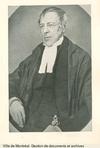
.
George Vanfelson, whose father was of German extraction and had settled at Quebec after the conquest, began to study law in 1798 in the office of Jean-Antoine
to attend the Roman Catholic church on the occasions required by law. Wenger became one of the leaders of the Brethren in Christ, known in Canada also as Tunkers, a pietistic group which emerged in