


Indians which had been passed in 1869. The delegates wanted more control over their affairs, including the right to make by-laws for their reserves. In 1882 the grand council, held at the New Credit reserve
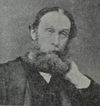
for teaching, and the remainder by the government for directing the observatory. Cherriman was to take the new position, and the older chair was to be filled by his brother-in-law, George Templeman

.
William Walter Copp’s father was a carpenter in Great Torrington, Devon, possibly employed by his father-in-law, a prominent local builder, who was responsible for the new parish church steeple erected in
.
François Provost having died on 1 June 1702, Crisafy obtained the post of governor of Trois-Rivières, exactly a year later. His immediate neighbourhood consisted of 32 houses in the upper town

leadership in directing the affairs of the AFC, spearheading a policy of expansion into the west. In 1827 he secured a partnership with Bernard Pratte and Company of St Louis (headed by his father-in-law
appointments are not confirmed in the records. John Fillis, his father-in-law, died in 1792, and Crosskill brought his family to Halifax in June 1793 to receive a “small portion” left to his wife, the farm
interests or to oppose various laws limiting their autonomy, while at the same time he swore fidelity to the Constitution of 1791. He also took part in the community life of Quebec, being an active member of
awarded the cross of the order of Saint-Louis on 1 April 1754.
Jacques-Pierre Daneau de Muy was typical of many Canadian officer-seigneurs. The
eight children; d. 1 Nov. 1885 in Hochelaga (now part of Montreal), Que.
William Darling, the eldest son of an Edinburgh fancy goods
home of his daughter Élisabeth and his son-in-law Joseph Falardeau on Rue Saint-Stanislas. He was buried the next day in the Cimetière des Picotés
of his assets went to his wife on condition that she not remarry. His son-in-law, Pierre-Cajetan Leblanc, took over running the museum, and in 1842 he was on Rue Saint-Paul, engaged as well in the
Master, the law of kindness was upon his lips, while the spirit he breathed toward the suffering and the erring was that of tenderness and love.” One of the earliest native-born Wesleyan Methodist
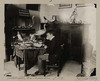
attendant in the faculty of law at the Université Laval. This post gave him access to the university library and to books on natural history not previously available to him. He was now able to continue his
emigrated from Scotland. On 1 April 1825 Robert Doak Jr purchased lot 45 from the Ephraim Wheeler Betts estate (having earlier obtained two adjacent lots for farmland) and his brother

underlines the fact that he had found favour with the Special Council. However, the Court of Requests was abolished in December 1841 and Dumoulin returned to practising law. In 1843 he was divested of his

manifest in the building he designed with Heriot for Ekers’ Brewery (1893–94, now the Musée Juste pour Rire), which was run by his brother-in-law Henry Archer Ekers (who would be elected mayor of Montreal in
William Smith, a new son-in-law, joined Forsyth and Company. Smith subsequently moved to Liverpool, England, where he conducted a branch operation in conjunction with Forsyth’s son Thomas. In 1806 John
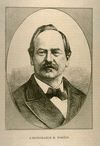
Newfoundland and who were exempt from the rigid laws concerning inspection of herring to which Canadian fishermen were subject. Fortin’s strenuous efforts to improve the fishermen’s situation were the beginning

1873 to 1875, taking over the post from her sister-in-law Anne Molson*. As president, she defended the auditing of courses as an effective way to
court ushers to arrest his brother-in-law, Timothy Sullivan, known as Timothée Silvain, king’s doctor, at the suit of Jacques-Joseph