

Acadia Univ. Arch. (Wolfville, N.S.), Acadia Seminary Alumnae Assoc., secretary’s book, 1892–1927; Board of governors, minutes, 1 (1850–83); Irene Elder Morton, “History of Acadia Seminary” (1912); Pierian
.
As a youth William Greenwood ran away from an unhappy home to Massachusetts, and sailed in vessels out of Cape Cod. In the early 1770s he came to Barrington, where his father-in-law, Solomon Smith, was
that Guillaume had been studying law under the attorney general, Louis-Guillaume Verrier*, since 1736 and, though still too young to be
Pierre Guy* and Jeanne Truillier, dit Lacombe; m. 1 May 1764 his cousin Marie
, particularly when it dealt with trade. Thus on 8 March 1797 he was appointed to a committee responsible for preparing a law on commerce between Lower Canada and the United States. Some weeks later he
four years earlier, leaving one child. Weldon practised law in Richibucto, N.B. He had been a member of the Legislative Assembly for Kent County since 1827 and speaker since 1843. The couple’s only
merchants of the town in signing the addresses of welcome or appreciation that were presented to them. In 1795, along with six other silversmiths, he petitioned for exemption from a law regulating the use of
Thomas Alfred Higgins’s biography of his father-in-law was published as The life of John Mockett Cramp, d.d., 1796–1881 . . . (Montreal
1760s in association with his future brother-in-law, Jean-Baptiste-Tropez Martin, investing over 20,000 livres in the Société de Guadalcanal alone, but whether he profited by his brief career in

fourth bishop of Kingston to succeed Patrick Phelan*. He was consecrated on 1 May at St Patrick’s Church in Quebec and moved immediately
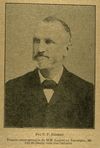
visited many other businesses like theirs in the United States. On 1 May 1893 Albert and Zéphirin became partners and the following year the firm enlarged and modernized its premises. Léandre

he was appointed examiner in engineering at the School of Practical Science, University of Toronto. He believed in high professional standards and supported licensing laws to raise the status of
together as best they could. Family relations were not always amicable however. In 1883 John Kellum described his sister-in-law’s hard-hearted demands for a contribution to his keep, and towards the end of

for Halifax in succession to his brother-in-law Malachy Bowes Daly. At Ottawa he generally restricted his comments to issues of immediate interest to Halifax, such as the improvement of the terminal

.
In 1846–47, possibly because of temporary difficulties with his English investments which were being handled by his father-in-law, Labatt visited Great Britain and considered remaining there, but the
; in addition he owned “many good houses in town.” In 1773 he was one of a number of prominent people who signed a petition to King George III asking him to grant the “Canadians” their former laws
*, a Quebec notary. He trained for the five-year term stipulated in an ordinance of 1785, the first law to regulate notarial practice under the British régime. Commissioned on 10 May 1788, he
.
François-Saturnin Lascaris d’Urfé was admitted on 1 April 1660 to the seminary of Saint-Sulpice in Paris and was ordained a priest in 1665 or 1666. His superior soon sent him, at his request, to Canada
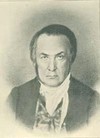
, Godefroy*, Alfred, and Arthur are the best known. At his father-in-law’s death on 25 April 1835, Laviolette became co-seigneur with Elmire’s brother, Charles-Louis Lambert Dumont
.
Théophile Lavoie was educated at the Collège de Sainte-Anne-de-la-Pocatière from 1847 to 1856 and spent the year 1857–58 taking law at the Université Laval. At the age of 24 he entered the noviciate of the