

1016, ff.467–68. Sixte Le Tac, Histoire chronologique de la Nouvelle France ou Canada depuis sa découverte (mil cinq cents quatre) jusques en l’an mil six cents trente deux
November by the official opening of Cataract’s transmission system. The line to Hamilton was then the longest in Canada and the second longest in the world after the one operated by the Blue Lakes Water
whose friendship was esteemed by many prominent citizens, Patterson was described at his death as “one of the most popular caterers in the Dominion of Canada
. Le Jeune, Dictionnaire. [François Daniel], Nos gloires nationales, ou histoire des principales familles du Canada . . . (2v., Montréal, 1867).
Louisbourg . . . in a schooner Britannicus where [they] were Transported there from Canada,” dated 6 Oct. 1748. It is possible that he was taken to Montreal in 1721 as a captive of
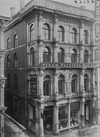
PERRAULT, LOUIS, bookseller, publisher, and printer; b. 8 Oct. 1807 at Montreal, Lower Canada, son of Julien
holder, judge, and politician; b. 8 Oct. 1773 in Hempstead, N.Y., second son of James Peters and Margaret Lester; m. first 23 Nov. 1797 Elizabeth Baker in Upper Canada, and they had 12
), f.63. The acts and resolves, public and private, of the province of the Massachusetts bay (21v., Boston, 1869–1922), IX. Coll. doc. inédits Canada et Amérique
manufactured not only in the colony but also in what was to become Canada. About two years later Philips formed a partnership with a John B . Philips, possibly his brother; John had come to Halifax about 1845
François Picoté de Belestre, a doctor; d. January 1679 at Montreal and was buried there on the 30th of that month.
He came to Canada in 1659 as
usual studied care, “could say that while he was in Canada there were no glorious actions for France in which he did not have a large part.” The general assembly of the clergy of France, however, came to
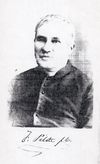
Saint-Antoine-de-Tilly, Lower Canada, son of Ambroise Pilote, a farmer, and Marguerite Coulombe; d. 5 April 1886 at Saint-Augustin-de-Desmaures, Que
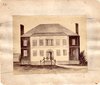
immediately on a three-week voyage to the home of John Ussher (Usher) of Chippawa, Upper Canada, arriving on 29 July 1817.
Pilotte attended to her
.”
Plessy had come to Canada as a recruit in the colonial regular troops and had been discharged in his twenties. The son and grandson of master tanners at Metz, he had worked in France before enlisting. The
POLLET DE LA COMBE-POCATIÈRE, FRANÇOIS, came to Canada in the summer of 1665 with the headquarters of the Carignan-Salières regiment
death in 1742.
Pommereau was undoubtedly assisted by his alliance with a great seigneurial family of Canada. On 11 March 1736 he married
that he intended to do missionary work in Canada. He sailed in 1663, stopped off at Plaisance (Placentia, Newfoundland), where he exercised his ministry for several months, and did not reach Quebec until
Crerar*, the leader of the Progressive party, which had been founded in 1919 by dissident Liberals and farmers’ associations in Ontario and western Canada, he was approached by James John Harpell, a
, Histoire de Nicolet, 1669–1924 (Arthabaska, Qué., 1924), 103, 106, 116. Jouve, Les Franciscains et le Canada: aux Trois-Rivières, 91, 127, 278. Sulte, Mélanges historiques (Malchelosse
Talon*’s administration, to undertake building ships in Canada on his own account. On 15 Nov. 1716 he wrote to the council of Marine, reminding it that it was “because of him that ship
). Three years later he was promoted lieutenant and returned to Canada; on 11 Feb. 1721 he received command of a company with a salary of 1,080 livres. The following year, on 25 June
of the city, Raby sailed to England with Saunders, but the following year he returned to Canada as “pilot extra” in the Kingston. He again went back to England at the end of the season and
de la colonie du Canada, et des actions qu’ils y ont prises,” BRH, XL (1934), 506. Tanguay, Dictionnaire, I, 507. J.-E. Roy, Histoire du notariat, I, 106, 108, 132, 313
history of the profession of notary in Canada. Two other sons of Gilles Rageot, Philippe, born in 1678, and Jean-Baptiste, born in 1680, entered the priesthood, the first in 1701 and the second in 1700. The
.
In 1612 he was involved, with de Monts, in lawsuits over supplies for the fur trade in America. By 1615 Ralluau was managing at Paris the interests of the Compagnie du Canada as well as acting as
.
Nothing is known of Randin’s parentage and early life, and there is no record that he ever married while in New France. He came to Canada as an ensign with the Carignan-Salières regiment in the summer of
.
Patrice René joined the Recollets in Paris in 1682 and made his profession the following year. He came to Canada around 1690, and on 30 June 1693 he signed a baptismal certificate at Beaumont
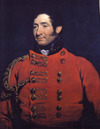
Canadas along with Lieutenant-General Gordon Drummond*. The Duke of York, commander-in-chief of the British army, referred to Riall as “an active
, Richard chose to remain in Canada. Shortly thereafter he was appointed sergeant in the Canadian forces, in which rank he accompanied governor Frontenac [see
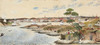
. Vancouver Times (Victoria), 5 May 1865. Victoria Daily Chronicle, 28 March 1863. J. R. Harper, Early painters and engravers; Painting in Canada
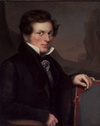
.
E. H. Bovay, Le Canada et les Suisses, 1604–1974 (Fribourg, Switzerland, 1976), lists 187 works by Rindisbacher and names the last known holder of each. In Canada, his works
judgeships; one grandson, William Johnstone Ritchie*, became chief justice of Canada in 1879
in it as an adjutant. “Although they [the Le Moynes and he] were reputed to be the best canoeists in Canada,” La Noue twice very nearly drowned in the rapids, when his canoe broke
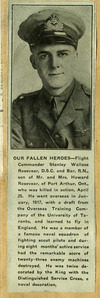
Bishop* “he was probably Canada’s foremost aviator.” He was, however, certainly in the first rank of the fighter pilots of World War I
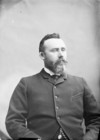
Canada, eldest son of Donald Ross and Margaret —; m. 30 July 1873 Jessie Flora Cattanach, daughter of Donald Cattanach of Laggan, Ont., and they had two sons; d. 25 March 1901 in
Stuart* in 1775, but in 1777 the American revolution drove many of the Canajoharie and Fort Hunter Mohawks to Canada. Christian Daniel
region about 1796. In 1805 the elder Sayer moved to Lower Canada; Pierre-Guillaume, in the way usual for children of country marriages, was left with his mother’s people and was assimilated to the Métis

the Canadian government was offering a special course in physical education to a representative of each military district in Canada. On the advice of François-Samuel Mackay, lieutenant-colonel of what
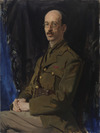
given to Alexander Carron, a 12th-century Scottish knight. Francis (Frank) Scrimger’s paternal grandparents emigrated from Scotland to Galt (Cambridge), Upper Canada, where his father was born and raised
Maritime provinces of Canada in the War of 1812 (London, 1928), 48–52, 240.
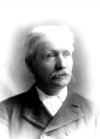
Barrie, Upper Canada, son of David Semlin and Susannah Stafford; d. unmarried 2 Nov. 1927 in Cache Creek, B.C.
Charles Semlin was
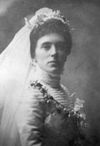
Adney* in Woodstock, N.B., and they had a son; d. there 11 April 1937.
A daughter of Canada’s foremost pomologist of his era, Minnie
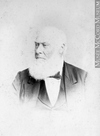
emigrated to Upper Canada in 1820. He was employed by the British authorities as clerk of the military settlement at Lanark-on-Clyde (Lanark) and Perth, assisting settlers to get established. After nine years
estates after the death of Jean-Joseph Casot*, the last member of the order in Lower Canada. The government thus entered into possession of the
.
Edward Short emigrated to Canada while still young, and studied with the lawyer David Augustus Bostwick at Trois-Rivières, then with Dominique
Niagara, Upper Canada, in 1835, and setting up as a bookseller and stationer. In September 1837 he began publishing the Niagara Chronicle in partnership with George
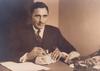
receive some compensation. He was buried in the Notre-Dame-des-Neiges cemetery in Montreal. Reports of his decease appeared in various publications, including Polish-language newspapers in both Canada and
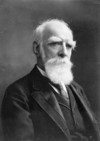
Stuart*, his mother’s brother, he sought to join the Hudson’s Bay Company. He embarked for Lower Canada on 16 May 1838. Soon after his arrival he was hired as an apprentice clerk in Lachine. A few
Upper Canada in 1861 under the sponsorship of a cousin already living there.
Within two years of his arrival Somerset received a first-class teaching
yet unknown. Judging from his association with military men, it is likely he had come to Canada with the colonial regular troops and had been a garrison surgeon at Fort Chambly. His wife’s family had