

of François-Xavier Bruneau, a dealer in pelts, and Thérèse Leblanc; d. unmarried 4 March 1851 in Saint-Bruno-de-Montarville, Lower Canada
September they took charge of the parish school, which would become the cradle of Marist activity in Canada. Other requests for the founding of schools began to come in 1886, including one for a school in
Canada.
Son of a Northumberland farmer, William Burn went to his mother’s native Scotland to become a sheep farmer at Kirkland, near Kirkcudbright
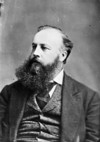
Loyalist, described himself as “a patriotic Canadian, descended from a race of patriotic Canadians – one of the oldest families in Canada.” He is said to have been educated at Trinity College, Toronto
).
Catalogne enlisted in the colonial regular troops about 1714 and was commissioned in 1722 as a second ensign. After he had served three years in Canada in this capacity, his father sought a promotion for him
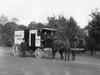
. He completed his training in 1847 and, judging Scotland’s economic prospects too limited, emigrated to Canada the following year. In September 1848 he began working as a baker in Toronto for William

devout wife; and in his friends, such as Henry Phillpotts, bishop of Exeter, whose brother George was Colborne’s aide-de-camp in Upper Canada. As he advised his son James, attend “to the study of Christ
.
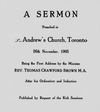
Crawford Brown’s desire for the ministry drew him back to Canada, where he received a call to St Andrew’s Presbyterian Church, Toronto. He was ordained and inducted as minister on 16 Nov. 1905. It
, Ont.
James I. Davidson arrived in Upper Canada in 1842 and worked as an agricultural labourer near Balsam (Pickering). Shortly afterwards, he
Dorothy Neal, of Kirknewton parish, Northumberland, England; d. 21 Feb. 1799 in London.
George Davison first came to Canada about 1773, and by
.
Following three years’ service at Dunkerque, Desandrouins was promoted second captain and sent to Canada as assistant to Jean-Claude-Henri de
in Terrebonne, Lower Canada, son of Édouard Desjardins, a bailiff, and Joséphine Panneton; m. 4 June 1867 in Montreal Zaïde Paré, daughter of merchant Hubert
Drouin and Marie Dubois; d. 1 June 1685 and was buried at Château-Richer the next day.
The date of Drouin’s arrival in Canada is not known
.
Duprac arrived in Canada in 1674 at the latest, since, on 6 Jan. 1675, he signed a marriage contract with Marguerite Vachon, daughter of the notary Paul
Magdalena Erb, widow of Abraham Erb*; they had no children; d. 28 June 1853 in Berlin (Kitchener), Upper Canada
. September 1858 in County Westmeath, and was buried in Castlepollard.
Francis Evans, a graduate of Trinity College, Dublin, arrived in Lower Canada

enjoyed a certain renown in Canada, where he received numerous commissions. The marvellous little picture depicting Beatrice Cenci, housed at the Musée National des Beaux-Arts du Québec, gives a
Canada; they had four boys and three girls; d. 1 Feb. 1897 in New Westminster, B.C.
Upon his father’s appointment to the customs office at
importance and value of insect control and entomological research to Canada be tested. Fletcher’s standing, his services to ministers and mps seeking information for their
Canada, where he was educated. He later taught school briefly in Louth Township. Unhappy with a teaching career, between 1845 and 1853 he edited successively the Long Point Advocate and Norfolk County

-Odilon Gauthier, whose father was the treasurer of Quebec City from 1851 to 1868 and one of the founders of the society of St Vincent de Paul in Canada, studied at the Petit Séminaire of Quebec, and

Virginia but Gibson’s uncle, Alexander Milne, in Markham Township, Upper Canada, replied that it appeared quite easy to qualify as a surveyor in the province. Gibson took this answer as a sign that work was
money to assist in the chartering of ships. Godet Des Maretz crossed over again to Canada in 1610, 1620 and 1623, always with Gravé Du Pont. In 1621 he bore the title of Captain on the Coast of
expansion of the business across Canada. By 1907 the company was the country’s largest supplier of both imported and domestic dry goods. It handled cottons, woollens, carpets, household furnishings, dress
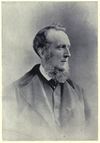
, John Hawkins Hagarty was educated privately and at Trinity College in Dublin, where he stayed for a year (1832–33). He immigrated to Upper Canada in 1834, spending his first year on a farm near
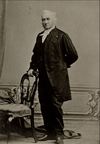
seigneur of Portneuf, who died in 1862. His father was a member of both the Legislative and the Executive councils of Lower Canada; his brother, Jeffrey
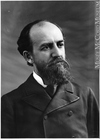
), Lower Canada, son of William Harrington, a merchant, and Laura Seymour; m. 7 June 1876 Anna Lois Dawson, eldest daughter of John William
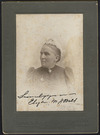
, and author; b. 24 Dec. 1838 in Maitland, Upper Canada, daughter of Robert Harvey and Sarah Glassford; m. 29 Nov. 1859, in Brockville, Upper Canada, Chilion Jones, son of Jonas
praised by the Montreal Gazette as being “the most convincing proof that Canada need not in future import presentation sets from abroad.” The master-work was a piece of art silver, made for
Franchère, and they had several children; d. 23 May 1865 at Montreal.
In 1797, Thomas Holmes, his wife, and his son Benjamin sailed for Canada
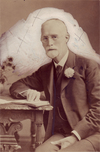
John’s, the son of a leading lawyer and future premier and chief justice. In 1858 his parents sent him for schooling, not to Britain, but to Upper Canada College in Toronto. After two years there, Hoyles
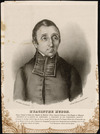
HUDON, HYACINTHE, Roman Catholic priest and vicar general; b. 28 Nov. 1792 in Rivière-Ouelle, Lower Canada
.
In May 1541, Jalobert joined the expedition consisting of five ships which Cartier was responsible for leading to Canada. The crossing from Brittany to Newfoundland took three months; then on 2
then was in partnership with his eldest son William Simons and a Scot, David Watson, had two production facilities in Canada, one on Rue Saint-Jean-Baptiste, a few steps from the offices of Kerry, Watson
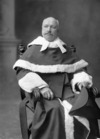
Dubuc*, reversed by the Supreme Court of Canada [see Sir William Johnston Ritchie*], but ultimately confirmed by the
was nominated by the colonial committee of the Church of Scotland as principal of Queen’s College at Kingston, Canada West. This Presbyterian foundation, established to break the monopoly of the Church
LÉVEILLÉ, MATHIEU, Black slave, executioner in Canada from 1733 to 1743; b. c. 1709 in Martinique; d. 9
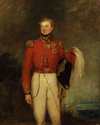
(Northern Ireland) until 1838. After having been made a kcb in April, he was posted to Lower Canada in charge of the brigade of Guards sent over with Lord Durham
1696 near Chicoutimi.
François Malherbe arrived in Canada around 1645 as a donné, and set out for the Huron country, where he stayed until this
Maurin, a merchant, and Marguerite-Geneviève Mounier; d. sometime after 1765, probably in France.
François Maurin arrived in Canada in
.
Samuel Papineau was only a private soldier; he concerned himself particularly with the land grants which were made to him from 1699 on. He is the ancestor of the Papineau families in Canada

future Upper Canada. Peachey and his colleagues René-Hippolyte Pepin*, dit Laforce, and Lewis Kotte (Koth, Cotté) were instructed
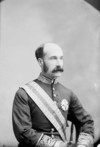
governor general of Canada; he was formally appointed on 18 August, arrived at Quebec City on 22 October, and assumed office the following day
Lieutenant Governor Francis Gore* in 1817, who sat on the original board of the Bank of Upper Canada in 1822, and who was a magistrate by 1827
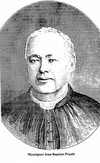
, Lower Canada, son of Louis-Basile Proulx, a farmer, and Marie-Thaïs Foisy; d. 25 March 1881 in Terrebonne, Que.
Little is known of Jean
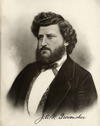
Provencher), lawyer, journalist, and public servant; b. 6 Jan. 1843 at Baie-du-Febvre (Baieville), Canada East, son of Godfroi Villebrun, dit Provencher (Provencher, dit
Quebec.
It seems that Quiniard came to Canada only a short time before his marriage, which was celebrated 3 Feb. 1701 at Sainte-Famille on the
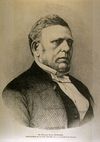
Brockville, Upper Canada, the eldest son of Stephen Richards and Phoebe Buell, and brother of Stephen and Albert Norton; m. 19 Oct. 1846 Deborah Catherine Muirhead (d. 1869), and they had three
Ridout*, surveyor general of Upper Canada, and of Mary Campbell; d. at Clinton, Ont., 24 Feb. 1871.
George Ridout attended John
profession of librarian in Lower Canada. The library apparently enjoyed a degree of popularity with the legislators, for a report of 1802 from an assembly committee suggested “arrangements . . . in