

Canada, and they had one son and three daughters, one of whom died in infancy; d. there 10 Nov. 1859.
George Charmbury Ridout emigrated from
. 1864 — Morris, of Sainte-Thérèse, Lower Canada, and they had four sons and two daughters; d. 18 Dec. 1900 in Montreal.
Born into a
band instruments. Robinson came to Canada in 1862 as part of the contingent of troops sent in response to the Trent affair [see Sir Charles Hastings
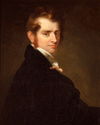
Simpson and members of the family emigrated to Upper Canada in 1815, where they initially owned an estate at Augusta, on the St Lawrence between Prescott and Brockville. In 1824 John Arthur
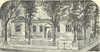
Russell and his second wife, Dorothy Harrison; d. unmarried 19 Feb. 1822 in York (Toronto), Upper Canada.
When Elizabeth Russell was born, her
Harvey*, in London, and they had no issue; d. 26 March 1836 in Belleville, Upper Canada.
James Hunter Samson probably came to the Canadas
were held responsible and were heavily fined in 1884. As president, Savary received a five-year prison sentence and took refuge in Canada, arriving in Quebec City towards the middle of 1884
Chaussegros* de Léry; d. 29 July 1865 at his manor-house, Coteau-du-Lac, Canada East.
Georges-Réne Saveuse de Beaujeu studied at the Collège de
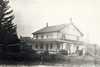
. 1843 in Berlin (Kitchener), Upper Canada.
Joseph Schneider’s father immigrated with his parents to Pennsylvania from the Palatinate (Federal
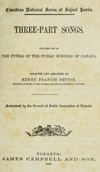
instruction in Upper Canada. Trained in England, he immigrated to Toronto in 1858, at the behest of Egerton Ryerson, to become music master at the Normal School. Sefton adapted a sight-singing method and, in
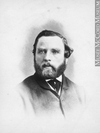
, Ayrshire, and worked on the Glasgow and South Western Railway before emigrating to Virginia in the United States where he became a railway contractor. In 1855 he came to Canada and entered into a partnership
many years. He was the first superintendent of its Sunday school (the first in Upper Canada), president of the first Bible Society in Brockville, and a member of the first Religious Tract Society of
in 1915 an honorary canon of All Saints’ Cathedral, Halifax. Under his leadership St Peter’s Cathedral exercised a wide influence in an Anglo-Catholic direction throughout eastern Canada. He
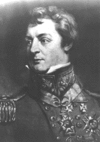
.
The contributions Smyth made to the development of Canada stemmed from his 1825 report, in particular from his promotion of an existing scheme for a canal which would link the Ottawa River and Lake
Smyth was “born and bred up in this Province of Canada” and worked as a farmer until he was 23 years old. About 1815 he left that occupation to become a land agent in York (Toronto). Smyth was a railway
; m. secondly in the summer of 1799 Abigail Cogswell, widow of Abraham Dayton; d. 20 Nov. 1833 in Gananoque, Upper Canada
children of the Reverend John Stuart* and Jane Okill; d. 5 Oct. 1862 at Kingston, Canada West
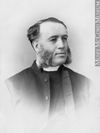
Methodist minister; m. first c. 1860 Mary Hutchinson in London, Upper Canada; m. secondly 24 Oct. 1866 Frances Mary Renaud in Peterborough, Upper Canada, and they had two sons
not left a diary full of observations and reflections on society in Lower Canada. Besides being an interesting chronicle of religious and social life at Terrebonne, the journal, which runs from 7
Taschereau* and Marie-Louise-Élizabeth Bazin; m. 29 Jan. 1805 Françoise Boucher de La Bruère de Montarville at Boucherville, Lower Canada; d. 8 Oct. 1826 at
Buffalo, New York, then came to Upper Canada in 1834, settling in Queenston. He was active in arranging for the incorporation, financing, and development of railways in western Ontario beginning with the
Canada, the 100th Royal Canadian Regiment of Foot. It was the first time a regiment of regular soldiers was recruited in Canada to serve imperial interests abroad. Rapidly, 1,027men were enlisted. Voyer
Canada, son of Ebenezer Washburn* and Sarah De Forest; m. 12 April 1821 Margaret FitzGibbon; d. 29 Sept. 1837 in
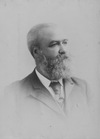
), son of Samuel Wilson and Elizabeth Crocket; m. 6 Nov. 1865 Jeanie Kilgour in the Presbyterian church at Beauharnois, Lower Canada; d. 8 Oct. 1899 in Montreal and was
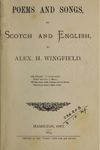
years in Auburn, N.Y., before moving to Hamilton, Upper Canada. Wingfield worked as a mechanic in the boiler-room of the Great Western Railway for 18 years. He then became a landing-waiter, or customs
Brantford, Upper Canada. There he became the senior partner in Wisner, Wilcox and Company, a small craft-shop operation which manufactured fanning-mills and ploughs. In 1861 it employed seven men. Wisner
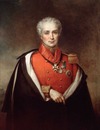
Upper Canada, succeeding Francis Gore. Other factors were involved: Maitland was a personal friend of Lord
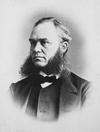
the English in British North America. Abbott’s early years were spent at various rural Anglican missions in Lower Canada, where his father was employed by the Society for the Propagation of the Gospel

the elected members of the legislature was known and in part implemented in Canada and Nova Scotia, but in the confused political state and frontier society of New Brunswick there had been no real
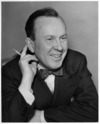
became enthusiastic and prominent Methodists after their arrival in Canada, in the 1820s and 1840s respectively. Pearson’s paternal grandfather, Marmaduke Louis, was a well-known Methodist minister; his
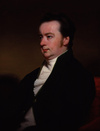
.
Charles Theophilus Metcalfe came to the Canadas at the end of a long career in colonial administration. Of old Yorkshire and Irish stock, he was inordinately proud of his father, who had acquired a
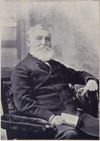
. 19 Feb. 1835 Ann Theresa Duff in Chippawa, Upper Canada; they had six children and adopted a seventh; d. 7 March 1891 in Winnipeg
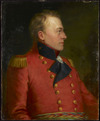
of John Brock and Elizabeth De Lisle; d. 13 Oct. 1812 at Queenston Heights, Upper Canada. He never married, and there seems to be no real evidence to support the stories that
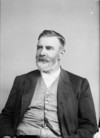
Garbuttsville (Garbutt), N.Y., eldest son of Adam Charlton and Ann Gray; m. 1 Nov. 1854 Ella (Ellen) Gray in Charlotteville Township, Upper Canada; they had no children; d. 11 Feb. 1910 in

literature. In 1833 he came to Canada with his family. The next year his father took up a farm near St George in the southern part of Dumfries Township (in what is now South Dumfries Township), an area of
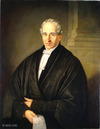
.
During the War of 1812 Cuvillier served in the 5th Select Embodied Militia Battalion of Lower Canada known as the “Devil’s Own” – initially as a lieutenant and adjutant. In June 1813, while under
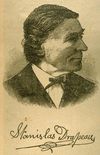
, and author; b. 28 July 1821 at Quebec, Lower Canada, son of Jean-Baptiste Drapeau of Charlesbourg and Marie-Angèle Bourbeau of Beauport; d. 21 Feb. 1893 in Pointe-Gatineau (Gatineau
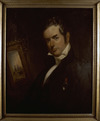
. secondly 19 March 1825 Eliza Richardson at Port Hope, Upper Canada, and they had at least four sons and two daughters; d. 22 May 1840 in Toronto

Quebec with the 49th Regiment; he remained in Canada for 45 years.
FitzGibbon’s commanding officer, Lieutenant-Colonel Isaac
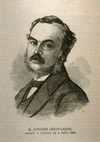
Canada, son of Antoine Gérin, dit Lajoie, and Amable Gélinas; d. 4 Aug. 1882 in Ottawa, Ont.
Antoine Gérin-Lajoie was so strongly
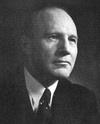
Canadian in London drew Muir’s attention to the Royal Bank of Canada, which had opened an office in London two years earlier. The Royal, under the aggressive leadership of its general manager, Edson Loy
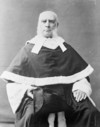
had two daughters; d. 31 Aug. 1909 in Ottawa.
In 1836 Samuel Henry Strong immigrated to the Canadas with his family. His father, who was
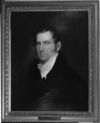
daughter; d. 14 July 1853 at Quebec.
A prominent member of the ruling élite of Lower Canada, James Stuart had pursued a career that was
, founded a private bank there. Green had had some experience of the Canadas for he had served there in the commissariat from 1811 to 1818. John Henry
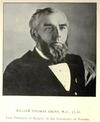
AIKINS, WILLIAM THOMAS, physician and medical educator; b. 5 June 1827 in Toronto Township, Upper Canada, son of James
the king of Canada attracted a large crowd to the baptism. He remained for two years in France where he was educated by the Jesuits and learned to read and write. On his return to Canada in 1628 his
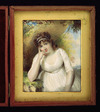
.
Elizabeth Frances Amherst spent her childhood and adolescent years in England. In June 1799 her husband was appointed deputy paymaster general of the British troops stationed in the Canadas. She
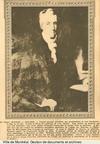
competition too stiff and patients scarce, he moved to the Bay of Quinte region in Upper Canada around 1797. After working for three years under difficult conditions in this rather primitive area, where he used
BAVEUX, JEAN-CLAUDE-LÉONARD (known in Canada under the name of Jean-Claude Léonard), priest, Sulpician, Oblate of
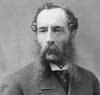
, U.S.A., to study English. When he returned to Canada, he decided to take up medicine, and studied in turn under two distinguished doctors, William Marsden and Jean-Étienne Landry. He qualified as a doctor