

approved a grant for the creation of a college in Nova Scotia prompted Carleton to request the same funding for a “public Seminary of learning” in New Brunswick. Although the home government refused its
to become a teacher. An excellent student, she took two years of training in one (1893–94) at Prince of Wales College in Charlottetown, then headed by Alexander
Edinburgh to obtain the best medical training available. He received a diploma from the Royal College of Surgeons of Edinburgh on 20 April 1843 and became an md on 1
Grand Parade. Archibald also had a hand in arrangements for the affiliation of the Halifax Medical College with the university. Negotiations for a union with King’s College in Windsor, however, proved
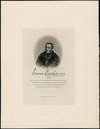
private academy in Galt and his older daughters were sent to Edinburgh for their later education) and he was a leader in the “Hamilton Educational Movement,” which in 1855 secured a charter for a college in
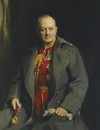
, at age 12, he entered Eton College. Julian was not a strong student, and in four years there he progressed only to the lower fifth form. (He did acquire a nickname, Bungo, which he would retain
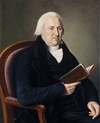
Longue-Pointe (Montreal) and continued them from 1773 at the new Collège Saint-Raphaël in Montreal. In the summer of 1775, having completed his sixth year (Rhetoric), which concluded the course of study
.
Born into a family who had come to Nova Scotia from the American colonies after the American Revolutionary War, William Alexander Smith was educated first at a private school and later at King’s College
, radio-telegraphy, and the hydrographic service; in June 1913 he announced that the Royal Naval College of Canada in Halifax, which was threatened with closure, would be continued. Hazen oversaw the

Arthabaskaville’s Collège Commercial du Sacré-Cœur, to which he was admitted in 1885. On 5 Sept. 1890 he entered the Petit Séminaire de Québec to pursue classical studies, remaining there until his sixth year
class struggle. He promoted the creation of a labour college, modelled on Ruskin College in Oxford, England; he hoped a leading radical intellectual, such as the American Scott Nearing, would take charge
further modified in the same year by conversion of the Central Academy, a government-supported grammar school in Charlottetown, into Prince of Wales College. This proved to be the Palmer government’s most
Little is known about his parents but young John Rose was given a solid education at Udny Academy, a grammar school outside Aberdeen, and King’s College, one of the founding institutions of the University
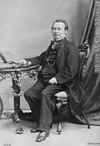
. Whether Whelan would have supported anything more than a grant to St Dunstan’s College is dubious, since he was an initiator of the secular Free Education Act, had publicly denied that Catholics were
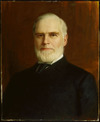
local centre for worship. He sent his eldest son, James Cox Eakins, to the Methodist-run Upper Canada Academy (Victoria College) in Cobourg, from 1840 to 1845. James Sr was a successful farmer and he
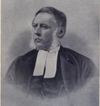
Malecite encampment above Fredericton. He did not attend college but studied law in the office of John Simcoe Saunders*, a provincial

Beech Avenue’s new church, Kingston Road United. At Victoria he chaired the building committee for the United Church of Canada’s new theological school and residence, Emmanuel College, erected in 1930–31
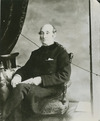
public financial grants to Nova Scotia’s sectarian colleges in favour of establishing a single, non-denominational institution of higher education. The scheme died amidst sectional and sectarian rivalries
, can be seen in the convent of Saint-Roch and the Collège de Sainte-Anne-de-la-Pocatière.
In addition to churches and public buildings, Baillairgé drew
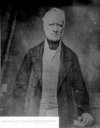
into the family of a well-to-do Scottish wine merchant, Alexander Bannerman received a grammar school education and proceeded to Marischal College, Aberdeen, where he spent two sessions. In his early