

.
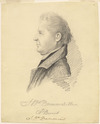
Jean-Baptiste Dumouchelle came to Lower Canada in 1795. It is thought that he then did classical studies at the Collège Saint-Raphaël in Montreal and that on completing his course in 1803 he went to work
Akins] at King’s College in 1868, was published in an expanded version two years later in Halifax and in a greatly enlarged second edition (Toronto, 1895). Based on a wide range of
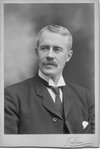
from Queen’s College in Kingston and an inspector’s certificate and a high school principal’s and specialist’s certificate from the Department of Education. He left teaching to become city clerk of
, which established the Ontario College of Pharmacy and generally regulated the profession in the province. He was the college’s first president and served a second term in 1877–79
.
Samuel Prescott Fairbanks attended King’s College, at Windsor, N.S., to which he matriculated on 3 Sept. 1810, a classmate of Thomas Chandler
.
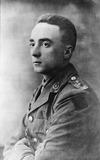
One of 14 children, Gordon Flowerdew was educated from 1894 to 1899 at Framlingham College in Suffolk, where he shone more on the playing-fields than in the classroom. After coming to Canada in 1903, he

served, with Dr John Brown Chamberlin, as joint coroner for the Bedford District. Dr Foster also attended lectures at McGill College’s new medical faculty and by his diligent studying and
Le Sage, and they had five children; d. there 29 April 1909.
Médéric Foucher studied at the Collège de L’Assomption from
.
Of Scottish descent, Alexandre Fraser grew up in a Roman Catholic family that was fully integrated into French Canadian society. He did his classical studies at the Collège de Sainte-Anne-de-la
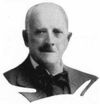
Gagnon*, Gustave Gagnon completed the classical studies course at the Collège Joliette and received musical training in Montreal from his brother-in-law Paul Letondal, a blind French émigré who would
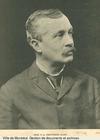
Geoffrion began his classical studies in 1855 at the Séminaire de Saint-Hyacinthe. In 1866 he graduated in civil law from McGill College in Montreal, where he had been a brilliant student, especially under
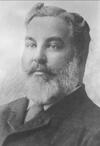
.
Upon completing his education in Guelph, Thomas attended McGill College in Montreal and Eastman’s National Business College in Poughkeepsie, N.Y. He later joined his father’s business, becoming
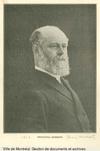
on the board of trustees of Queen’s College in Kingston and worked for the union of the various branches of Presbyterianism in Canada, which was achieved in 1875 [see William
departure from the cabinet was eased by transferring the site of the proposed agricultural college (later the Ontario Agricultural College) from Mimico to Guelph in 1873. In the assembly, however, Gow claimed
excellent horseman, he first intended to join the army but was persuaded by his mother’s side of the family to enter the priesthood. His theological studies were completed at the College of Killechiarain in
novitiate at Paris. From 1672 until 1680 he taught and tutored in the Jesuit schools of Hesdin, Eu, and Arras. These assignments he interrupted for a year of philosophy at the Collège Louis-le-Grand in Paris
physicians and surgeons that represented a restructuring of the Medical Society of Halifax which had been established ten years earlier. He was also a governor of Dalhousie College
inherited it, and then because his father steered him in another direction for his career.
Guy studied initially at the Collège Saint-Raphaël in Montreal
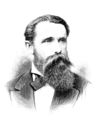
Frederick was educated at the academy and at Acadia College, receiving his ba in 1860. In that year his father moved to Saint John, N.B., and established a young ladies’ high
).
James Macaulay Higginson was educated at Trinity College, Dublin, before entering the Bengal army in 1824. He served in several campaigns and came to the notice of Sir Charles Theophilus