

further resolved that the government would pay the tuition fees of one of his sons for four years at Harvard College.
He probably went to live
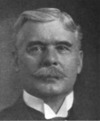
his father was appointed mine manager at Bruce Mines, on the north shore of Lake Huron. Educated at Upper Canada College in Toronto, he began work there with the Bank of Montreal in 1866. He joined the
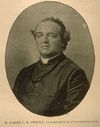
(Sainte-Thérèse). This five-act tragedy extolled the sacred values of homeland and religious faith, presenting the exemplary reign of St Edward the Confessor for students of classical colleges
.
Even before the end of his studies, probably at the Jesuit college, Charles Rageot began to help his father in the registry of the provost court. Gilles Rageot, although still young, suffered a great
.
Charles-Denis Regnard Duplessis de Morampont began his studies in Quebec and from 1719 to 1723 continued them at the Jesuit college in La Flèche, France, under the supervision of his older brother
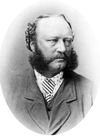
Elizabeth Rogan; d. 21 June 1874 while visiting Toronto, Ont.
Bernard Rogan Ross was educated at Royle College, Londonderry, and
death in 1880 the esteemed pastor of the Grande Ligne church and an occasional teacher in Feller College. As a colporteur he travelled on horseback distributing literature and Bibles; he held meetings and

the Jesuit college somewhat grander than they actually were. Yet the general character of these latter and of other lost buildings of Quebec seems to be conveyed. The interiors of the Jesuit and
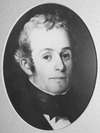
Baillie*, had too much influence at the Colonial Office. The one great issue that was resolved was that of assuring permanent financial provision for King’s College, Fredericton, an issue which had
education, remarkable energy and patience, and occasionally of humour. He studied surgery in London under Sir David Barry and was a pupil of G. J. Guthrie, president of the Royal College of
Soumande studied at the Jesuit college, and in 1663, when the seminary of Quebec was founded, he was one of the first students to be admitted to it. He received the tonsure at the age of 16; Bishop
newly founded department of practical science of McGill College. After graduating with the degree of bachelor of applied science in 1873 he took a position as a surveyor’s assistant for the Canadian
. John’s College, Cambridge, at the age of 16. He graduated with a b.a. in 1622–23 and was ordained in September 1625

, purchased a commission in the 68th Foot in 1826. He studied further at the Royal Military College at Sandhurst, England, and, on numerous leaves and assignments, travelled throughout Europe. In 1833 he
chapel of the Jesuit college with Gilles Hocquart* serving as his godparent. No doubt at that time he acquired the Christian names, Louis-Claude
circuit in 1855. The following year he was received on trial and assigned to the Galt and Berlin circuit. In 1858–59 Sutherland attended Victoria College, Cobourg, but the demand for itinerant preachers
.
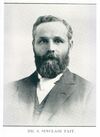
After attending schools in Wallace and Amherst, N.S., J. Sinclair Tait went to Mount Allison Wesleyan College in Sackville, N.B., from which he graduated in 1877 with a bachelor of science and
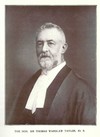
United Presbyterian Church in Toronto and he later served as elder, clerk of session, and representative to the presbytery. As a member of the board of Knox College and the senate of the University of
bestowed upon him in 1851 by the now defunct Franklin College, Ohio, which was strongly abolitionist.
Taylor worked for the union of the Canadian churches
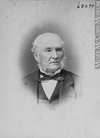
. 1839 received a diploma from the Royal College of Surgeons. In 1840, having spent some time in Paris where he attended lectures given by the leading French scientists, he began a medical practice in