

was not a bigoted one. He supported Thomas McCulloch’s appointment as principal of Dalhousie College in 1838 by stating in council that if he
, England.
After schooling in Bermuda, Richard Alexander Tucker enrolled on 20 Oct. 1802 at Jesus College, Cambridge, and, beginning 16 July 1802
and Gruzzel Drew; d. 24 Nov. 1754 in Hertford, England.
William Tutty received his ba from Emmanuel College, Cambridge, in 1737, and
.
Hubert-Joseph Tétreau studied at the college of Montreal, where he was encouraged to prepare for the priesthood. From 1822 to 1824 he taught at the seminary of Saint-Hyacinthe and at the seminary of

, and they had two sons and two daughters; d. there 21 Feb. 1834.
After graduating from King’s College, Windsor, Richard John Uniacke
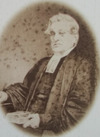
.
Robert Fitzgerald Uniacke was educated at the Halifax Grammar School, King’s Collegiate School, and King’s College, Windsor. He was articled in his father’s Halifax law firm until he decided to enter holy
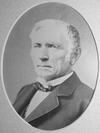
in 1883–84. He was also a charter member of the Medical Council of the College of Physicians and Surgeons of New Brunswick, created in 1881, and served on that body until his death. Vail’s professional
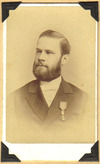
.
Charles-Amédée Vallée studied at the Collège de Lévis from 1861 to 1864 and then at the Académie Commerciale de Québec. On 16 May 1868, as a youth of 17, he embarked for Italy with the second
Hackett. He then went to England and, in 1827, passed the examinations at the Royal College of Surgeons in London, receiving praise from the celebrated John Abernethy and from Sir Anthony Carlisle for
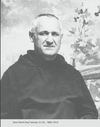
.
After completing classical studies at the Collège de Combrée, in France, and spending a year at the Grand Séminaire d’Angers, Pierre-Paul Vannier entered the abbey of Saint-Pierre de Solesmes. There he
Trinity College, Dublin, in 1799, graduating ba in the summer of 1804. He had received a commission as second lieutenant in the Royal Engineers on 1 Feb. 1804 and was one of the first of this corps to
, 245. Albert Burnside, “The Bible Christians in Canada, 1832–1884 . . .” (thd thesis, Emmanuel College, Victoria Univ., Toronto, 1969), 375. Thomas Shaw, The

Baldwin* recommended him to be queen’s counsel, despite the difference in political conviction between VanKoughnet and the ministry. He served on the council of the University of Trinity College and

1901 at his residence on College Avenue, Winnipeg. The funeral was held under the auspices of the masonic lodge, of which he had been a prominent member

Taché* of St Boniface. Among the many groups were hospital nurses and college students, tobogganists and hockey players, and societies of all types. She also photographed landscapes of the
, Wetmore served on the board of the College of New Brunswick and for a time as president of the Fredericton branch of the Society for Promoting Christian Knowledge. He also served as one of the justices of
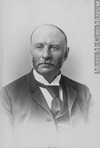
William Dawson*, principal of McGill College. While in Montreal, Whiteaves had lacked a suitable reference library and research materials; he
educated at the Anglican King’s College in Windsor, N.S., and was graduated ba from that institution in 1824. Admitted to the Nova Scotia bar in 1828, Wilkins became a
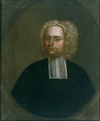
.
John Williams attended Roxbury Latin School and graduated from Harvard College in 1683. He taught school for two years in Dorchester and studied divinity. In March 1686 he was selected as preacher at
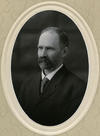
-educated scientist. Attached to the college of agriculture, Willing offered his students instruction in weed and insect identification as well as pest control and plant diseases, and he also gave lectures on