

, master mason and contractor; baptized 3 Oct. 1699 at Saint-Charles-de-Charlesbourg Charlesbourg, Que.), son of Michel Renaud, dit Cannard, and Marie-Renée Réaume; buried there on 15
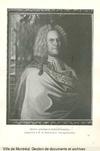
; b. 1668 at Saint-Étienne-d’Étréchy, bishopric of Sens, France, son of Abel Rocbert, notary and lieutenant of the provost court of Étréchy, and Marie Pothier; d. at Rochefort in 1753 or 1754
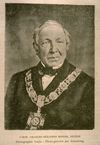
working as a carpenter, and four years later he had become a building contractor. It was probably not until 1859 that he set up his factory for making agricultural implements on Rue Saint-Martin in Montreal
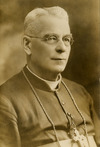
ordained priest on 13 June 1886. While continuing to teach, he ministered as chaplain in the parish of Saint-Zéphirin-de-Stadacona from 1888 to 1890. On 23 June 1888 he was appointed prefect of
politician; b. 19 May 1813 at Saint-Jean-François-Régis (Saint-Philippe-de-Laprairie), Lower Canada, son of Lieutenant-Colonel Charles-Michel
SASSEVILLE, FRANÇOIS, silversmith; b. 30 Jan. 1797 at Sainte-Anne-de-la-Pocatière (La Pocatière, Que.), son of Joseph
Canada, and the seigneury of Soulanges. Georges-Réne Saveuse de Beaujeu was then 22 years old. On 20 Sept. 1832, at Saint-Jean-Port-Joli, he married Adélaïde, the younger daughter of Philippe
SCHINDLER, JOSEPH (Jonas), “engineer” of mathematical instruments, silversmith, and merchant; b. in the parish of Saint-Nicolas
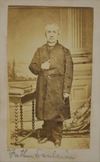
. He also published Constitutions de la congrégation de Saint-Basile (Lyon, 1878). Father Soulerin’s letters are in the archives of the Congregation of Priests of St Basil in Toronto and in
parish (c. 1716); b. 1670 in Saint-Michel parish, Saint-Sever, province of Gascony; son of Antoine Soupiran and Catherine Laborde; d. 9 Feb. 1724 in Quebec

Saint-Marcellin, France, son of Antoine Tabaret, a locksmith, and Adélaïde Forêt; d. 28 Feb. 1886 at Ottawa, Ont.
Joseph-Henri Tabaret
-François de La Faye*], who remained under the direction of Saint-Sulpice, and later the Brothers Hospitallers of the Cross and of St
Pointe-Saint-Charles (Montreal Island). Tellier, an experienced educator, was assigned in 1849 to Bishop Rémi Gaulin* of Kingston as director of
Oct. 1841. Soon after, the couple left for Saint John, N.B.
On 7 Sept. 1842 the Pickards’ first son, Edward Dwight, was born in Chelsea
at the Saint-François-Xavier mission at Prairie-de-la-Magdelaine. Won over by their example and by his conversations with them, he arrived at the mission with them in the spring and asked permission to
large corn patch.
In the latter years of Tomah’s life the Malecites began to experience the effects of loyalist expansion into the upper Saint John
: Jacques, Sieur de Sainte-Hélène, the first lieutenant; Pierre*, Sieur d’Iberville, the second lieutenant
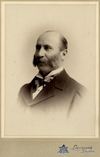
1864, the Petit Séminaire de Québec from 1864 to 1867, and the Collège de Sainte-Anne-de-la-Pocatière from January to July 1868. He then enrolled for a year in the faculty of arts of the Université
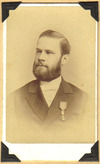
VALLÉE, CHARLES-AMÉDÉE, Papal Zouave, bank manager, and office holder; b. 17 Oct. 1850 in Saint-Roch parish at Quebec, son
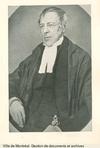
Vallières* de Saint-Réal and Andrew Stuart*. Vanfelson stood again in 1829 in a by-election held for the seat left vacant by Vallières de Saint
Veron de Grandmesnil, who had come from Saint-Martin-des-Noyers (Saint-Martin-du-Mesnil-Oury) in Normandy, France, and of Marguerite Hayet; d. 18 May 1721 at Trois-Rivières
Grant*, the future seigneur of Saint-Roch, an arriere fief in the seigneury of Notre-Dame-des-Anges called La Mistanguienne (also known as Grandpré and Montplaisir), a property he had bought from
hand beyond entries in church registers and a few documents that he witnessed. He entered the seminary of Saint-Sulpice at Paris on 27 Nov. 1691 and arrived in Canada in July 1697
requested a reward for him and entrusted him with the command of Fort Nashwaak (Naxouat) on the Saint John River. In August 1696 Villieu took part, along with
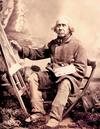
-Hurons (Wendake), Lower Canada, son of Gabriel Vincent and Marie Otis (Otisse, Otesse, Hôtesse); m. 14 Aug. 1848 at Saint-Ambroise-de-la-Jeune-Lorette (Loretteville) Marie Falardeau (Falardau
, and although technically a deserter he felt so secure that he married Marie-Josephte Deguire at Saint-Laurent on 23 Nov. 1761. In 1763 he became a property holder in Montreal

significant scenery on their route.
In 1823, through the earl’s influence, Woolford was appointed assistant barrack-master at Saint John, N.B., and then

appearance at St Lawrence Hall in Toronto in 1856 is evidence that his activity was not restricted to one city. From Quebec Sabatier moved to Saint-Jean-Chrysostôme not far from Lévis and for a brief time

. From 1885 to 1893 Émile attended several elementary schools. In September 1885 he was enrolled at the Académie Saint-Antoine, run by the Brothers of the Christian Schools, and starting the following
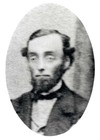
politician; b. 17 Sept. 1826 at Sainte-Anne-de-la-Pérade (La Pérade), Lower Canada, son of Pierre-Antoine Dorion* and Geneviève
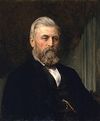
the river and floated to a boom at its mouth, where a village grew up bearing the name of Gibson (now part of Fredericton). There, across the Saint John River from the provincial offices and legislature
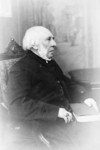
William Dering Gray*, rector of Trinity Church, Saint John, opposed Medley’s authority and influence with an appeal to Protestant
joined Fraser and nine government members to defeat Saint John’s aspirations and carry the retention of Fredericton by a margin of 20 to 18
commissary and intendant of New France; b. 18 July 1695 in the parish of Sainte-Croix, Mortagne-au-Perche, France, third of 14 children born to Jean-Hyacinthe Hocquart, commissary general of the
Archambault; m. 1 Oct. 1860 Azilda Robitaille in Saint-Roch-de-l’Achigan, Lower Canada, and they had 11 children; d. 20 March 1904 in Montreal

; d. 25 April 1913 in Saint-Thomas, near Joliette, Que.
Joseph-Alfred Archambeault did his classical studies at the Collège de
joined the loyalist migration to Parrtown, the future Saint John, N.B., and acted for a time as secretary to “The Directors of the Town at the Entrance of the River Saint John,” who included George
. October 1814 on the Niagara frontier.
Atiatoharongwen was the son of a black man and a Saint-François Abenaki woman. All three were captured in a French
was running a general store and became interested in the timber trade at Saint-Pierre-les-Becquets (Les Becquets), where he acquired some land in April of that year. He was already seigneur of the fief
attended the Saint-Joseph children’s shelter of the Grey Nuns [see Julie Gaudry*], and then took his primary schooling with the Brothers of
began his career at the Tignish village school in 1851. Eighteen months later he returned to his studies, this time at the Collège de Sainte-Anne-de-la-Pocatière in Lower Canada. He came back to Prince
community of Saint John, N.B. On 25 Aug. 1784 he was appointed surgeon to the British garrison at Fort Howe and lived an apparently quiet life in Saint John except for one amusing contretemps with
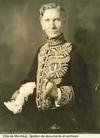
CARROLL, HENRY GEORGE, lawyer, politician, judge, and office holder; b. 31 Jan. 1865 in Saint-Louis-de-Kamouraska
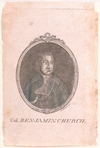
-Vincent d’Abbadie de Saint-Castin and his forces. Saint-Castin had participated in raids on Maine settlements, the latest being the capture of Fort William Henry with
.” In the summer of 1750 Cobb encountered French forces in a small fort at the mouth of the Saint John River, in territory which was claimed by both the French and the English. When the French commander
Mills* who was away in London, bought the house on Rue Saint-Louis which had formerly belonged to Michel-Jean-Hugues Péan* and in
destined to become New Brunswick. Edward Winslow* obtained property for him on the west side of what would be named Saint John Harbour, and Henry
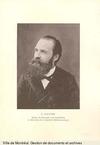
.
Guillaume Couture was born in Montreal’s faubourg Québec to parents of modest means. He received his elementary education at the École Sainte-Brigide, which was under the Brothers of the Christian
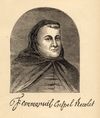
Saint-Vallier [La Croix*] on 16 March 1726. His ministry was to be divided into two
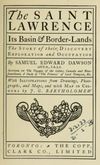
Dawson and Elizabeth Gardner; m. 16 Oct. 1858 Annie M. Bent in Saint John; d. 9 Feb. 1916 in Westmount, Que.
Samuel E