

solicitor of his native Saint John and participating in the founding of the Saint John Law School. It is for his written work, particularly his remarkable 1870–71 journal, that he remains best known. It
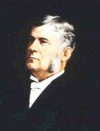
Lynch Scott’s father had immigrated from Scotland about 1817, and his mother was a native of Vermont. Educated at Brampton grammar school, Scott studied law at Osgoode Hall in Toronto and worked in the
. c. 1770, daughter of Jean-Baptiste Chaloux and Marie-Anne Bellefontaine; d. 1 Sept. 1839 at Quebec.
A native of Quebec, Marie
signed J. Desrosiers or Joseph Derosiers), militia captain and seigneur; b. 1 Oct. 1704 at Lavaltrie (Que.) and baptized 1 Nov. 1704 at
legislative councillor and judge was a barrister-at-law in the province of Quebec. He may therefore have been the “counsellor Johnston” who was in Quebec that very month with a young wife described by Francis
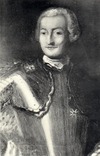
early age, becoming a cadet on 1 Jan. 1741. He participated in the Acadian campaign of 1746–47 [see Jean-Baptiste-Nicolas-Roch de
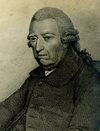
in law and mathematics as a student at Clare College, Cambridge, where he received a ba in 1752 and an ma three years later. Giving promise
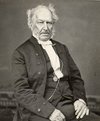
BOWEN, EDWARD, lawyer, judge, and politician; b. 1 Dec. 1780 at Kinsale (Republic of Ireland); m. in
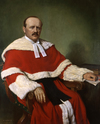
, 19 (1899): 1–19, 38–45; and “The extinguishment of easements,” Canadian Law Times, 20 (1900): 279–93. A complete list of his publications is held in the Anglin file at the DCB offices
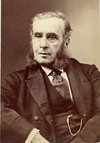
Perrault* and Edward Burroughs, protonotaries at the Court of King’s Bench. He continued his training with André-Rémi Hamel from November 1829 until he was licensed to practise law on 26 Sept. 1832
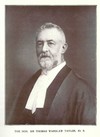
, MU 475, file 23; RG 22-205, no.9874; RG 80-27-2, 66: 26. Law Soc. of Upper Canada Arch. (Toronto), 1–5 (Convocation, rolls), barristers’ roll; T. W. Taylor, “A sketch of the life of Sir
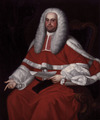
.
In March 1730 Belcher had been entered in the Middle Temple, London, and he arrived to study law a year later; in May 1734 he was called to the English bar. He appeared in a number of colonial
Viger*. Perhaps to broaden his knowledge of English law and improve his prospects in private practice, he left Viger in March 1808 to finish his studies under the influential Stephen
Carey’s early career. According to an obituary in the Manitoba Daily Free Press in 1890, Carey studied law in Montreal before he took up journalism, working first as an employee with the
law. They were increasingly concerned as well about the continued absence of a definite statement of property law, and precise regulations to govern complex commercial dealings. The most opinionated of
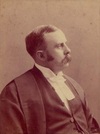
Italian, a position he held for a year while he read law as an articled student with George Morphy, of the firm Morphy, Sullivan, and Fenton. He continued his studies at Patton, Osler, and Moss, and, after
and then from 1890 to 1893 attended the faculty of law at McGill University, where he obtained his bcl. The following year he enrolled in
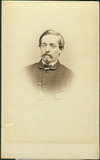
friend, as well as those of his father-in-law and brother-in-law. He therefore became sole proprietor of the firm, whose share capital would reach $300,000 in 1896 and then $1 million in 1899
, rum, sugar, staves, shingles, coffee, lumber, indigo, salt, and plaster of Paris. On 1 April 1811, during the Napoleonic Wars, his brig, the Caroline, was taken by a French brig in
consequently to have ceased collecting the customs duties which had been continued from the French régime. The law officers of the crown, however, gave the opinion that the duties could legally be collected “by