

brother-in-law Pierre Marcoux* (the husband of Marie-Anne Dunière), his cousin by marriage Pierre
, studied law at the Inner Temple. Upon receiving his ma in 1818 he joined the imperial service and was for a period deputy paymaster-general of British forces in British North
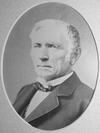
a non-party government specifically to pass a law establishing a non-denominational school system supported by direct taxation. Vail did not support the school legislation, but his appointment as
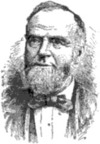
). J. G. Reid, Mount Allison University: a history, to 1963 (2v., Toronto, 1984), 1. Waite, Man from Halifax. John Willis, A history of Dalhousie Law School
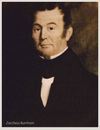
judge; b. 20 Feb. 1777 in Dunbarton, N.H., son of Asa Burnham and Elizabeth Cutler; m. 1 Feb. 1801 Elizabeth Choate, and they had one son and five daughters; d. 25 Feb. 1857
Bégon; d. 30 April 1748 at Montreal, where he was buried on 1 May.
Descended from one of the most influential robe
materials to the authorities at Detroit.
On retiring from his surgeon’s post at the fort about 1752, he was succeeded by his son-in-law, Gabriel-Christophe
Guy of Bristol and it has been said that Colston was Guy’s brother-in-law (Prowse, 94, who has been followed by many historians), but there appears to be no documentary proof of this. Neither

Smith*, a leading Upper Canadian politician. Lee was made clerk of the Executive Council in 1853 and was clerk of the Privy Council from 1 July 1867 until his superannuation at his own
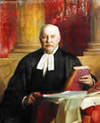
, a Halifax law firm that was pioneering a new area of practice – corporate law – and would within a century become the linchpin of the first interprovincial law partnership in Atlantic Canada

a meeting on 14 December.
In 1836, when he was a law student, Angers published a pamphlet entitled Système de sténographie, applicable au
Profession of the Law.” At the outbreak of the American rebellion he was practising in Newport, R.I., but his outspoken support for the crown forced his retirement to South Kingston, a loyalist area, in
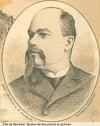
training in law and his interest in his profession. Skilled in matters of procedure, he took an active part in debates about the administration of justice and about reform of the electoral law, the civil
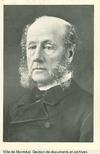
(Montréal, 1894). Western Law Times (Winnipeg), 5 (1894), no.1: 63–64. Montreal Daily Star, 28 May 1894. P.-G. Roy, Les juges de la prov. de Québec. F.-J

, items 1064, 1269–71; M5908, item 1676. Law Soc. of Upper Canada Arch. (Toronto), 1-1 (Convocation, minutes). London Public Library and Art Museum (London, Ont.), St Thomas, Ont., cemetery
. These commitments were to intensify his career-long quest for financial security.
In 1788 he journeyed south to Lincoln’s Inn in London to study law and

.
The father of Lewis Morris Wilkins was a New York loyalist who brought his family to Shelburne, N.S., in 1784. Details about the education of Lewis Morris are lacking. He may have studied law with

, née Chevallier (d. 1893); m. there thirdly 26 Sept. 1894 Léda Patoine, widow of Adolphe Hamel, a merchant; d. 1 Feb. 1926 in Montreal

Wilkie*, and began to read law as a clerk in the office of Andrew Stuart*, a friend of his father. Although specializing in maritime law, he
civil government for Quebec, had drawn the province’s boundary just west of the Ottawa River, and “the Indian country” beyond it remained under martial law, with justice being dispensed by the post