


consolidated his position by appointing his brother-in-law, William Nisbett, acting receiver general of the quitrents, and by reaching an accommodation with his attorney general, Phillips

Hertel* de La Fresnière, René-Ovide Hertel de Rouville did not win renown through the noble feats of arms that glorified the Hertel name. Quite early in life he turned to the study of law, taking

act. The spirit of the law, however, remained unchanged. Shortly after, Rogers issued a pastoral letter exhorting his flock to cease their “active opposition”: “We must simply tolerate what we cannot

of the courtroom in contempt of court, Caldwell failed to bring him to order, but promptly called Ross to order when he stated that neither law nor justice existed in the colony. Ross and the other

Philosophy program). Having completed his classical education at the age of 17, which was then considered young, he returned to his native city and began to study law at the Université Laval. At the same
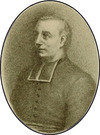
law, the seminary could draw from various sources an average annual income of £14,200 between 1840 and 1846 to meet expenses of £12,202, of which 12 1/2 per cent would go to social welfare and

.
Adolphe-Philippe Caron was the only surviving son of a middle-class Quebec family. After his early education at the Petit Séminaire de Québec he began the study of law, which he completed at McGill College
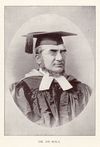
contemporary philanthropist, and R. Abram Peritsol, who contributed to the development of the arts and sciences. De Sola also wrote medical studies, on the rabbinical dietary laws and the use of
Buade* de Frontenac, who apparently was protecting him, appointed him “process-server and royal serjeant-at-law serving the whole of Canada.” A year later, on 5 Nov. 1674, Genaple appeared before
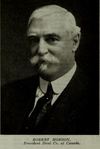
Wood*, who stood at the centre of an ambitious group of capitalists. Hobson married his daughter, and in 1896 Wood turned to his son-in-law to help administer the Hamilton Blast Furnace Company
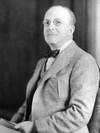
. In addition to practising, he lectured in international law, the history of English law, and jurisprudence at the Manitoba Law School from 1915 to 1921. He would be appointed a
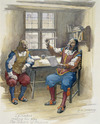
and civil law.
He graduated as a bachelor of laws in 1598 and took a minor part in the negotiations for the Treaty of Vervins made between Spain and

joined his father’s law firm in 1858 and was called to the bar the following year. He knew how to interest juries, and he gained a reputation for placing the affairs of his clients above all other

taking of Cape Colony in September 1795 and in an expedition against Manila in 1798. In 1803 he was back in England, and on 1 June 1806 he obtained the rank of captain in the artillery. His
in the courts of the District of Quebec.
The Quebec Act, which came into force on 1 May 1775, was supposed to put an end to the existing

law. On 6 Jan. 1812, on the recommendation of Governor Sir George Prevost*, he had been made an honorary member of the Executive
Bentom, who arrived at Quebec on 1 June 1800. He questioned Spark’s trinitarian orthodoxy and noted that his communion was “open to any person who chooses to partake without the least
ignored matters “of vital import.” Maitland’s predecessor, Francis Gore*, had “by arbitrary acts . . . thwarted the laws of the land” and

Colvile made in a letter of 1 March 1853. Principally because his wife’s failing health required a more temperate climate, Cameron accepted the position, at £150 yearly plus board. The Camerons

.
Meanwhile, on 26 Jan. 1816 Christie had been appointed law clerk by the House of Assembly, with responsibility for framing bills; the appointment was confirmed by a government commission in March