

. 1717 (o.s.), probably at Dundee, Scotland, eldest son of John Colvill, 6th Baron Colvill, and Elizabeth Johnston; m. 1 Oct. 1768 to Lady Elizabeth, daughter

. Daughter Avis, always a shadowy figure, was now completely superseded by “Grandmama,” who with her perfectionist son-in-law embarked upon “a most exceptional education” for the five grandchildren
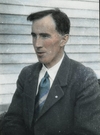
post he met his future father-in-law, Frank Noseworthy, a general dealer and Methodist layman. Noseworthy represented to Jackson the ideal of a contemporary member of his church, and he likely served as
of the governor-in-chief, the Duke of Richmond [Lennox*], in August 1819. He presented himself to Richmond’s son-in-law Sir
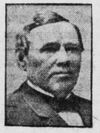
. 16 Aug. 1813 in St Stephen (St Stephen-Milltown), N.B., son of Daniel Murchie and Janet Campbell; m. first 1 Nov. 1836 Mary Ann Grimmer, and they had
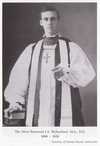
criticized the grim conditions in local cotton mills and stressed the need for laws to regulate factory work and child labour. Working to improve the lives of young people, he supported campaigns for
court of inquiry, which arrived at a Solomonic verdict on 21 May 1822: Allen was found guilty of disobeying a lawful command but his appeal of seniority to Shore was upheld. Smyth then defined
. . . , compiled, edited, and published by Thomson. In point of fact it was a plagiarized reprint of Thomas Jefferson’s volume of the same title (1801) omitting references to American law and history, and, where
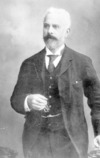
-law had acquired a mining property south of Kamloops. In 1887 they formed the Nicola Mining Company Limited, a London-based company for which they acted as local representatives. Although the business
the convention of separate school teachers in Hamilton, where he was elected recording and corresponding secretary as well as a member of the committees on the convention’s constitution and by-laws and
eldest brother, who became a law student under Baldwin and lived with another uncle, John Spread Baldwin. The rest of the family immigrated in 1819 and the ambitious Daniel Sr established himself as a

Baillairgé, who was only four years old when his father died, chose a career in law. After classical studies at the Petit Séminaire de Québec from 1822 to 1830, he was articled from October 1830 until June

August 1852 he took up permanent residence in Montreal. Over the next decade or so he was employed by the firm of Morison, Cameron, and Empey, studied law in the office of George-Étienne

, in September 1778. On 1 November in the presence of witnesses Marie-Catherine and Laterrière signed what can be interpreted as a private marriage contract, a document they took the precaution of
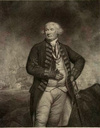
convoyed the annual fleet of West Country fishing ships safely across the Atlantic, arriving in St John’s on 1 July. After supervising the summer fishery and settling the usual disputes, he sailed

barns, cabins, and fences. His experiences of childhood were dictated by his race and social status. George had inherited his unfree condition from his enslaved Black mother in accordance with British law
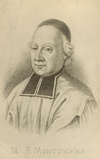
his country against the invaders; as a subject, a citizen who has taken an oath of loyalty to the king is violating the law if he refuses to obey orders; as a Catholic, the Canadian must show that his
part of Newfoundland, and chances for expansion were fairly slight. Moreover, the death of his father-in-law had left MacBraire without an “English house” essential in many aspects of the trade and

and public affairs.
At about the time of his first marriage Perkins became a member of a partnership with his father-in-law and another cousin, and
every word as law, and a conflict grew between the two men. No major disruptions were caused, however, and on 15 Jan. 1792 a fleet of 15 ships left Halifax for West Africa. Meanwhile Parr had