


in further trouble with Ottawa in 1898. He had taken a second wife while his first still lived, and Canadian law called his actions bigamous. When he was told he had to repudiate his new wife, he

in Cambridge, Mass., in all probability as a professor of law, Paul Cazeneuve, as he would be called from then on, made his real debut in the United States in 1889 with a French troupe, the Maude Banks
to trial in the early 1800s, once for forgery and once for larceny. Although he was acquitted on each occasion, he did not escape the clutches of the law for long: in 1804 or 1805 he was convicted of
1814 in Truro, N.S., second son of Samuel Archibald and Elizabeth Archibald; m. there 1 June 1843 Elizabeth Archibald Burnyeat, and they had one son, who died at age 14, and three
occurrence in the early 19th century and Baby was no exception. On a large number of his properties he failed to pay his taxes and as a consequence stood to lose more than 9,000 acres. The law, however
in 1882, a by-law establishing a public library was approved in a plebiscite on 1 Jan. 1883. Hallam chaired the library board, and at its inaugural meeting he described what he thought the
Andrews, N.B. Among those who recommended Beardsley for holy orders was his future father-in-law, the Reverend Ebenezer Punderson, who described him as “a Person of an Unspotted Character
Vondenvelden as inspector of roads for the city and parish at a salary of £100 per annum. One of his responsibilities was to enforce the law requiring citizens to maintain the streets in front of

life, even advocating that it be abolished by law. Although he was a shrewd administrator, he had been, like William, somewhat off the mark in believing that the economy of Quebec City could be
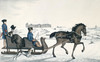
courts and magistrates be set up, that a company of troops be sent to the colony to enforce the laws and keep the natives in order, that the settlers be allowed to purchase provisions and skins for
copies by John Neilson*’s shop at a cost of £5 3s. 4d. The catalogue sold at 7 1/2d. (no copy survives), and in it
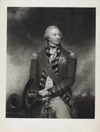
to change the laws and customs of the colony. The Canadians insisted on and obtained a high quorum of 34 to ensure that no bill would pass unless a majority of them accepted it. As well, they were
Nathaniel*, were members of the assembly, as was his son-in-law John Craigie, who was married to his daughter Susannah. His son William became a captain in the 15th Foot, James was assistant commissary
customs duties, dispatched law-breakers to St John’s for trial, and recruited men for the defence of Quebec against the Americans. During the American revolutionary war he cooperated closely with the

take up work in a law office in Fredericton, N.B.; and at 20 he turned to teaching school. It was not until Collins became attached to journalism, first as publisher of the Fredericton Star
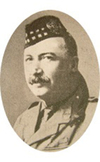
Drury* and the United Farmers of Ontario. Currie served on several standing committees, including those related to public accounts, printing, municipal law, and fish and game. In 1926 he was returned
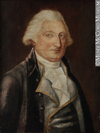
, along with their brother Ross*, to study French civil law and language at the English Catholic college of Douai in France, and they had returned
House of Assembly of Prince Edward Island, he had acquired business allies on the south shore of the Baie des Chaleurs, since two of his brothers-in-law, Hugh and
Bigot* on 1 September of that year. When he was appointed director of the Domaine du Roi in 1752, he relinquished only his office of controller. In 1759, along with Guillaume
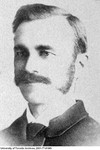
farmer; b. 1 Oct. 1848 in Kearby, near Wetherby, England, son of William Dale and Frances Stephenson (Stevenson); m. 10 April 1901 Florence Frederika Ryckman in Brockville, Ont., and