

nominally chief custodian of the family inheritance, but after 1796 the administration would be performed increasingly by his brother-in-law Jonathan
children of James Stewart and Elizabeth Bremner; m. 26 June 1816 at Halifax Sarah Morse (d. February 1893), and they had seven children; d. 1 Jan. 1865 in Halifax
December 1600 but went abroad before taking his degree. He travelled widely in Europe, receiving the degree of doctor of law in Vienna. He had returned to England by the summer of 1603 and in July 1605

temperance. In 1855 a law was passed by the state legislature that limited the vending of liquor to druggists, for medicinal purposes. The law was never effectively enforced, but the resulting uncertainty was
. 8 1/2.d. George owned half the shares, but, chronically ill, he retired to England, leaving Monro and Bell to manage the operation
and long from day to day the praises of parasites?”
The 1 Oct. 1904 edition of the paper strongly condemned the Bond administration and
position. In 1801 he was admitted to Lincoln’s Inn but, disliking law, he abandoned his studies within a year. He returned to Oxford and obtained an ma in 1804. On 22 July

four years, the St Lawrence Academy, at Potsdam, New York State. In 1839 he registered as a student at the Law Society of Upper Canada, and in the autumn of 1844 was allowed to practise law. On 31

Charles Dent immigrated with his family to Canada West as a small child. He studied law in the Brantford office of Edmund Burke
Bona, apparently remained with his parents until he married in 1771. He then went to live at Île aux Coudres, on some land inherited from his father-in-law. At this period the inhabitants of the island

Morrison; m. in 1877 Margaret, daughter of John George Bowes*; d. 1 Nov. 1888 at Toronto, survived by two children
John, N.B., Laura Edith Chipman, sister-in-law of Samuel Leonard Tilley, and they had six children; d
competence and international law status of Newfoundland, 1855–1934 (Toronto, 1988); “Newfoundland and the Paris Peace Conference, 1919,” British Journal of Canadian Studies (Edinburgh), 1 (June
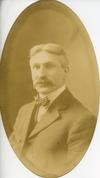
fishing trips, his curling, and his golf.
In 1900 Mackenzie published The laws of gravitation …, and he later spent a year at the Cavendish

her generation who were increasingly vocal about their rights in law and their needs and opportunities in society
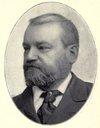
; and Wilfrid-Bruno* divided his public life between the law and politics. But Guillaume-Alphonse was the best known, the most energetic

. Alexander Sr operated a flourmill, which was probably located in the faubourg Des Récollets, in partnership with his brother-in-law William
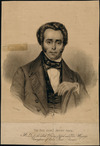
Price’s life before he arrived in Upper Canada in 1828 with his wife and young son, except that he had studied law at Doctors’ Commons in London. Two years after his arrival he acquired two tracts of land
to pursue a political career. He was able to give up his law office in Montreal and move to L’Assomption, where he launched into politics. Elected to the House of Assembly for that riding after

Ireland), third son of Jacob Spence, a Methodist minister, and Elizabeth Stephens; m. 1 July 1879 Sara Violet Norris in Eglinton (Toronto), and they had two daughters; d. 8 March