

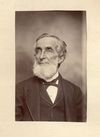
official assignee responsible for applying the new bankruptcy law. He kept this post until he became completely blind, some ten years before his death
his logs were sawn at the mill of Charles Sargeant, a future son-in-law. Burchill invested in many local enterprises, including the Bathurst Telegraph Company, the Newcastle Telegraph Company, the
. Elected a municipal councillor on 9 Jan. 1893 and mayor on 26 Jan. 1895, he resigned on 21 July 1896 because the electorate refused to support a by-law authorizing a $200 loan for work
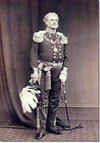
legislative and executive councils Mather Byles Almon*, Johnston’s brother-in-law and a prominent Conservative merchant and banker. Howe and his
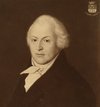
Chaussegros de Léry; d. 1 Jan. 1822 in Montreal and was buried 5 January in the church at Vaudreuil.
Michel-Eustache-Gaspard-Alain

.
Thomas Coffey’s formal education was meagre and probably did not extend beyond elementary school. After his family arrived in Lower Canada on 1 June 1852, they settled in Montreal, where he was taught
Montreal. On 6 Nov. 1760, two months after the surrender of the town, the new governor, Thomas Gage*, wishing to “maintain law and order” in
.
Emmanuel Couillard-Després was a sixth-generation descendant on his father’s side of Guillaume Couillard* de Lespinay, son-in-law
.
John Counter died six years later at the home of his son-in-law, in virtual obscurity. Only a brief notice appeared in the local newspaper on the death of a man who had devoted his life to the welfare of
broken the law in ignorance. Given the situation and evidence of Crandall’s good character, Judge D’Arcy Boulton* decided to recommend
John by-election. His unsuccessful campaign was supported by Tilley, now provincial secretary and the author of the 1855 prohibitory liquor law, despite the fact that Cudlip was a wholesale liquor dealer
occasions. In 1722 his widowed sister-in-law, Catherine Gonillon, entrusted him with the management of her affairs on Saint-Domingue (Hispaniola) and in La Rochelle. Perhaps it was on one of these trips
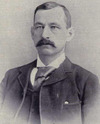
company raised in the area to face a threatened Sioux attack. That year he established, at age 21, one of the first two general stores in Palestine; the other was owned by his future brother-in-law
in the War of 1812, Pierre-Théophile also became a notary. After studying at the Petit Séminaire de Montréal, he apparently articled with his brother-in-law, Jean-Baptiste Lukin. He was authorized to
inspected for proper accommodation and provisions and denied clearance if these were not adequate. When consulted, Scotland’s lord advocate, Charles Hope, expressed the opinion that “there is no Law for
Commandant des volontaires de Dauphiné” and his own brother-in-law. As the war went on, Doreil’s cautious insinuations that all was not well within the colonial administration became more outspoken and, at
received a charter by a law passed by the House of Assembly, and therefore the right to administer itself through an electoral body. From 1833 to 1836 the charter had been applied, but when it expired at the
on the morning of 4 November, Cardinal, Duquet, and François-Maurice Lepailleur, Cardinal’s brother-in-law, began parleying with the Indian chiefs. The Indians invited the entire group of
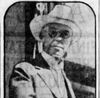
in this occupation, he took the name Arthur Ellis.
Because executions were a provincial matter under Canadian law, Ellis was not actually employed
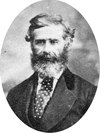
eventually known as Winnipeg. Later that year he opened a shop in a building owned by Thomas Logan, his future father-in-law, thus beginning a lifelong relationship with that pioneer family. Sometime in the