

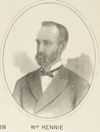
RENNIE, WILLIAM, agriculturist, seed merchant, farm superintendent, and author; b. 15 March 1835 in
immediately, nor any seed. The Executive Council did, however, agree to reimburse him for part of his expenses, up to £300, on presentation of “satisfactory” receipts. At the beginning of 1807 the government
difficulty of getting good seed, the Executive Council of Lower Canada recommended that small-scale experiments be conducted and subsidies be granted. Isaac Winslow Clarke and William
Weld*’s Canadian Agricultural Emporium, which sold new and improved varieties of grain and other farm and garden seeds to farmers all over Canada. Pearce and Weld’s son Henry ran the business as
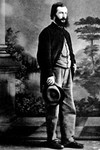
appointed Brown its seed collector in February 1863.
Brown arrived in Victoria on 6 May. His first expedition was to Great Central Lake, Sproat

), England, in 1771. Until that time, Kew Gardens had received plants and seeds from a variety of persons, but William Aiton, the director, wished the institution to undertake its own gathering of specimens
Eureka fanning-mill, combined the operations of a fanning-mill and seed separator in preparing seed for market or planting. It was not new technology but it worked better than many other fanning-mills

farm itself was divided into plots of 213 acres which were occupied by individual farmers (housed in cottages) but were worked by teams of men, horses, and machinery, especially during seeding and
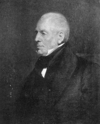
, N.S. He collected botanical specimens there and sent seeds for the Royal Botanic Gardens, Kew (London), to Sir Joseph Banks*, then
Seed Growers’ Association from 1904 to 1905 and again from 1910 to 1914 as a representative of the Manitoba Agricultural College.
After 18 years as
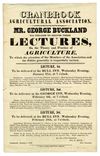
agricultural methods including the cultivation of high-grade seeds, the importation of pure-bred livestock, and the use of improved agricultural implements. He succeeded Edmundson as secretary of the Board of
garden supplies including flowers, ornamental trees, and seeds. Periodically, he speculated in land. In 1837 he transferred the bindery part of his business to a Montreal firm. His major commitment
Standing Buffalo Reserve was formed. Seed and some implements were supplied by federal authorities, but no more tangible help with housing or farming was forthcoming as the Sisseton-Wahpeton shifted from the

become the founder, editor, and publisher of the Saskatchewan Farmer (Regina), in which he advocated weed-free summer-fallow, pure seed, weed control, mixed farming, tree planting, and a good farm
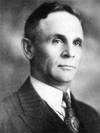
“the best all-round man.” He graduated in the spring of 1906 and accepted a job in Winnipeg with the federal Department of Agriculture as the only representative of its seed branch in Manitoba. The
famous “summerless year” of 1816. The government was obliged to import and distribute seeds. Although the harvest improved in 1817, agriculture remained in a low state the following year, the more so
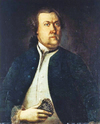
Gaultier*, Kalm collected seeds of various economic plants in the area. He found Quebec’s climate more extreme than Sweden’s and felt that some Canadian plants would not thrive in his homeland. After his
1785 with an extensive collection of seeds and botanical specimens from various parts of Persia and Mesopotamia.
Later that year the French government
thought the climate not unfavourable to settlement, as he had experimented successfully with English fruit, grain, and vegetable seeds. Settlement would bring advantages to the English economy: the
Des Ormeaux to postpone his undertaking until after seeding, so that they could take part in it. Later, upon receipt of the news of the defeat at the Long Sault and the possibility of an attack in force