

demonstrated a distinct lack of confidence in Mackay, emphasizing that he was supplied only with drugs which would not prove poisonous. Mackay was also left with full provisions, large quantities of seed, a pair

attempts to acclimatize seeds to the Maritimes. Farmers and gardeners in Nova Scotia were then in the habit of using seeds imported from England. Smith observed that these seeds had a tendency to fail, and
Samuel Seeds, who for many years acted as editor of the Courier. The enterprise was moved into a new brick building in 1846 on what is still known as “Chubb’s corner.” Since the late 1840s stocks
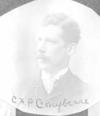
considered exceptional. Charles started all the trees, hedges, and shrubs from seeds and slips obtained from England.
An avid patron of the arts
, sawmill machinery, sporting rifles, tools, seeds, cricket equipment, and surveying devices, but the expenses involved in his immigration plans plunged him into further financial difficulties before he left
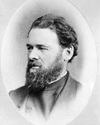
either side of the mission. With meagre equipment, seed grain and garden seeds were sown and agriculture taught, and homes and auxiliary buildings, a school and a church, were constructed. McDougall made
The colonial system . . . (1833) Bliss stated that through the loss of protective markets “the seeds of disunion” had been sown and would eventually explode and “scatter through the world
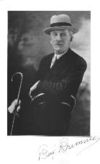
part of the century, Benjamin became a travelling salesman with Carter and Company Limited, which specialized in books and seeds. Named a partner in 1902, he retained the position until his retirement
.
It was a source of pride to Burr that he “never saw the Ritious forsaken or his seed Beging Bread,” and he attributed his success to hard work, temperance, and the Proverbs of Solomon

occasions: in 1815 to examine claims to compensation under the Militia Men Indemnification Act for injuries suffered in the War of 1812, in 1817 to purchase seed grain for parishes in financial straits and to

not defined beyond a statement that it would be “in the vicinity of Morleyville.” Seeds of future difficulties were sown by the fact that the region covered by the treaty did not take in the lands of

.
For Clerke the seeds of personal tragedy had been sown before he left England in 1776, for a spell in the Fleet prison in London as the guarantor of another’s debts had left him with tuberculosis. As
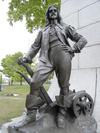
inherited, through his wife, half of Hébert’s estate. Moreover, in the same year (1627) Champlain also granted to Couillard, for personal reasons, “a hundred acres of land to clear and seed,” which bordered
to the “seed” of Abraham. For Crawford, circumcision and baptism were quite distinct: “Circumcision is a cutting off the extreme point of the generating member. Baptism is the immersion of the
bushels of flax seed, and 40 bushels of oats. Such prosperity deserved a mansion house, and Denson built his around 1772
persuasion, were the seeds which bore fruit in 1848 when Nova Scotia became the first overseas colony in the British empire to obtain responsible government
William Douse took up farming, shipbuilding, brewing, and auctioneering, and eventually pursued with some success the buying and selling of seed and produce. In 1833 he was named land agent by the 6th Earl
company needed to purchase a seat on the Winnipeg exchange.
Ewart had other interests, too. In the early years of western settlement, the seed branch of
Acadians planted seed brought in from Connecticut. Foucher’s goal was to supply the Canadian market with domestic production. He demonstrated that the crop could bring untold wealth to his own region and to

products. Gamble also advertised various fine qualities of wheat seed. He exported to England in ships which he either owned outright or in which he held substantial shares. In 1840 he bought a lot at the