

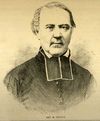
matter of the services he or the curate rendered them at their mission in Rue Champlain. These difficulties with the Irish increased his sensitivity, and the slightest opposition from the archbishop’s
at Montreal and a fief on Lake Champlain called La Moinaudière.
Raimbault was a man of some culture. The inventory of his possessions drawn up
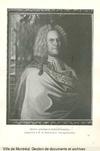
Beauharnois granted Louis-Joseph a large seigneury, called Rocbert, on Lake Champlain. It was reunited to the king’s domain in 1741, but was returned to him on 9 July 1742. Michel also
second in command, an offer that Lévis was glad to accept. No sooner had the expedition left Montreal, however, than it was recalled and sent post-haste to Lake Champlain. Word had been received that Major
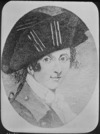
lieutenant-colonel of the 34th Foot. He took part in the operations in 1776 that drove the Americans from Quebec and up Lake Champlain to Ticonderoga (N.Y.). When Major-General John
in 1808 was working as a clerk to the military secretary at Halifax. During the War of 1812 he was in Montreal. On 15 May 1817, at Champlain, N.Y., he married Louisa, younger daughter of Daniel
him many Mohawk warriors, among them Tekawiroñte. Tekawiroñte apparently participated in the defence of Canada against the invading Americans in that summer’s campaign around Lake Champlain and the
. The Great Mohawk fought under his orders. At the end of August he went to Lake Champlain and met some 60 Mohawks who were on their way to attack the colony. The Great Mohawk persuaded them to go back
Hazeur* de L’Orme, parish priest of Champlain, before the provost court of Trois-Rivières. Both of them laid claim to the tithes paid by the inhabitants of Arbre-à-la-Croix and the Prairies Marsolet
interested habitants. In 1733, however, he was diverted to search for ship timber in the Lake Champlain region. This trip was significant. He advised the minister of Marine, Maurepas, that no trees could be
.
Honorius Provost
ASQ, Documents Faribault, 23, 25. Champlain, Œuvres (Laverdière), II, 1283–87. JR (Thwaites
the Patriot force which left Detroit on the Champlain to invade Upper Canada at Windsor. He claimed at his subsequent trial that the steamer was to have sailed to Black River, Mich., where he
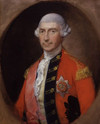
be employed in invading Canada by the Lake Champlain line. On 21 June he arrived at the head of Lake George with a large part of his army. Further advance would depend on water transport, and on
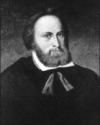
Father Biard with him, and should destroy all the other French settlements to the north – to 46º according to Champlain (Works (Biggar), IV, 20) or 46 1/2º, according to Biard (JR

the Massachusetts committee of safety that an attack be launched against Fort Ticonderoga (N.Y.) on Lake Champlain, arguing that “the place could not hold out an hour against a vigorous onset
.
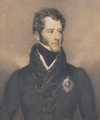
He also proved to be an astute negotiator, and left his name to the Rush–Bagot agreement concerning the reduction of naval forces on the Great Lakes and Lake Champlain. Worked out during 1816 with the
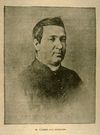
-Saint-Rosaire. The first public pilgrimage took place on 7 May 1883. Year by year the number of pilgrims slowly increased; they came from Trois-Rivières and Champlain and, after a dock was built
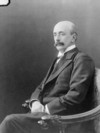
to mark the tercentenary of Samuel de Champlain*’s founding of Quebec. Fresh from his battlefield victory, he decided to transform the
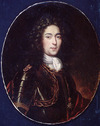
Champlain. Prior to his appointment as governor-general of New France on 23 March 1665, he was governor of Thionville in Lorraine. He arrived at Quebec with the intendant, Jean
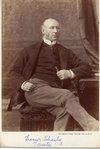
Killaly’s son Jack, he secured a job as an assistant engineer for the contractor who was building the eastern division of the Ogdensburg and Lake Champlain Railroad. “I was very glad that you have at length