

-de-la-Nouvelle-Beauce (Sainte-Marie), Saint-Denis on the Richelieu, Terrebonne, and Berthier, as well as at the boarding-school of the mother house in Montreal. She was back in Lower Town when she was
Berthier’s battalion. In 1691 he received from Frontenac a commission as ensign in the troops in Canada, which the king ratified on 1 March 1693. He was promoted lieutenant on 15
succession: Saint-Joachim in Châteauguay, 1822–25; Saint-Patrice in Rivière-du-Loup, 1825–30; Saint-Georges in Saint-Georges de Cacouna, 1830–32; L’Assomption in Berthier-sur-Mer, 1832–34; and Saint-François
Berthier began to establish themselves on his unoccupied land. But he only occasionally spent time there and continued to live at Trois-Rivières, where all his children were baptized. On 5 March 1721
he and his family settled first at L’Assomption, and later at Berthier-en-Haut (Berthierville). Robinson may have begun articling to become a lawyer at this time. He seems to have remained in contact
September he took part in Tracy’s expedition against the Mohawk villages, and led the rearguard with Capt. Berthier
flowing in July, and the enterprise could not be economic. During the next two seasons Chévigny turned to the southwest, where in the seigneuries of Berthier and Dautré he manufactured pitch and resin on
.
Settled near the St Lawrence in the former presbytery of the curé of Berthier-en-Bas (Berthier-sur-Mer), Angers could have lived out his life on the bench, dividing his leisure between reading and his
, Sainte-Marie-de-la-Nouvelle-Beauce (Sainte-Marie), Berthier (Berthier-sur-Mer), Sainte-Anne-de-la-Pocatière (La Pocatière), and Baie-Saint-Paul, for example, as well as from the town of Quebec and its
BLAIS (Blay), MICHEL (Michel-Toussaint), militia captain and co-seigneur; b. c. 1711, probably at Berthier-en-Bas
.
Denis was also active in municipal politics for nearly 30 years, including 25 as mayor of Saint-Norbert and some 10 (from 1889) as warden of the county of Berthier. His political allegiance to the
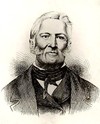
Berthier-en-Haut (Berthierville), Que., son of Barthélemy Faribault* and Catherine-Antoine Véronneau; d. 20 Aug. 1860 in Faribault
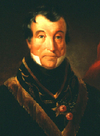
Trois-Rivières militia. On 19 May 1812 he was promoted major. Transferred on 18 March 1813 to the Berthier battalion of militia, he became its lieutenant-colonel on 25 September
mother country with pine and oak boards and planking, and to obtain more raw materials he worked oak stands in the seigneuries of Berthier-en-Haut and Dautré. On 20 Oct. 1730 Lepage de Sainte-Claire
his second wife, Sophie Héneau, of Berthier on 20 Aug. 1806; they had one child, who died young. He established himself at Rivière-du-Loup, where he made a fortune in the grain and hay
Berthier-en-Bas (Montmagny), of which he was the founding parish priest. His name appears among the 13 signers of an important report on the tithe, presented to the court by the parish priests of Canada and
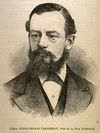
the counties of Champlain, Joliette, Berthier, and L’Assomption with Joseph-Édouard Cauchon*, the president, to get subsidies; the
, Que.; m. secondly 30 Oct. 1797 in Berthier-en-Haut (Berthierville), Lower Canada, Anna Louisa Vial de Sainbel, widow of Charles Vial de Sainbel, and they had at least one child, Louisa Nash; d
Plessis appointed him assistant priest at Berthier-en-Haut (Berthierville, Que.) and missionary at Drummondville. In 1825 he was attending only to the latter post. He ministered to the faithful in the
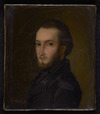
his doctor’s advice to stay in the country for a period and moved with his family to Berthier-en-Haut (Berthierville). In 1830 young Guillaume joined his brother Charles-François