

loyalists who immigrated to Prince Edward Island in 1785. At an early age James was apprenticed to his uncle, James D. Bagnall*, who was king’s
immigrated to Prince Edward Island in the 1840s. He settled at Alberton in western Prince County, where he established himself as a farmer, merchant, and shipbuilder. In 1849 he married Jane Bowness; she bore
accompanied by Lord himself. An important figure in the Charlottetown business world, he was a shareholder and director for many years of the Bank of Prince Edward Island, a founder and director of the Union
Burnard, a successful English merchant and shipbuilder, established a shipbuilding settlement, New Bideford (later Bideford), on the eastern end of Lot 12, Prince Edward Island, in 1818. A year later
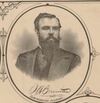
. there 29 Jan. 1916.
Joseph Fletcher Brennan, a writer and publisher who may have been a native of Prince Edward Island, sent both

.
Donald A. MacKinnon was of Scots stock: his father had been born in Scotland and his mother was a descendant of settlers who had come to Prince Edward Island in 1803 with the Earl of Selkirk
.
Following a public-school education in Scotland, Angus McMillan immigrated to Prince Edward Island with his parents and siblings in 1834. The family settled in Wheatley River and engaged in farming. Scant
to Prince Edward Island. He immediately began work as a land surveyor, and a few years later became a merchant in Charlottetown. By the end of the 1820s he was one of the leading importers on the
Jan. 1886 at Charlottetown, P.E.I.
John LePage, whose father had immigrated to Prince Edward Island from the Channel Islands about 1807, was
, descriptive of Prince Edward Island (1822) and Travels in Prince Edward Island, . . . in the years 1820–21 (1823). Brought up with a strict religious training and just enough common
. there 2 March 1932.
As is common with women born in rural Prince Edward Island in the 19th century, few documents survive to shed light
Bay, P.E.I.
Sylvain-Éphrem Perrey was born some 50 years after the deportation of the Acadians of Île Saint-Jean (Prince Edward Island) in 1758
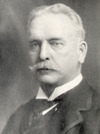
member of Prince Edward Island’s first responsible, and reform, government. James had been born in Garryhinch, in the town of Portarlington (Republic of Ireland), and had come to the Island in 1834 to
parents and sister to Prince Edward Island where they settled at St Andrew Point (Wightmans Point) in Lot 59, Kings County. They leased 179 acres of land from Sir James Montgomery, a major land
).
Nothing is known of William Rankin before his appearance in Prince Edward Island in the early 1830s. He was likely a kinsman of Coun Douly Rankin
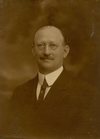
Department of Education officials. He none the less left the field of education in 1903 for a more remunerative position as manager for Prince Edward Island of the Mutual Life Assurance Company of Canada. He
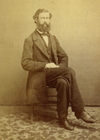
of considerable distinction, if not exceptional wealth. His father had migrated from England to Prince Edward Island in 1828 to manage the family’s extensive landholdings and, failing to garner enough
Charlottetown and then studied law under Attorney General Robert Hodgson*. Admitted as an attorney of the Supreme Court of Prince Edward Island in
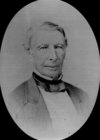
offices, honours, and pensions more than once betrayed a lack of taste. Nonetheless, he was undeniably a man of distinction in the history of Prince Edward Island: he was the first native chief justice, the
. That he is remembered today as a photographer is the result of a gift of some 225 negatives made to Prince Edward Island by Mitchell’s grandson, a resident of Ottawa, in 1972. A number of the negatives