

; d. 15 April 1873 at New Glasgow, P.E.I.
Alexander Laird immigrated to Prince Edward Island in 1819 as a member of a colonization
Fraser*, from a group of Scottish Presbyterians who had established “flourishing settlements” in the southeast corner of Prince Edward Island. These predominantly Gaelic-speaking communities were
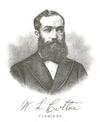
paper and in 1877 he turned it into a daily, the first in Prince Edward Island. The move was a bold one, but a spirit of optimism was abroad in Charlottetown, and large homes and new public buildings were
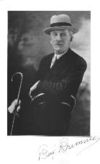
members of Prince Edward Island’s House of Assembly (Henry and George Beer).
Some personal details can be gleaned from Bremner’s histories. His
Gordon, who had been serving in Prince Edward Island since 1806. In 1808 Keir formally offered himself for the Secession congregation in Halifax, and in September he sailed with his bride for Nova Scotia
him in one of the major issues of post-confederation Prince Edward Island politics, that of demanding federal compliance with the promise made in 1873 to provide continuous communication with the
.
Cornelius Howatt, a tenant farmer from Tryon, was first elected to the Prince Edward Island House of Assembly in 1859, and he served continuously until his defeat at the polls in 1876. During three of these
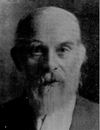
OULTON, ROBERT TRENHOLM, farmer and co-founder of the silver fox industry in Prince Edward Island; b. c. 1835 in Mount
. She was a founder and first president of the Ladies’ Hospital Aid Society, established shortly after the incorporation of the Prince Edward Island Hospital in 1884. The society collected voluntary
*, an established newspaperman. At the age of 26 he began his own newspaper, the Colonial Herald, and Prince Edward Island Advertiser, with the assistance of John S. Bremnar; the first issue
1873. Pioneer (Summerside), 22, 29 Sept. 1880; 17 Aug., 5 Oct. 1881; 6 Sept. 1882; 29 June 1935. Prince Edward Island Agriculturist
Lewellin Lewellin had farmed for 16 years in England before he immigrated to Prince Edward Island in 1824 from Wiltshire. He was a friend of John
Proud, irascible, and talented, Ambrose Lane (d. 1853) came to Prince Edward Island as commander of a British military detachment
.
Arthur Peters was born into what passed for an aristocracy in 19th-century Prince Edward Island. As his obituary in the Charlottetown Guardian would note, he “enjoyed the advantage of aristocratic
in Charlottetown, he became private secretary to the lieutenant governor of Prince Edward Island, Charles Douglass Smith*. The next
northwestern Prince Edward Island with his father in 1835. He took up farming, and as a comparatively educated man he often acted as an intermediary between his French-speaking Acadian neighbours and the land
, Peter McIntyre papers; James Morrison papers. NA, RG 31, C1, 1881, 1891, Prince Edward Island. PARO, Acc. 3271, RBMB for All Saints’ Roman Catholic Church (Cardigan) and St James Roman Catholic
in the Royal Navy before spending seven years studying cabinet-making and drafting in the area around London. He immigrated alone to Prince Edward Island in 1809 and was reunited with his wife and four
missionary on St John’s (Prince Edward) Island; his mother’s sister was the widow of John MacDonald* of Glenaladale, who in 1772
. 1750 Elizabeth —; m. secondly 6 July 1775 Ann Berry in London; d. July or August 1794, probably in St John’s (Prince Edward) Island