

Antigonish, ed. R. A. MacLean (2v., [Antigonish], 1976), 2: 64. Casket (Antigonish), 8 Dec. 1887: 2. C. S. MacDonald, “Early Highland emigration to Nova Scotia and Prince Edward
in 1773, and that of another group of Scots, who had initially established themselves on St John’s (Prince Edward) Island, in 1774, added to the stability of the community
1756 Le Guerne had managed to get some 500 Acadians across to Île Saint-Jean (Prince Edward Island) [see Gabriel
year book of Nova Scotia, New Brunswick, and Prince Edward Island . . . (Saint John, N.B.), 1876. The Baptist year book of the Maritime provinces of Canada . . . (Saint
diocese of Ontario, in 1868 and priest in 1872, he was licensed curate to All Saints Church, Kingston, in 1868, and later to various parishes in Lanark, Prince Edward, and Northumberland counties. Having
in land in North America. He acquired a lot on St John’s (Prince Edward) Island and in 1773 was among several petitioners for 250,000 acres in upper New York
Tupper*. Trudeau was entrusted with the deputy ministership. The new department was responsible for the construction, maintenance, and operation of the Intercolonial and Prince Edward Island railways
at peace with English families. He shipped most of Cape Breton’s population to France in 1745 and planned to repatriate the settlers of Île Saint-Jean (Prince Edward Island), who also came under the
the outside staff. When Prince Edward Island joined confederation in 1873, Smith personally inspected all the navigational aids there and devised an upgrading program. Based on his recommendations
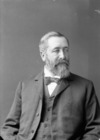
Fisher*, seven more experimental stations were set up, in locations ranging from northern Alberta to Prince Edward Island. Travelling in all seasons, by train, wagon, sleigh, and horse, Saunders
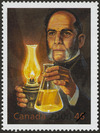
map of Nova Scotia and also the report of his survey of Prince Edward Island. The following year one of his two major works, New Brunswick, with notes for emigrants, appeared. Not only
.
McLeod was the son of a ship’s captain in Prince Edward Island, and his thoughts were never far from sailing and the “mid-Atlantic’s pure breezes.” Educated at local schools, he read law for three years
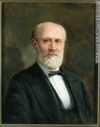
MacDonald* of Glenaladale, a Roman Catholic, was the last of a line of Scottish lairds bearing the title Glenaladale. In 1772 he transported over 200 Highlanders to St John’s (Prince Edward) Island
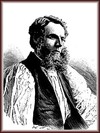
farmed at East Zorra, near Woodstock.
While at East Zorra, Fauquier came under the eye of Edward Huntingford, whose father had built a church for the
” under Étienne Verrier*. In 1734 at Verrier’s request he was posted to Île Saint-Jean (Prince Edward Island) to serve in an engineering capacity
fishing trade as a ship captain, particularly along the northern coasts of the island. He may have been born in St John’s and was certainly living there in 1758, when he joined with other merchants in
commanding the Nouveau Commerçant in the coasting trade between Louisbourg and Île Saint-Jean (Prince Edward Island). Working with his father until the latter’s death in 1733 and then on his own, he
Lawrence*], Gueguen went to Île Saint-Jean (Prince Edward Island) to escape the British. After a brief stay he boarded a schooner for Quebec. He reportedly entered the Petit Séminaire and studied there
cruised with some of them to St John’s (Prince Edward) Island, the St Lawrence, and Quebec, while the rest patrolled the fishing grounds. Because large warships ran the risk of being wrecked if
superior of the missions of Nova Scotia, Cape Breton, Îles de la Madeleine, St John’s (Prince Edward) Island, and part of New Brunswick.
Jones