

Collège de Valognes.
During the French revolution Le Courtois refused to take the oath of allegiance to the Civil Constitution of the Clergy imposed
Séminaire des Missions Étrangères in Paris requesting the aid of French clergy with the Acadian missions.
Upon his arrival Le Roux was sent to
.
Eugène Lefebvre was not a flamboyant figure. He is perhaps best seen as typical of the Roman Catholic clergy who led or followed the French Canadian migration into northeastern Ontario towards the end of
Constitution of the Clergy – termed by him an “iniquitous law” – he refused to do so and with another Spiritan priest, Jean-Baptiste Allain
system of clergy reserves in the province. Although his concern over tariff changes led him to be active as well in the British American League [see George
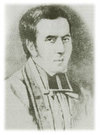
-century French Canadian clergy as a whole. Hence there is nothing surprising in the fact that he felt little sympathy for his “materialistic and mechanistic century.” As a whole his teaching was based on a
evangelical churches in the Maritimes led Payzant and Manning in 1797 to urge the New Light clergy of Nova Scotia to form an association, its first full meeting taking place the following year. “The necessity
.
L’Émancipation lodge had to suspend its activities on 13 June 1910, following attacks by the clergy, some newspapers, and members of the Association Catholique de la Jeunesse Canadienne-Française
. The large number of priests who attended his funeral is evidence of the esteem in which he was held by the clergy of his time

had attained a position of seniority among the clergy of Upper and Lower Canada, and in the last years of his father’s episcopate and for the entire period of Bishop Charles James
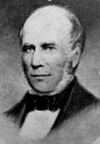
Canada, the clergy reserves and rectory endowments, and university control.
John Mowat’s most notable contribution was in education. In 1829
residence. The diocese of Charlottetown was still a missionary diocese in 1842, with 13 clergy struggling to serve 22,500 Roman Catholics scattered over 33
Willis, and he was active in the movement against the clergy reserves. From June 1851 to January 1854 he was in London, Canada West, after which he was transferred to Hamilton. Here he
wealthy aristocracy of Protestant clergy and members of the legal profession; a bourgeoisie of property owners, primarily British; and a proletariat of craftsmen, day labourers, servants, and squatters, of
president of the Bible Society and as a commissioner of the clergy reserve fund. When he died in 1853, he was eulogized in the local newspaper as a man “whose urbanity and warmth of heart endeared him to his
abolition of the clergy reserves, separate schools, and seigneurial tenure in Lower Canada, and to work for reciprocity with the United States and a union of the British North American provinces. He was
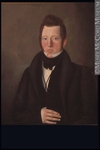
as inspector of clergy reserves for the Western District. The work was uncongenial and arduous, but it did pay 15s. per day for part of the next two years. He continued to reside in villages
got along well with the Roman Catholic clergy and members of the religious orders. Since no Anglican church had been erected he conducted services in the chapel of the Hôtel-Dieu. He maintained contact
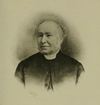
steps towards the organization of the Upper Canada Clergy Society, and Osler’s experience marked him as a likely prospect for a pioneer mission in that province. His first thought had been of a
open for the clergy and for all church purposes free of charge.” He was one of the men instrumental in persuading Bishop Alexander