

Reformers of Upper Canada, the government of the United States, and the “liberal” clergy. The participants decided the festival should be celebrated annually. In 1836, however, the Reformers were divided. The
. John Murray, The history of the Presbyterian Church in Cape Breton (Truro, N.S., 1921). L. M. Toward, “The influence of Scottish clergy on early education in Cape Breton,” N.S
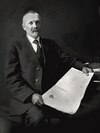
security to a generation of builders who were valued by the clergy and favoured by the project managers. Ouellet built or remodelled nearly 250 churches, mainly between 1876 and 1905
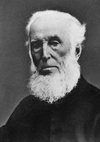
England’s rights to the clergy reserves in Upper Canada, questions on which his views resembled closely those of Strachan.
While at Cobourg, Bethune also
, issued an open invitation to the French refugee clergy to settle in Canada. Castanet was among those who accepted. Approximately 45 French priests in exile left England for Canada between 1791 and 1802
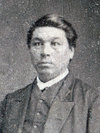
Settee*, was one of the “pure” Indian clergy in Rupert’s Land. The three were close, aware of their subordinate status as native clergy and the penury that it brought. Paid less than their European
the conquest Father Louis, like others of his order, turned to the parish ministry. He was prompted by his need for a livelihood and also by goodwill towards the secular clergy, whose numbers diminished
many of their fellow priests who refused to take the oath to the Civil Constitution of the Clergy, which the Constituent Assembly required from 1 Oct. 1791. By good luck they managed to escape
Briand, who had appealed to the clergy and the Canadian people to remain loyal.
On 15 Feb. 1776 the second Continental Congress in
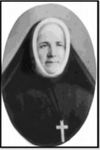
, and it was at the academy that Sister Marie-Angèle and the other novices were instructed in the rudiments of pedagogy by the clergy who supervised the course of studies. They also received training in
Religious Liberty,” demanded the removal of clergymen from political positions, the institution of equal rights for clergy of all denominations, the modification of the King’s College charter, and the
.
Jennings took an active part in promoting the cause of education in Upper Canada. He was prominent in the agitation for the secularization of the clergy reserves, contributing many articles to the press on
received when he presented himself at the seminary of Quebec on 28 Aug. 1726. For some years the Canadian-born clergy had been complaining, not without reason, of being systematically kept out of
Mills]. Although the Catholic clergy generally considered the new school system a threat, the local parish priest, Bernard-Claude
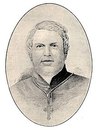
than at the direction of the clergy.
This spiritual suasion, exercised, however, without the public boycotts and excommunications characteristic of
November 1844, Father John bitterly accused the bishop and several of his clergy, including Father Francis, of fomenting strife in his pastoral charge to abet his removal
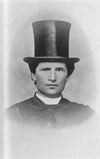
fellow clergy with disciplinary or alcohol-related problems. He also made his mark as a “brick and mortar priest,” having been responsible for the building of the rectory in Caledon in 1868 and the
.
Murray W. Nicolson
Arch. of the Roman Catholic Archdiocese of Toronto, Clergy files, Nasr to O’Connor, 4 July 1902; OC
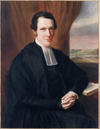
.
For 32 years Nicolls successfully directed Bishop’s as a liberal arts college and Anglican divinity school. He saw Bishop’s as an institution that would provide clergy for the Church of England in
duties there for some years. It is presumed that after the outbreak of the French revolution he refused to swear allegiance to the Civil Constitution of the Clergy, for in 1799 he was in England under the