

.
Joseph Michaud’s parents moved from Kamouraska, Lower Canada, to Saint-Basile around 1835. When Firmin relocated in Rivière-à-la-Truite, near Edmundston, Joseph, the youngest of 24 children, went to

pipes of tobacco and play the silent spectator.”
After this epic journey Miertsching never returned to Canada. Following his marriage in Saxony, he
were admitted on an equal basis with men, and “in this respect,” according to scholar George Edward Levy, “the Baptist Seminary at Fredericton pioneered for all Canada.” Admission was open to every
series of circuit appointments, occasionally interrupted by ill health and by further teaching positions, in many parts of what is now Atlantic Canada: Burton, N.B. (1854–56); Pownal, P.E.I. (1856–57
.
Before coming to Canada in 1687 as a captain in the colonial regular troops, Monic had held a commission in the regular armies, having served in Flanders, Germany, and Lorraine as a subaltern in the
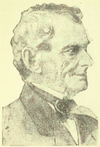
.
George Monro came to Niagara, Upper Canada, as a child with his parents. He left for York (Toronto) in 1814 with his elder brother John and together they entered the retail grocery business. They separated
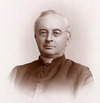
the dairy industry; b. 4 Feb. 1842 in Saint-Jean-Chrysostome, Lower Canada, son of Joseph Montminy, a tinsmith, and Marguerite Lambert; d. 17 Dec. 1899 at Quebec, and was
specimens, beginning about 1888, with John Macoun*, assistant director and naturalist of the Geological Survey of Canada. Since 1886 Macoun had been
lived with an English maid and a black slave. With a fortune of 300,000 livres gathered in trade at Quebec, he intended to continue trading to Canada but these hopes were dashed by the British
MOWAT, JOHN BOWER, Presbyterian minister and college professor; b. 8 June 1825 in Kingston, Upper Canada, son of John

officer; b. 15 May 1859 in Dee Side, Bonaventure County, Lower Canada, third son of John L. Mowat and Elizabeth Moores; m. 16 Oct. 1888 Bertha C. Herrett in Petitcodiac, N.B
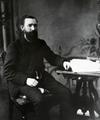
activities helped lay the foundations of urban development throughout western Canada in the late 19th and early 20th centuries. Collectively and anonymously they provided the initiative and energy which helped
[Stayeghtha] he joined the British and went to the vicinity of Fort Malden (Amherstburg), Upper Canada, where other Indians were gathered. He fought at Maguaga (Wyandotte), near his home, in August
PANS, MG 1, 705. Halifax Herald, 9 Nov. 1915. Academy of Medicine, The map of the history of medicine of Canada; commemorating the diamond jubilee of the Academy of Medicine
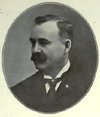
Perth, Upper Canada, son of John MacLaren and Helen (Ellen) Buchanan Ferguson; m. 29 April 1885 Janet McLeod in Woodstock, Ont., and they had a son; d. 19 April 1917 in Toronto
. Alvord and C. E. Carter (Springfield, Ill., 1921), 83. The Windsor border region, Canada’s southernmost frontier . . . , ed. E. J. Lajeunesse (Toronto
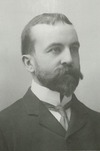
, university teacher and author; b. 21 June 1862 in Berlin (Kitchener), Upper Canada, eldest son of the Reverend John McMechan and Mary Jean McKellar; m. 1889 Edith May Cowan of Gananoque, Ont
pastures abroad.
Selkirk’s original scheme to locate Highland colonists in Upper Canada had foundered on opposition from the British government, and at the
.
Robert McBeath came to Canada with his parents as a member of the fourth party of colonists brought out by Lord Selkirk [Douglas*] in 1815
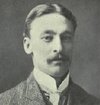
.
Throughout his legal career McCarthy was active in outdoor sports, the Anglican church, and his community. He was a governor of Trinity College School and Western Canada College in Calgary, a chairman of the
, Scotland, third son of John McDonald and Amelia Cameron; m. 5 March 1811 Mary Stone, and they had three sons and two daughters; d. 7 Oct. 1826 in Gananoque, Upper Canada
McGILLIVRAY, DONALD (Dan), engineer and contractor; b. 1857 in Strathroy, Upper Canada, son of
in Toronto; they had no children; d. there 8 Dec. 1912.
Agnes McIntyre, who arrived in Canada in 1882, may have lived briefly in
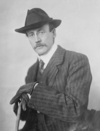
Township, Upper Canada, third child of William McKenzie and Catherine Shiells; m. 18 Aug. 1907 Ethel O’Neil (d. 1952) in Dublin; they had no children; d. 28 April 1938 in
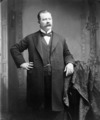
officer, and politician; b. 1 Jan. 1842 in Glen Donald, Charlottenburgh Township, Upper Canada, third of the seven children of Roderick McLennan and Hannah MacDonald; d. unmarried 8
, who had been an officer in the British army, came to Lower Canada in 1821 bearing a testimonial from the bishop of Kilmore. In September of that year Bishop Jean-Jacques
NWC and the HBC in 1821, McMillan joined the reorganized HBC as a chief trader and was stationed in the Columbia district. After a furlough in 1823–24 spent in the Canadas, he was assigned to
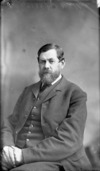
reputedly worked for 18 months in an ironworks in Lanarkshire. In 1843, with his brother, Robert, he immigrated to Huron County, Upper Canada, where many of their friends and family had settled. The
. 1906 in Winnipeg.
After serving in the British army, Percy Neale came to Canada, probably in 1873. In that year he joined the newly formed North
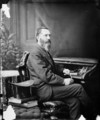
De Cosmos and his allies, and, along with his former partner Barnard, he was a delegate that fall to the league’s Yale Convention, which called for union with Canada and responsible
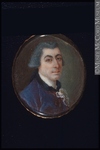
political struggles of Lower Canada. The eldest son, George*, became a fur trader
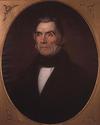
Nelson’s family background or early life to suggest that he would become an opponent of British misrule in Canada and a champion of the civil rights of French Canadians. His mother was the daughter of a
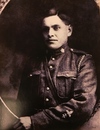
. 1918. D. C. Scott, “The Canadian Indians and the Great World War,” in Canada in the Great World War; an authentic account of the military history of Canada from the earliest days to the
.).
Forrest Oakes was an English merchant who came to Canada during the period of military occupation. By 1761 he was a partner in the firm of MacKenzie and Oakes, and in September he hired indentured employees
endowing missionary work among the Indians and for the establishment of the Church of England in Canada. In mentioning the Jesuit estates he anticipated an issue of major political importance in the next
1764 at the Credit River (Ont.); d. 30 Sept. 1828 at the Credit Mission (Mississauga), Upper Canada.
As a young man Wageezhegome
Johnson, to attack Canada during the War of the Austrian Succession. He also supplied Johnson with intelligence such as the news he brought in 1747 that the Hurons had requested the Six Nations
), 16 Feb. 1884. Evening Express and Commercial Record (Halifax), 1 March 1865. Can., Royal commission on the relations of labour and capital in Canada, Report (5v
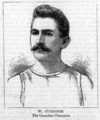
burials, 4 May 1862 (mfm. at AO). Canada’s Sports Hall of Fame (Toronto), W. J. O’Connor file. York County Surrogate Court (Toronto), no.9408 (mfm. at AO). Globe, 26 Nov. 1888, 7
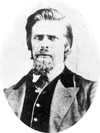
back to Minnesota.
No proceedings were taken against O’Donoghue in the United States for his filibustering expedition against Manitoba, but in Canada
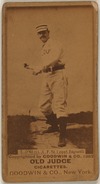
. 25 May 1858 in Woodstock, Upper Canada, son of James O’Neill, an innkeeper, and Mary Jeffrey; d. unmarried 31 Dec. 1915 in Montreal and was buried 3 Jan. 1916 in Woodstock
mobility. As a millwright, he met one of the most urgent needs of the colony. He probably came to Canada about 1670 as an indentured worker. In October 1672 he became the apprentice of Jean
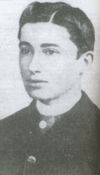
he would recover, decided to send him back to Canada. He returned in September 1895 and was assigned to the monastery at Sainte-Anne-de-Beaupré, where he was able to carry out simple duties, preaching
Panet*, a notary, and Marie-Louise Barolet; d. 23 May 1834 in L’Islet, Lower Canada, and was buried under the step of the high altar in the parish church
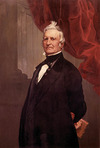
central role played by the Papineau, Viger, Dessaulles, Cherrier, Bruneau, and other allied families in the society and politics of Lower Canada, that Louis-Hippolyte
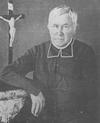
*, and Denis-Benjamin Viger*, was conducting an inquiry into the state of education in Lower Canada. Summoned to give testimony before the
bateau the Saint-Pierre, which carried the peas, wheat, flour, and wood of Canada to Louisbourg where they were exchanged for return cargoes of West Indian rum, molasses, sugar, and fruits. But
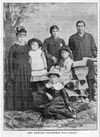
Winnipeg district of the Methodist Church of Canada to recommend in 1889 that he be accepted on probation for the ministry. The first Cree from a northern Manitoba community to be so honoured, Paupanekis
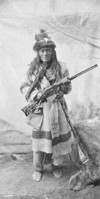
Qu’Appelle, Payipwat was not informed of Canada’s intent to send a commission that would speak to the Cree and Saulteaux people there. He learned of it only after an agreement, Treaty No.4, had been negotiated
Nov. 1819. Robert Cooney, A compendious history of the northern part of the province of New Brunswick and of the district of Gaspé, in Lower Canada (Halifax, 1832; repub. Chatham