
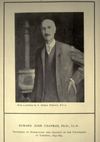
. . . (1843) and A brief description of the characters of minerals . . . (1844). In 1849 he obtained a professorship of mineralogy at University College, London
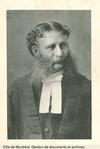
study and practice of law, he studied medicine at Victoria College in Cobourg, Upper Canada, the Albany Medical College in New York State, and McGill College in Montreal; McGill, from which he graduated
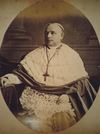
primary school in the primatial town of Armagh, then, at 17, went to Rome to complete his studies at the College of the Propaganda. On 6 June 1857 he was ordained priest at the church of St
-Madeleine, Sillery, and Quebec. During the ten years following this period he was employed at the Tadoussac mission, except for one year (1683) when he taught the lower grades at the Collège at Quebec

noviciate of the Society of Jesus at Rouen on 1 Oct. 1621. He was a teacher of junior classes at the Collège in Rouen (1623–27), studied theology at the Collège in Clermont (1627–30), taught
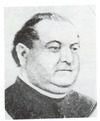
, but left there in 1841 to attend the newly founded St Mary’s College in Halifax. The following year he returned home and during 1842–43 received private academic instruction from the parish priest
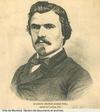
the names Gélinas, Gérin, Lacourse, and Bellemare.
In his 13th year, in October 1852, Évariste Gélinas entered the college and seminary of
denominationalized during his long career that both of Hartley’s sons who became ministers were college-educated and, at his death, a daughter was in college preparing for foreign missionary service. He himself had
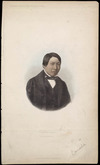
.
In November, at the suggestion of the Society for the Propagation of the Gospel and by direction of the Admiralty, he was placed in St Augustine’s College, a college for the education of

missions; 14 years were to elapse between the taking of this vow and Gabriel’s arrival in Canada. In the interval he was a teacher at the Collège in Moulins (1632-35), studied theology at Bourges (1635
, where he remained for seven years. Having embarked on a course of studies at King’s College, Fredericton, he completed an honours degree in January 1852 and an ma two
. 26 Nov. 1774 in New York.
John Ogilvie enrolled in Yale College, New Haven, Connecticut, in 1745 and as an undergraduate became a candidate
1819; his thesis, entitled “De amaurosi,” dealt with the loss of sight without visible cause. He had meanwhile joined the Royal College of Surgeons of London in 1817 and the Royal Medical Society of
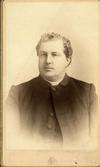
three children, enrolled at St Michael’s College in Toronto in September 1852. A member of its founding class, he completed his classical and philosophical courses before entering the noviciate of
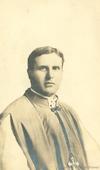
elementary schooling, Henry attended the College of St Joseph in Memramcook. He graduated with a ba in 1897, taking the first prize in five of the six courses in the final

July 1781 at Notre-Dame-de-l’Assomption (Windsor, Ont.).
From 1721 to 1727 Pierre-Philippe Potier attended the Jesuit college in Tournai (Belgium
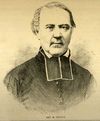
, Abbé Jean Raimbault, to send him in 1830 to assist Abbé Charles-François Painchaud*, the founder of the college of Sainte-Anne-de-la
was very young, started school at the age of eight, and graduated from the Fredericton Collegiate School and entered King’s College (later the University of New Brunswick) in 1849. He received his
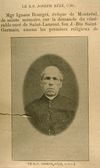
Joseph-Pierre Rézé entered the Collège de Château-Gontier in France. Choosing the priesthood as his vocation, he did the final two years of the classical program (Philosophy) and studied theology at the
into business. However, on the advice of two clergymen he studied for holy orders at Bishop’s College, Lennoxville, graduating in arts in 1876 (ma 1879). Having