

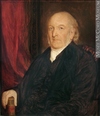
Montreal.
Alexander Skakel entered King’s College, Aberdeen, in 1789 and graduated ma five years later. He is said to have
royalty, was educated at Perth Academy. In 1833 he earned the licentiate of the Royal College of Surgeons of Edinburgh. He immigrated to British North America in 1834, but the first evidence of his presence
School before entering King’s College, Windsor, in September 1828.
At King’s, Welsford is usually portrayed as a lover of the classics wandering the
Morris Wilkins was educated in Windsor at King’s Collegiate School and at King’s College, graduating ba in 1819. He was noted for his quick temper, and once attacked his
College; in 1836 he conducted drawing classes at the Home District Grammar School. At the same time he sketched and painted the townscape, and in 1835–36 advertised for subscribers to his series of Four
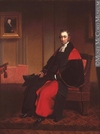
suitable buildings and for the teaching of disciplines other than medicine, the only faculty with which the college had opened in 1829. (Medicine at that time occupied quarters in the lower town.) Bethune’s
the family farm in Perth County, Upper Canada. At Upper Canada College in Toronto in 1866–67, he was head boy for a time. He attended the University of Toronto, where he received a
Burnside and an endowment of £10,000 to the Royal Institution for the Advancement of Learning for the establishment of a university, one college of which was to bear his name. Provisos were, first, that Mrs
Lesieur-Duchêne (Duchaîne) family that towards the end of the 18th century had inherited part of Grosbois seigneury near Trois-Rivières. He received a classical education at the Collège Saint-Raphaël in
southwestern Ontario community where his Scottish father served as a Presbyterian minister. After attending St Marys Collegiate Institute he studied at Toronto’s University College, and in 1883 he completed
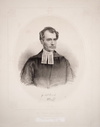
studied theology under Bishop Charles James Stewart*. In 1830 he enrolled at St John’s College, Cambridge, from which he received his
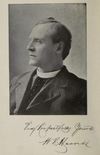
Christian Schools, and from 1860 to 1867 he took his classical studies at St Michael’s College. Favoured by his bishop, John Joseph
.
Educated at Winnipeg’s St John’s College (the Anglican college affiliated with the University of Manitoba), in 1884 Machray received his ba with first-class honours. He
Upper Canada College in Toronto, where he became head boy in 1861. The next year he entered the University of Toronto on a double scholarship in classics and mathematics; he consistently stood first or
Brothers’ college in Dublin. He took up his first teaching position at St Kevin’s, Dublin, where he remained for 11 years. Subsequently he served as assistant principal of Our Lady’s Mount, Cork
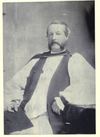
), and continuing at University College School, London. He entered Christ’s College, Cambridge, in 1855, received his ba in mathematics four years later, and proceeded
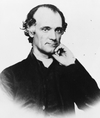
growth of public education and closed in 1882) and responded to a call to become superintendent of Haverford, a Quaker college near Philadelphia. At this time the Society of Friends was experiencing a
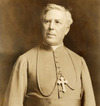
.
Little is known about Gustave Blanche’s childhood and youth. From 1858 to 1866 he attended the Collège Saint-Sauveur in Redon, run by the Eudists; from 1868 to 1870 he studied law and worked as a notary’s
MacDonald* in Rustico. When in January 1855 Bishop MacDonald founded a new “diocesan Seminary,” St Dunstan’s College in Charlottetown, he named Angus McDonald rector, although the latter had not yet
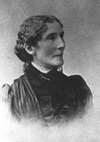
1857 to return home but her retirement from her profession lasted only four years. In the autumn of 1861 she became the first principal of the Wesleyan Female College in Hamilton. During her seven years