

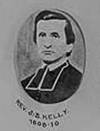
older clergy, appreciated the importance of education, but his efforts to resuscitate a college established in the parish by Cherrier in 1805 were ultimately unsuccessful in the face of competition from
Morris* in St John’s before returning to Ireland. Robert was almost certainly educated at St John’s College, Waterford, before moving in 1856 to Newfoundland, where he worked as a
.186–97. PRO, Adm 1/2655, “Description of Lewisburg in the Island of Cape Breton, 1741.” Correspondence of William Shirley (Lincoln), I, 289. Harvard College records . . . (3v
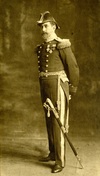
.
Charles was just a boy when his mother was killed in a sleighing accident in 1860. Six years later, at the age of 11, he followed in his father’s footsteps and went to Upper Canada College in Toronto
Fredericton, and Acadia College in Wolfville, N.S. In 1833 Kinnear became a judge of the Court of Vice-Admiralty and he was named to the Legislative Council in 1839. He resigned from the assembly at that
, the newly established Queen’s College, the Cataraqui Bridge Company, and the building fund for a monument to Sir Isaac Brock
1853; he graduated three years later. He obtained a ba from McGill College in 1859 along with the Henry Chapman Gold Medal, a prize awarded each year to the outstanding

.
Although Labelle openly pressed for such an institution, which she also termed a “post-secondary undertaking,” she was careful to use the specific term school and not university or college for girls. As she

Adhémar; d. 6 July 1863 at Montreal.
Patrice Lacombe studied at the Collège de Montréal from 1816 to 1825. He displayed there an aptitude
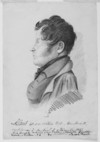
the Department of Gard (France), Louis Lacoste received his secondary education at the college of Montreal, then studied law, and on 19 March 1821 was commissioned as a notary. He practised at
missionary societies in the Baptist churches of the Maritimes. It was probably at Wolfville that Lamont met Rufus Sanford, a former student at Acadia College and then a teacher at Horton Academy, who had
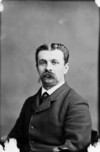
Christian family who lived in Saint-Roch ward. In the autumn of 1855 his father enrolled him in the commercial program taught by the Brothers of the Christian Schools in the newly opened Collège de Lévis
College, Oxford University, in 1739 and was then ordained to the curacy of St Ive, Cornwall. In 1750 he journeyed to St John’s, presumably with the fishing fleet, and officiated as a clergyman for
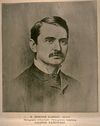
Robillard in Montreal, Que.; d. there 21 April 1890.
Edmond Lareau received his secondary education at the Collège Sainte-Marie-de-Monnoir
-Hyacinthe, Que.
Shortly after his father’s death on 31 Oct. 1792, young Larocque, who had studied at the Collège de Montréal, was sent to
France, where he lived until 1851. He retained his interest in Canada. In 1843 he donated £225 for the construction at Willamette (Oreg.) of a college, Saint-Joseph, for French Canadians. On his return to
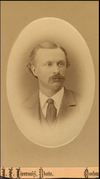
College of Physicians and Surgeons of the Province of Quebec and set the rules for the practice of medicine.
Larue’s outlook was conservative and he had
Ryerson the purchase of the land on which the Metropolitan Church in Toronto was built and he was a member of the senate of Victoria College at Cobourg
Point, Madison, Maine), then that at Médoctec until 1754. Later he lived in retirement at the Jesuit college in Quebec, applying himself to confessing the Indians. Marcel Trudel believes that Lauverjat
“admirably completed the entire work.” Furthermore, in 1869 he published his Histoire du Canada, a text which classical colleges were still using at the beginning of the 20th century. “This competent