

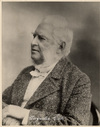
Côté, a miner, and Louise Letarte; m. there 30 April 1845 Émilie-Caroline Lemieux in the parish of Saint-Roch, and they had 13 children; d. 30 Sept. 1904 at Quebec and was buried
others, under the Spanish flag, in 1762. In these ventures, as in the outfitting of a schooner for Saint-Domingue (Hispaniola) in 1763 and a 16-gun frigate, the Vigilante, he seems to have been
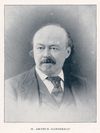
Hurteau*, a notary, and Françoise Lamarre, and they had two sons and two daughters who survived him; m. secondly 30 Aug. 1880 Stephanie MacKay in Saint-Eustache, Que., and they had one
Estèbe* (1752), and Joseph Charest (1757). When in 1751 Dasilva contracted to build the Estèbe house, which still stands on Rue Saint-Pierre, he was in partnership with René Paquet and Pierre Delestre
ministers and churches of the Maritime provinces of Canada (Saint John, N.B., 1880), 330–32. J. A. Clark, A history of the First Baptist Church, Charlottetown ([Charlottetown
DELABORDE (de La Borde, La Borde), JEAN, king’s attorney; b. 1700 or 1701 in the parish of Saint-Germain-le-Vieux, Paris, France
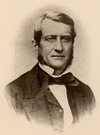
DELAGRAVE, CYRILLE, lawyer, member of the Council of Public Instruction for Lower Canada; b. 25 Nov. 1812 at Sainte-Marie-de
population of the districts of Montreal, the Ottawa valley, and Saint-François, and of the town of Trois-Rivières and the part of the district of Trois-Rivières to the west of the town
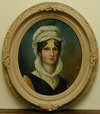
Pélissier*. Pélissier was a friend of her father, director of the Saint-Maurice ironworks, and “a very rich man, from whom [her parents] were hoping to receive substantial assistance.” The marriage took
contracts such as that concluded between him and the parents of Ignace Pélerin, son of Pierre Pélerin de Saint-Amant and Louise de Mousseaux. By the terms of this notarial document, Demosny undertook to teach
.
From about 1661 instruction had been given in New France by the king’s hydrographer [see Boutet* de Saint-Martin
come to America in 1665 with the Carignan regiment, but this is not the case. He sailed in June 1671 on the Saint-Jean-Baptiste “with two carpenters, two masons, and four labourers to clear
response to appeals from Canada for missionaries, immigrated to Montreal where he studied theology at the Grand Séminaire de Saint-Sulpice. Early in 1836 he was ordained by Bishop Jean-Jacques
Saint-Jean. He seems to have been a conscientious man, as the missions with which the colonial authorities entrusted him bear out. On 13 Feb. 1752 he had the signal honour of drawing up Governor
spoke in support of Liberal candidate Joseph-Israël Tarte* in the Montreal working-class riding of Sainte-Marie
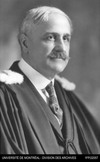
Séverin Lachapelle* in 1910. Dubé was involved in the early stages of the Hôpital Sainte-Justine (1907) [see Irma
.
After being a close witness of the first clashes between Bishop Saint-Vallier [La Croix*] and
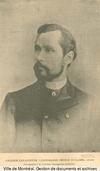
had three sons and a daughter; d. there 11 Aug. 1892.
After attending the Collège Saint-Marie-de-Monnoir in Marieville, Georges
.
In 1671 the seigneurs of Montreal granted to Dupuy 320 acres, at the Saint-Louis rapids, as a noble fief without rights of justice; this was the Verdun fief. In the following year he received a
August 1666 Duquet had married at Quebec Anne Lamarre, who came originally from the parish of Saint-Sulpice in Paris
, Dictionnaire. J.-J. Lefebvre, “Les familles Durocher de Montréal et de Saint-Antoine-sur-Richelieu,” BRH, LXV (1959), 67–82.
Delorme in Saint-Hyacinthe, Lower Canada, but she died childless the next year; m. secondly 26 May 1807 Adélaïde Gauvreau, daughter of Louis
Paris, “to become, without much caring whether it was my inclination or not, a Military hero.” He served with distinction in the French army and appears to have been created Chevalier de Saint-Lazare et
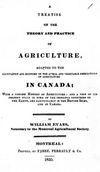
, and they had at least one child; d. 1 Feb. 1857 in Côte-Saint-Paul (Montreal).
William Evans arrived in Lower Canada in 1819, and soon
. 1633 at Saint-Germain l’Auxerrois in Burgundy; d. 6 June 1689 and was buried the next day at Beauport. He is not to be confused with a contemporary named Michel Feuillon, who had settled
September, he took a few more prizes; but he was attacked off Cape Saint-Vincent in Portugal by Menendez and his squadron, who chased him as far as La Rochelle; there, in the ensuing battle, he fell
in Saint John, where he studied its accounting system, Forman took up his new duties. When Forman’s friend, Mather Byles Almon, succeeded Lawson in March 1837, the cashier was placed in a position
Bell, second daughter of Matthew Bell*, a wealthy Trois-Rivières businessman and the lessee of the historic Saint-Maurice ironworks. Forsyth was
,” Charlotte Gallar, Angers, Saint-Michel du Tertre, 26 sept. 1648 (baptême).
GAMELIN MAUGRAS, PIERRE, merchant, king’s interpreter; b. 1697 at Saint-François-du-Lac (Que.), son of Pierre Gamelin and Marie-Jeanne
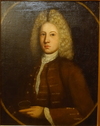
Saint-François-Xavier (Batiscan, Que.), son of Ignace Gamelin* and Marguerite Le Moyne; m. 31 Jan. 1731 in Montreal
the chief road officer, subdelegate of the intendant, churchwarden, and seigneur; b. c. 1643, son of Claude Genaple and Catherine Coursier, of the parish of Saint-Merri in Paris; d
. 1656 and was ordained in 1676. He began a long and distinguished teaching career in 1662–63 at Saint-Flour, where he taught humanities. He was then placed in charge of philosophy at the college in
. c. 1660, probably at Saint-Germain-Laval, France; d. after 1716, in France, probably at Lyons.
The date of La Tourette’s
Jeanne-Françoise Juchereau*, dite de Saint-Ignace. Born at Quebec in 1650, she was several times superior of her
, New Brunswick, Canada, 1773–1919 (N.B. Museum Hist. Studies, 10, Saint John, N.B., 1960).
during the 1730s and 1740s. His younger brother, Louis-Ignace, settled in Saint Domingue where he worked as an inspector in a sugar refinery, and later married a mulatress

relatives by marriage, including Nicolas Gastineau Duplessis and Jacques Maugras, senior. An equal number of Indians, namely 20 Sokokis and 5 Algonkins, who were recruited at Saint-François-du-Lac, joined the
Scotia (Montreal, Pictou, Halifax, Saint John, N.B., and Toronto, 1877). H. L. Scammell, “The rise and fall of a college,” Dal. Rev., XXXII (1952–53), 35–44.
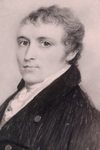
the Maritimes he made some remarkable journeys for a man his age, travelling overland from Halifax to Saint John on one occasion, to see for himself if the route was feasible in case troops had to be
career as a writer. His poetry began appearing in print in the 1870s in such outlets as local newspapers, the Maritime Monthly (Saint John, N.B.), and the Dominion Illustrated (Montreal
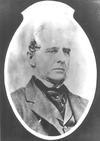
family, which was closely related to Marie-Charles-Joseph Le Moyne de Longueuil, Baronne de Longueuil and seigneur of Belœil. The parish council of Saint-Antoine-de-Longueuil also called upon his
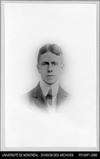
masterpiece he wrote in the Lac Saint-Jean region in 1912–13, which has been appropriated by the Catholic clergy and the political right.
Hémon had embarked
Tardière” in Poitou, France, son of Étienne Jeanneau, a merchant, and Jacquette Clément (Vincent); m. on 16 Aug. 1694 Catherine Perrot at Sainte-Famille, Île d’Orléans; d. 8 May 1743
Francois-Augustin has been attributed to him, probably by confusion with Baron François-Augustin Joannès de Chacornacle (1683–1754), captain of the garrison at Trois-Rivières and knight of the order of Saint
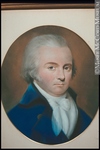
1757 to 1760. At 13 he had served as a volunteer under the command of his father in the battle against the French at Lake George (Lac Saint-Sacrement); as a young man he accompanied him on
of lieutenant-colonel in the militia. Two years later he took command of the Saint-Jean-Port-Joli battalion of militia and in 1828 he was called on to serve as militia inspector. In April 1832 he
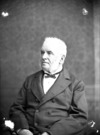
was enough work for everyone. During his tenure as chief engineer Samuel Keefer laid out the Beauharnois Canal, directed the enlargement of the Lachine Canal, rebuilt the lock at Sainte-Anne-de-Bellevue
Saint-Louis. He served ashore at Brest until 1727, when he set sail again on the Brillant. On 1 Oct. 1731 he was promoted captain. As second in command on the Fleuron in 1732
: L’Hermitte, Saint-Ovide de Brouillan [Monbeton*], Jean-Baptiste de