

Source: Link
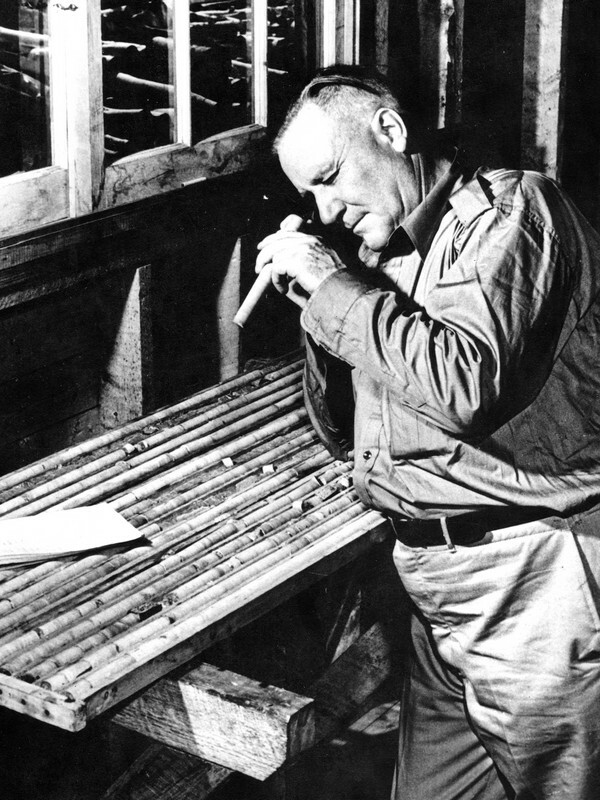
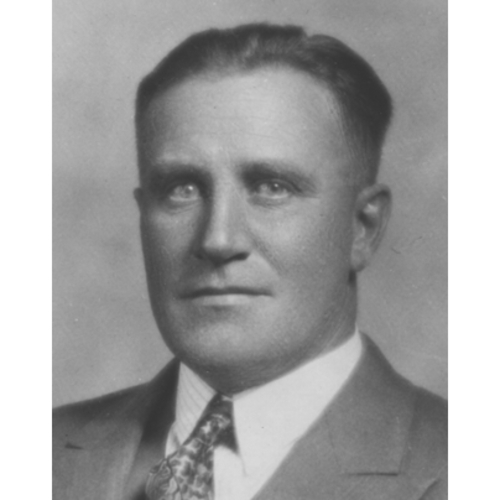
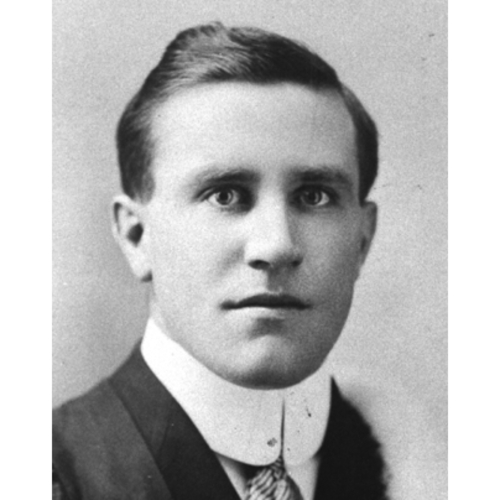
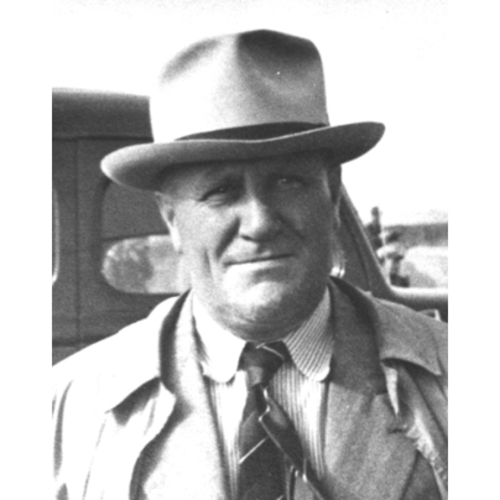
NORRIE, JAMES PAUL (also known as Paul in Nova Scotia and Jim in Quebec), engineer and mining contractor; b. 25 April 1891 in Onslow, N.S., son of Henry James Norrie and Annie McDougall; m. first 22 Dec. 1913 Hannah Grace Hartling in Halifax; m. secondly 27 Dec. 1933 Margaret Rosamond Fawcett in Upper Sackville (Sackville), N.B.; d. 9 Oct. 1945 in Noranda (Rouyn-Noranda), Que.
Education, first jobs, and family
James Paul Norrie grew up on a farm in North River, N.S. The eldest son of a father who farmed out of necessity and provided informal legal advice to others, he received his secondary education at Colchester County Academy in Truro. Thanks to the financial support of Davidson Hill, a local Liberal farmer, he trained as an engineer at Mount Allison College in Sackville, N.B., from 1909 to 1911. He continued his education, from 1911 to 1913, at the Nova Scotia Technical College in Halifax [see Alexander Howard MacKay*], where he earned a bachelor’s degree in engineering.
Following employment as deputy inspector of mines in Nova Scotia (1913–14), Norrie held management positions in mining and metallurgical operations. He worked as a manager at two gold mines: the Moosehead Reduction Company in Moosehead (1914–15) and Great Falls Mine in Potomac, Md (1915–16). He was the foreman of concentration and fusion at the Rome Brass and Copper Company in New York State (1916–17). Subsequently, he held the post of superintendent and metallurgist at the Monarch Metal Company in Hamilton, Ont. (1917–19), and at Electro Tin Products in Brantford (1919–21). He then turned to the rapidly expanding gold mines of northeastern Ontario, where he was superintendent of Porcupine Davidson Gold Mines in South Porcupine (Timmins) (1921–23) and of the underground operations of Sylvanite Gold Mines in the Township of Teck (Kirkland Lake) (1923–24). He returned to the United States, where from 1924 to 1926 he worked as a researcher in tin smelting at the American Smelting and Refining Company in Perth Amboy, N.J., and then at the Williams Harvey Corporation in Brooklyn (New York). After being on the move for 13 years, working for 10 different employers in Canada and the United States, he would settle in Quebec to continue his career.
Meanwhile, in 1913 Norrie had married Hannah Grace Hartling of Port Dufferin, N.S., and they had four children: Pauline, James Henry, Virginia, and Harry. His wife and children stayed with her family in Port Dufferin. Hannah’s tragic premature death on 13 Oct. 1923 in Halifax forced Norrie to entrust the care of his children to his parents on the family farm in North River. Not until 1927 did his sons and daughters visit him onsite in Abitibi, Que. Settling in Amos, Norrie married Margaret Rosamond Fawcett in 1933, and they also had four children: Margaret, Judith, George, and Roderick.
Taking root in Quebec and facing the Great Depression
In the summer of 1927, Stadacona Rouyn Mines, near Rouyn (Rouyn-Noranda), hired Norrie as manager. In August he supervised the exploratory work, shaft boring, and diamond drilling at Malartic Gold Mines, which had started up again after a two-year interruption. Malartic was acquired in 1928 by Ventures Limited, which consolidated the investments of Thayer Lindsley, at the time one of the most important mining geologists and entrepreneurs in North America. Over the course of his career, Norrie worked alongside Lindsley on many mining projects. They shared a mutual respect, even if they were sometimes in competition. Norrie could always count on Lindsley to inject money into his companies, which sometimes had a decisive leveraging effect.
In 1929 Malartic Gold Mines closed down after an evaluation of its ore concentrations revealed that the level was too low given that the fixed price of gold was $20 an ounce. Norrie found himself ruined just before the Great Depression, which would turn the North American and international economy upside down. A few years earlier he had begun staking numerous claims with the prospector Lee K. Coffin in the area surrounding the future town of Malartic and had established contacts with several other mining researchers and entrepreneurs in the region. But financing the development of his claims was hindered by the decline of the financial markets.
Discovery of a uranium deposit
In the spring and summer of 1930, Lindsley and a group of partners in Dominion Explorers gave Norrie the opportunity to join an exploratory expedition to Great Bear Lake, in the Northwest Territories, in the roles of chief engineer and manager. Norrie, with the prospector Gilbert Adelard LaBine*, the geologist John Clifford Rogers, and Lindsley, discovered and identified samples of uranium ore (uraninite or pitchblende), which would become the source of a large deposit that Eldorado Gold Mines (known as Eldorado Mining and Refining from 1942) mined initially for radium and then for uranium. In From cloddy earth to glittering gold, Norrie’s daughter Margaret would recount that in August 1945, on hearing a radio broadcast about the atomic bomb’s destruction of Hiroshima in Japan, her horrified father blurted out, “I discovered the main component used in the making of that bomb.”
Searching for and developing gold deposits
Back in Abitibi in the autumn of 1930, Norrie, often in association with prospectors in the area, embarked on the search for and development of gold deposits, an activity that became an all-consuming passion. For some of the three or four million shares of each small company formed by the promoters, he tried to secure financing through brokerage firms able to create a market for mining stocks on the Toronto and Montreal stock exchanges. Norrie, together with a prospector, in particular Coffin at the outset, held claims and obtained shares in exchange for them; each broker received a block of shares for his services, and the rest were held in reserve to be sold on the market according to what was needed for mining the deposit. The secret of success lay in finding a promising vein and convincing serious brokers of its potential so that they would recommend it to their investor clients and enter it on the list of mining stocks at a price between $0.10 and $1 a share.
Prospecting and investing in two areas
Norrie had access to a few blocks of claims in two areas. The first included claims staked in the early 1930s near the Perron mine, in Pascalis and Senneville townships, south of Senneterre, and north of the Siscoe mine on Lake De Montigny [see Stanley Edward Siscoe*] and the Lamaque mine in Bourlamaque Township. He also possessed blocks in a second zone between Rouyn and what would become the town of Val-d’Or, near the future community of Malartic in Fournière Township. In practice, he acted as the intermediary between prospectors and company managers. He was responsible for evaluating the deposit and for ensuring that drilling was carried out and a shaft was sunk to continue underground development.
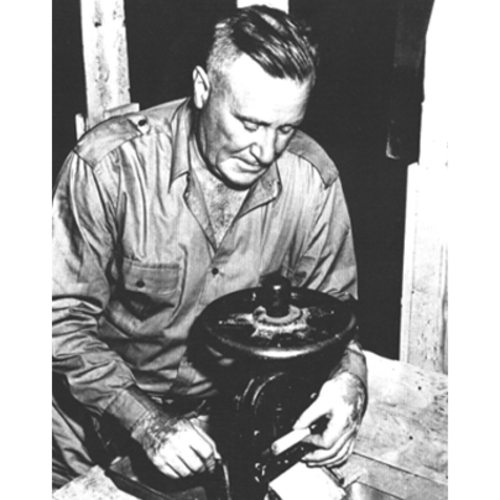
In the first area Norrie, as managing director, involved himself in the claims of Georges Bussières and Charles-Édouard Massicotte for the Treadwell Yukon Company and its subsidiary, the Bussières Mining Company. He was in charge of sinking a shaft and building the A-frame support and hoist wheel. The work was completed in September 1932 and the site gradually went into production the following year. The company covered its expenses, but the profits were not enough to finance other deposits and interest brokers; neither did they meet the needs of Norrie and his family. It was not until 1933, when the price of gold reached $35 an ounce, that the financial environment of the gold industry changed radically and many deposits were able to yield high returns.
That year Norrie sold his shares in the Île Tiblemont deposit to an American group for a considerable sum, which made it possible for him to reinvest personal resources in the new deposits. In addition, in 1934 he received an offer from Alex Perron of the Township of Teck to take over the management of the Perron mine, a job that put him in touch with the major Montreal brokerage firm Nesbitt, Thomson and Company (NT). Its primary representative was Melvin A. Thomson, who financed Perron Gold Mines and stipulated that Norrie be hired. Together with Bank of Toronto administrator Andrew Johnson Davis of Newmarket, Ont., Thomson became a financial partner for most of Norrie’s subsequent mining projects. In addition to the Perron mine, Norrie managed the Bussières mine until his replacement was found in 1934.
The experience Norrie acquired at Malartic Gold Mines, which had started up again under the name Canadian Malartic Gold Mines in 1932, prompted him to accumulate claims in the surrounding area, close to the future town of Malartic. During the summer of 1932, Coffin and Norrie staked claims in Fournière Township, to the east of the Canadian Malartic mine. In September 1934, having incorporated East Malartic Mines, they sought investors. Lindsley, who was already involved in the neighbouring Canadian Malartic mine, contributed, and NT eventually took over the financing in August 1935. Norrie served as vice-president and general manager. Beginning in 1939, however, crumbling rock formations in the galleries caused technical problems in the extraction process and made the operation of the East Malartic mine more difficult. Shareholders of Howey Gold Mines, who formed a near majority in the enterprise, voiced scathing criticisms of members of Norrie’s family employed by the company, including his brother Joseph Ronald and his son-in-law, the geologist Robert Alfred Halet. The conflict led to the departure of his brother in 1942 and to his own resignation at the beginning of the following year. He and Coffin also sold their shares. Another block of claims to the east of the East Malartic mine caught Norrie’s attention and served as the foundation for the Malartic Gold Fields in 1935. Exploratory drilling led to the construction of a hoist wheel, which was in operation from 1940 onward.
Inspiration Mining and Development Company
Although he held management roles in mining and administration for several projects, Norrie derived the most satisfaction from searching for and discovering mineral deposits and initiating their development. It is not surprising, then, that he had the idea of setting up his own exploration company that could acquire, own, and develop mining properties until they could be successfully operated. Lindsley’s model of Ventures Limited certainly inspired Norrie: a mine generating large profits could be sold or operated and, through its cash flow, contribute to financing prospecting. To this end, in 1934 Norrie established the Inspiration Mining and Development Company (IMD) for projects in northern Quebec and Ontario. Backed by his usual group of investors – NT, Davis, and Lindsley – the IMD allowed Norrie to consolidate the non-developed properties he held with Coffin and those he had purchased in the Chibougamau region. As had often been the case, Thomson was the company’s president and Norrie was vice-president and general manager. The IMD hired a few geologists and mining engineers for exploratory work and began to accumulate shares in mining projects that were under development or active. At the end of the 1930s, it also branched out into contract drilling.
During this period Norrie took part in many projects near the Perron and East Malartic mines. He had an intimate knowledge of the geology of both deposits and could see that the gold-bearing formations extended into neighbouring properties. Through the Perron mine as well as the Bussières mine (renamed Cournor in 1937), which he knew well, he became involved, directly or through the IMD, in the Beaufor mines to the south, Pascalis to the east, and Senore to the north. He owned shares in these mines and participated in their management with NT. Since the Pascalis mine belonged to Ventures Limited, joining its holdings with those of the other three was not possible. In the area of the East Malartic mine, several potential deposits adjacent to the mine, at the Malartic Gold Fields or nearby, were part of a comparable process of consolidation: National Malartic, Partanen Malartic, Quemartic, Lacoma, Dubuisson, Amphi, Seventh Malartic, Marbenor, Norbenite, Bart Malartic, Clarnor Malartic, and Citralam Malartic.
Other projects
Among all of these projects, which were backed by the same funding network, Norrie invested systematically in those he believed in. He often took part in managing operations, but at the end of the 1930s he began to take on contracts as an engineering consultant. He was paid by the month for drilling done by the IMD or for in-shaft boring by another of his companies, Miners Inc. After the outbreak of the Second World War, all of these projects ran into mounting obstacles as gold was not a strategic metal. Restrictions were applied to the development of new mines, and only those already in operation could continue to function, although their activities were limited by labour shortages. Norrie explored a few projects involving strategic metals, in particular related to mica deposits discovered by Justin Sanford Purdy in Mattawa, Ont., in 1942. Forced to slow down his activities in gold mining, he took advantage of the situation to make an old dream come true: after his father’s death in 1938, he took over the operation of the family farm in North River, transforming it into a large dairy farm where he kept Jersey cows and also bred horses. He would, however, divest himself of the property in 1943.
The multiplicity of projects Norrie took part in troubled NT. The company would have preferred that he concentrate on those agreed to by the IMD and not allow his name and reputation to be used as security by promoters. Having been slowed down for a time by the war, Norrie again had the opportunity to go searching for potential gold deposits, especially in the Croinor project, east of the Lamaque mine. In 1945, shortly after travelling on foot the 18 miles of terrain between Croinor and Senneterre, Norrie suffered a massive heart attack and collapsed. He died a few days later, on 9 October, at the age of 54.
Assessment
James Paul Norrie made a remarkable contribution to the mining industry of northwestern Quebec. He successfully demonstrated that near the richest of the region’s large gold mines – such as the Lamaque mine of Teck-Hughes Gold Mines, and the Siscoe and Sigma mines of Dome Mines – there were deposits with significant potential for productivity and profitability for enterprising investors. For this reason, the area around Malartic owes him an enormous debt. In 2011 the Osisko Mining Corporation began to create a vast open-pit mine combining several of the sites Norrie had helped exploit. His exceptional career earned him a place in the Canadian Mining Hall of Fame in 2000.
Ancestry.com, “New Brunswick, Canada, marriages, 1789–1950,” James P. Norrie and Margaret R. Fawcett, Sackville, 27 Dec. 1933. N.S. Arch., “Nova Scotia hist. vital statistics,” James Paul Norrie, application for registration of birth, Onslow, 25 April 1891; James Paul Narrie [Norrie] and Hannah Grace Hartling, Halifax, 22 Dec. 1913 (marriage). Gazette (Montreal), 10 Oct. 1945. Northern Miner (Toronto), 1933–38. Canadian mines handbook (Toronto), 1931–41. Financial Post Survey of Mines: Canada and Newfoundland (Montreal), 1934–35, 1941–42, 1946. George Norrie and Harry Norrie, From cloddy earth to glittering gold (Saint John, 2006). Québec, Ministère de l’Énergie et des Ressources Naturelles, “Registre foncier du Québec en ligne,” acte, radiation, avis d’adresse, Québec, 1930–1948; index des immeubles, 1930–1948; index des noms/zonage agricole, 1930–1948. Marc Vallières, Des mines et des hommes: histoire de l’industrie minérale québécoise des origines à aujourd’hui ([Québec], 2012).
Image Gallery

Cite This Article
Marc Vallières, “NORRIE, JAMES PAUL (Paul, Jim),” in Dictionary of Canadian Biography, vol. 17, University of Toronto/Université Laval, 2003–, accessed May 29, 2026, https://www.biographi.ca/en/bio/norrie_james_paul_17E.html.
The citation above shows the format for footnotes and endnotes according to the Chicago manual of style (16th edition). Information to be used in other citation formats:
| Permalink: | https://www.biographi.ca/en/bio/norrie_james_paul_17E.html |
| Author of Article: | Marc Vallières |
| Title of Article: | NORRIE, JAMES PAUL (Paul, Jim) |
| Publication Name: | Dictionary of Canadian Biography, vol. 17 |
| Publisher: | University of Toronto/Université Laval |
| Year of publication: | 2026 |
| Year of revision: | 2026 |
| Access Date: | May 29, 2026 |