

group of six emigrated to Prince Edward Island, where Mrs Sinclair purchased a 100-acre farm in a newly settled and inland section of Lot 67, on the western edge of Queens County. Peter settled into
of Prince Edward Island. Prior to his departure he was given the kh (civil division) and was knighted by William IV at St James’s Palace
the Bank of Prince Edward Island, founded in 1856, and he sat on its board until its cessation of business in 1881. He retired from banking in 1900. Even though he did not reach the first rank of the
of Annapolis Royal, N.S., when he wrote in the 12 Aug. 1909 issue of Church Work (Halifax) that those who denied that the Church of England in Prince Edward Island was part of the diocese
elder Laird had been a liberal in politics, a sometime radical on the Prince Edward Island land question, and a staunch Presbyterian. Having broken ranks with the liberals on the Bible question, he had
(Prince Edward) Island probably in 1787. Unable to get an expected land grant, Samuel, a carpenter and cabinet-maker, settled his family in Charlottetown where from 1788 to 1795 he was deputy sheriff and
.
Stanislaus Francis Perry died in the nation’s capital in 1898 after a brief illness. The first Acadian from Prince Edward Island to play a role in politics both provincially and federally, he none the less
to Port Roseway (Shelburne), N.S., and then on to Tryon, St John’s (Prince Edward) Island.
He arrived at Tryon in 1783 and the following year
Stewart*, a landowner on Prince Edward Island, who hired Goff to be his agent there. The following spring the Goff family moved to the Island, where Fade by 1814 agreed to act also as agent for George
. His wartime commander Fanning was appointed lieutenant governor of St John’s (Prince Edward) Island in 1786 and soon after invited Gray, whom he regarded as “a gentleman of superior merit and worth
improvements, and encouraged higher learning among generations of bright young Islanders. Although Prince of Wales College ceased to exist in 1969 and was replaced by the University of Prince Edward Island
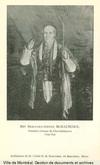
MacDonald* of Glenaladale to St John’s (Prince Edward) Island in 1772, 13-year-old Angus stayed behind to study for the priesthood in the secret Highland Catholic college at Buorblach (near Morar
.
After Prince Edward Island transitioned from colony to province in 1873 [see James Colledge Pope*], many government
.
Originally from Lincolnshire, England, the Lea family settled in the Tryon area of Prince Edward Island in about 1818, and several of its members became leading farmers in the district. Walter Lea went to
Prince Edward Island was associated with wealth, political influence, and the tory cause. The elder Thomas Heath Haviland had, after his emigration to the Island in 1816, established himself as an office
March 1848 in Charlottetown.
Frederick John Martin Collard emerged suddenly in Prince Edward Island public life in September 1844 when he
.
James Colledge Pope’s father, a native of Plymouth, England, immigrated in 1819 to Prince Edward Island. In the company of his older brothers Joseph became involved in the timber business at Bedeque
on a tale told by the Micmac, was published in the July 1899 issue of the Prince Edward Island Magazine. In 1901 she began the publication of Christmas Chimes, an annual magazine
assistance of James Bardin Palmer* of Charlottetown, Binns sailed for Prince Edward Island to set up an agency to supply Hope with such local
PRINCE, JOHN, lawyer, farmer, soldier, politician, and judge; b. 12