

to perform marriages, there being no resident clergy, and it took him to the celebrations and parties at which he shone.
From at least August
gentry, the clergy, and the bourgeoisie, Papineau was better situated than others to benefit from the seigneurial régime and its mode of operation. In the late 18th century, when there was a sizeable
the clergy’s proposal to increase the annual tithes, on the grounds that it would be too burdensome for the habitants. Similarly, he pleaded with the minister to permit and even to support Madame

a series of sharp verbal exchanges that led in turn to complaints about his lack of respect for the clergy. This would not be by any means the last occasion when Jacques’ personality stimulated heated
as an elder and latterly was a major benefactor of the Presbyterians’ provincial building fund. Yet he was not a sectarian. Recalling the clergy reserves problem in Upper Canada, he had reminded
work. Although he supported the legitimacy of the constitutional privileges of the Church of England, the clergy reserves issue had to be settled in the interests of internal harmony. To this end he
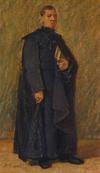
to the general assembly of the French clergy “that he had an abbé who was willing to accept this post [the bishopric], and to go and make the sacrifice of his wealth and his person among the Indians
-religionists as a whole, and in 1827 he spoke in favour of giving Presbyterian clergy full rights to perform marriages.
During the “Brandy Dispute” of 1830
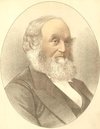
name changed to Inverness in 1837. For two decades he was re-elected with the support of its merchants and, more especially, its Catholic laymen and clergy, who constituted a majority of the population
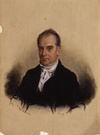
, Baldwin had presaged the pattern of development for higher education in Ontario.
Baldwin also contended with his church over the clergy reserves. His

, which assumed the role of the clergy in many spheres, took charge of modernizing education, health care, social services, culture, the status of women, economic development, and international relations
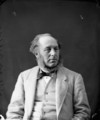
the Roman Catholic clergy. His account reflected a self-conscious patriotism as well as tinges of racism. While he was preparing his essays, he was also helping to establish a Halifax branch of the
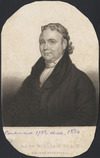
holiness.” With few exceptions, he was warmly received not only by Methodists but by Anglican clergy and other influential people. At Charlottetown in 1794 he was given the use of the parish church by
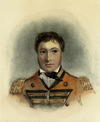
clergy reserves, all of which was subject to the control of the crown through its representative, the lieutenant governor. The receiver general also served the provincial House of Assembly by collecting
the seigneury of Île-d’Anticosti, all of the seigneury of Saint-Armand, Dunham Township (minus the government and clergy reserves), a quarter of Stukely Township, and various other unidentified lots
schools and with its hesitation in abolishing the clergy reserves and other examples of denominational privilege in Upper Canada. In Glengarry, the relationship between Protestant and Roman Catholic Scots

-Saint-Louis, also run by the Brothers of the Christian Schools, where he apparently regained his taste for study, perhaps because the institution’s clergy encouraged artistic expression in their pupils
the province. Under his leadership the assembly went into a committee of the whole. Nichol introduced resolutions which, among other things, vilified the crown and clergy reserves as “insurmountable
their supporters at the mass level. Palmer, an Anglican, wholeheartedly backed the Protestant clergy in their campaign to place the “open Bible,” with as few restrictions as possible, in publicly funded
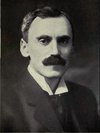
later. In the spring of 1932 a group of clergy and laymen wished to nominate him as the first lay moderator of the United Church of Canada, an election he would stand an excellent chance of winning. The