

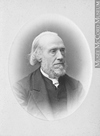
CORDNER, JOHN, Unitarian minister, editor, and author; b. 3 July 1816 in Ireland, son of John Cordner
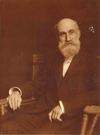
BARNES, WILLIAM SULLIVAN, Unitarian minister; b. 16 June 1841 in Boston, only child of William Ham Barnes, a Baptist
PÉTURSSON, RÖGNVALDUR, Unitarian minister, businessman, editor, author, and community leader; b. 14 Aug
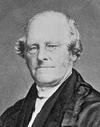
HINCKS, WILLIAM, Unitarian clergyman, theologian, and university professor; b. 16 April 1794, Cork, Ireland
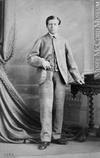
his estrangement may have been his second marriage, to Mary Kent Bradbury, a Unitarian from Boston. His first marriage on 4 Jan. 1842 to Frances Michael David, his first cousin, ended with her
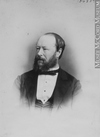
Presbyterian until 1840 and member of the St Gabriel Street Church, he converted to Unitarianism under the influence of the Reverend John Cordner
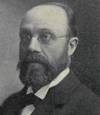
Hope Bertram was named after George Hope, the noted Scottish agriculturist and Unitarian. After attending the parish school of Dirleton, near Fenton Barns (Hope’s holding), Bertram was apprenticed in the
cabinet makers.”
One of Baird’s first important commissions was from the Christian Unitarian Society of Montreal. For its church, opened in 1845

a pianist, with the Boston Choral Union and the Newton Musical Association, and as an organist, at Second Unitarian and Phillips churches in Boston and at Eliot Church in Newton. He completed his
Cordner, they joined the Unitarian Church, and George was to remain a staunch Unitarian throughout his life. The Liberal Christian, a monthly journal edited by Cordner, was published by
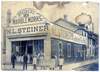
1882, when they purchased a plot in non-denominational Mount Pleasant Cemetery, and had their child’s remains reinterred there. Within the next few years members of the family joined the Unitarian Church
to socialism and pacifism. In 1913 she and Marion left Knox Presbyterian Church for the recently established First Unitarian Church of Calgary, which had a progressive women’s alliance. Three years
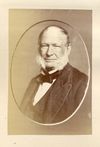
manicured lawns and shrubs overlooking the city. He was a Unitarian, as were several other prominent Montrealers, including Sir Francis
the eminent and radical church historian Adolf von Harnack, whom he later privately described as a “Unitarian of the highest type.”
Wallace
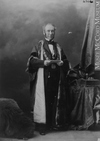
especially painful. Throughout most of his adult life, Workman was an adherent of the Unitarian church; he once confided to a friend that, as a Unitarian, he was “accustomed to vituperation from opposing

, where he was educated and raised as a Unitarian. On the completion of his formal education, Charles entered the Liverpool office which his father ran for the family firm (after 1839 called Bowring
work on the project that summer in Montreal, he died of tuberculosis. He was buried by the Unitarian minister, John Cordner*, and rests in an
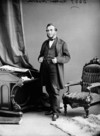
Unitarian Society of Montreal on 6 June 1842. His Unitarianism sprang from his association with his uncle, Moses Gilbert, who was one of the earliest Unitarians in Montreal. As a member of the society’s
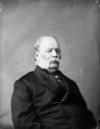
the Unitarian Francis Hincks*, in the St Patrick Society, which had been founded in 1834. Both of them, with Lewis Thomas
whose hostility to the provincial government was partly rooted in disappointment of their material expectations and a jealous contempt for the local élite. In the case of Matthews, a Unitarian, as in that