

graduate of the University of London, was a Unitarian minister who later embraced the Church of England. One of Maurice’s uncles was Richard Holt Hutton, owner and joint editor from 1861 of the Spectator
, Unitarian Messiah (Montreal), 29 March 1934. LAC, R233-35-2, Que., dist. Montreal (90), subdist. St Louis Ward (E): 109; RG 150, Acc. 1992-93/166, box 2199-37. Le Devoir, 28 mars
the prison at Plymouth. In the same year they had a commission to design Unitarian schools at Taunton. Between 1848 and 1851, when the partnership is presumed to have ended, they designed schools and
produced on his mind was a dislike to the perusal of the Bible ever since.” Indeed, Maclean was widely believed to be an “infidel,” the contemporary Island term for atheist, agnostic, Unitarian, or apostate
, Samuel Parkman, was a wealthy merchant and shipowner, and his father a prominent Unitarian minister. In 1840, after attending schools in Medford and Boston, Parkman entered Harvard University, which then
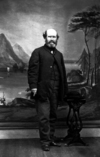
unitarian, and leaned toward Owenite and radical views in politics. His diary, resumed in Paris after lapsing in 1835, shows him as having discussions with Louis-Joseph
.
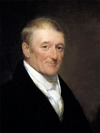
Towards the end of his life, he became interested in the organization of a Unitarian congregation in Montreal, which among its supporters had a great many merchants of New England origin. In 1832 he was one
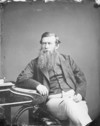
entirely on religious lines. Although William Pope had been born into a Methodist family, he was widely known to be an “infidel” – the contemporary Island name for atheists, agnostics, Unitarians, and
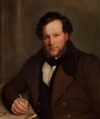
Church (Free Presbyterian), Queen Street (1857–58). But he worked for many other denominations in the city, designing the Methodist New Connexion Church, Temperance Street (1846), the Unitarian Church
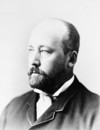
Horne’s death on 11 September intervened. A Unitarian funeral service was held at his Montreal home and a special CPR train took his body back to Joliet for burial in Oakwood Cemetery
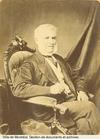
moving to Montreal, became active in the Unitarian community. Hincks soon found that the proprietor of the paper, Hutton Perkins, would neither give him a free hand editorially nor sell the paper to him