

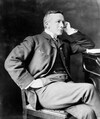
Brown*, his mother a stalwart of Presbyterian Church philanthropy, and his uncle Oliver a supremely successful lawyer and politician. Jack rebelled. At Upper Canada College, where his father had been
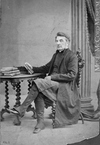
officers – Thomas Brown Anderson*, the treasurer, and Strachan Bethune, the legal adviser-and to its élite of lay members who included
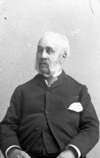
competition was called, and in 1867 Fuller, working with the local firm of Nichols and Brown, had his design premiated. He was asked to work with Arthur Delavan Gilman, an adept in the French Second Empire
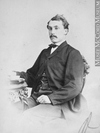
streets, around 1875. Designed by Montreal architect John James Browne*, it was built in the “Scottish baronial” style, combining “Medieval
.
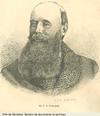
According to Thomas Storrow Brown*’s statement to the librarian of McGill College around 1870, Amury Girod was a rather tall man, well built
., Toronto, [1948]). Le Jeune, Dictionnaire. Ottawa directory, 1879–92. J. J. Brown, Ideas in exile: a history of Canadian invention (Toronto and Montreal
over legislation and the lives of Canadians than most elected politicians.
Desmond H. Brown
Borden (2v., Toronto, 1938). R. C. Brown, Robert Laird Borden: a biography (2v., Toronto, 1975–80). Canadian annual rev., 1911. The Canadian
Brown*’s election committees. On his return to Brantford, he became active in the local Reform Association. For business reasons he declined the Liberal nomination for Brant North in the 1872 federal
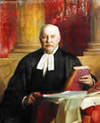
Robert Edward Harris, painted by Henry Harris Brown, hangs in the Law Courts Building in Halifax. As chief justice, Harris was ex officio vice-chair of the board of trustees of the Public Arch. of N.S
Peter Brown), who, along with some of his legitimate and illegitimate children, was to inherit part of his assets. Hart already had at various times acknowledged and even lent assistance to a number of
Jan 1885; 5 Jan., 27 May 1886; Bailey to Hendrie, Symes and Co., 18 June 1886. HPL, Arch. file, Brown–Hendrie papers. NA, MG 28, III 20, Van Horne letter-books, 8: 271–72, 342
. Abetted by leading members of the Reform party, especially George Brown*, editor of the Toronto Globe, and later Edward
-26. Globe and Mail, 13 April 1937. R. C. Brown, “Hughes, Sir Samuel,” in Dictionary of Canadian biography
, Le Canada sous l’Union, 1841–1867 (2v., Québec, 1871–72). R. R. Brown, “The St. Lawrence and Industrie Village Railway,” Railway and Locomotive Hist. Soc., Bull. (Boston
were served on other members, including Kent and Peter Brown*, and on Walsh, whom Kielley tried to have arrested
Colonist in Toronto, attacking George Brown* for fanning the flames of anti-Catholicism and for recommending representation by population. In
. E. Brown, “‘Living with God’s afflicted’: a history of the Provincial Lunatic Asylum at Toronto, 1830–1911” (phd thesis, Queen’s Univ., Kingston, Ont., 1981
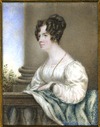
[Browne*]. Mary’s and Anne’s responses to Niagara illustrate their contrasting approaches. Mary’s is the more conventional: “The waters came gaily on, hurrying tumultuously in the very wantonness of
. Started by members of the anglophone elite, including a number of businessmen and, in particular, by the industrialist and philanthropist Herbert Brown