

Sillery in 1642.
Nicollet’s arrival in Canada – in the service of the Compagnie des Marchands de Rouen et de Saint-Malo – remains difficult to date. The

going to Canada, and the superior general, François Lechassier, consented all the more willingly because François Vachon* de Belmont
Mary’s, but a disagreement between the archbishop and the order’s superior in Canada resulted in the abandonment of this plan. O’Brien looked to other religious orders for assistance, still hoping to use
servant, businessman, and politician; b. 20 Jan. 1815 at Batiscan, Lower Canada, son of Joseph Pacaud, a carpenter, navigator, and merchant, and Angélique Brown; m. first 28 July
Digé. Throughout the sessions of this first parliament in Lower Canada Panet attracted attention by his almost unbroken solidarity with the English party. For example, he opposed the choice of
London for the province of Quebec; b. 27 July 1860 in Rivière-Ouelle, Lower Canada, son of Joseph Pelletier and Henriette Martin; m. first 24 Jan. 1888 Alice Hudon (d. 1910) at
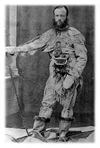
of Canada.
Perhaps influenced by the popularity of Mazenod and by the challenge of missions, Petitot, who had taken the minor orders of the
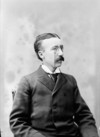
natural resources of Canada’s far north. He repeatedly recommended (in 1907, for example) that the Canadian Arctic be explored and that some areas of the region be officially appropriated by Canada. As well

.
Maria Heathfield Pollard was born into a Methodist family. Her father had served as a minister in Upper and Lower Canada since his arrival from England in 1842, and during the 1860s he was chairman of
fought in the War of 1812, but if so he did not let his participation interfere with the development of his commercial interests. By 1813 he was resident in Kingston, Upper Canada, and engaged in trade
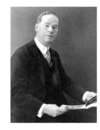
of the first generation of professionally trained architects who worked in Canada, and, with Samuel Maclure*, a founder of a legitimate, if
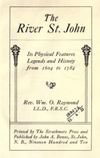
could write of Raymond, “No man in Canada has done better work for the country in [the] historical line than he has and got less for it.” At Christmas the same year Raymond’s health gave way under the
Sulpician teachers. Nothing at this period suggested that he would become an impassioned spokesman for the independence of Lower Canada and a new, genuinely liberal, social order
. 1784 Sarah Davenport, née Underhill, and they had ten children, of whom two sons and one daughter survived infancy; d. 12 June 1812 in Port Ryerse, Upper Canada
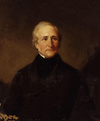
placed in charge of a small outpost near Quebec and took part in resisting the American advance on Lower Canada in the winter of 1813–14. In August and September 1814 he served on the Niagara frontier of
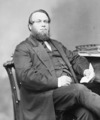
Prince*, member for Essex, calling upon Canada “to become an Independent Sovereignty.” In the general election of 1851 Sanborn was opposed by John Henry Pope himself, but greatly increased his majority

-based firm that he and Ernest Ross Rolph established in 1899. He was best known for his beaux-arts commercial buildings, such as the headquarters of Manufacturers Life and Canada Life, and for

Canada, son of Georges Tanguay, a school inspector, and Angèle Jolivet; m. 10 Aug. 1886 Clara Trudel at Quebec, and they had five sons; d. there 6 Nov. 1923
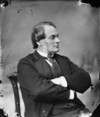
tolerate. Tilley and his council met Gordon at Sussex on 24 Oct. 1861, a week before Tilley had to depart for England in pursuit of an intercolonial railway that would link Canada with the Maritimes. He
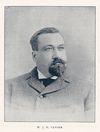
in Saint-Louis-de-Terrebonne (Terrebonne), Lower Canada, son of Émilien Vanier, a baker, and Lucie Soucisse (Soucie); m. first 11 July 1881 Olivine Pariseau (d. 29 July 1929) in the
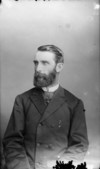
time when shipbuilding was in decline and which had created in Canada “a national unity, a national independence, to which we were utter strangers a quarter of a century ago.” He also advocated
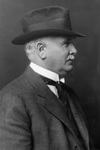
BURNS, PATRICK, settler, rancher, businessman, and politician; b. 6 July 1856 near Oshawa, Upper Canada, son of Michael
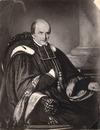
, grandfather of Louis-Jacques, arrived in Canada in 1759 from the parish of Saint-Pierre-Langers, near Granville, Normandy. He never forgot his native land and provided his grandson with a living link with
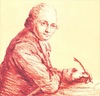
Lawrence*]. Back in Canada in the autumn of 1759, he was entrusted with the mission of returning to Acadia to make a count of the Acadian refugees and report on the state of this war-torn region. He
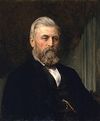
primarily focused on planning and carrying to completion the most grandiose project of his life, the building of one of the largest cotton mills in Canada directly across the Nashwaak River from his mansion
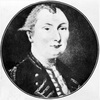
revolution made it necessary to reduce routine work in the settled areas to accelerate the surveying of vast tracts never before considered for settlement in the region that was to become Upper Canada. To
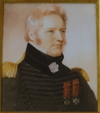
Hertel* de Rouville, in Chambly, Lower Canada, and they had four sons and three daughters; d. there 27 Feb. 1829.
Charles-Michel
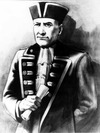
Pointe-Fortune, Upper Canada.
Details of Miles Macdonell’s early life are sketchy. He was born into a distinguished Catholic family with a long military
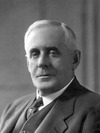
, auctioneer, politician, and office holder; b. 5 Sept. 1861 in Peel County, near Brampton, Upper Canada, son of Arthur Norris and Phoebe Crawford; d. unmarried 29 Oct. 1936 in Toronto
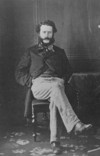
Canada, fifth of 16 children of John Robson and Euphemia Richardson, natives of Roxburgh, Scotland; m. 5 April 1854 Susan Longworth in

*. Anxious to have bright Métis boys trained for the priesthood, Taché arranged in 1858 for Riel and three others, including Louis Schmidt, to attend school in Canada. At the Petit Séminaire de Montréal Riel
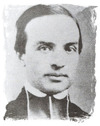
in Saint-Pierre-de-la-Rivière-du-Sud, Lower Canada, son of Jean-Baptiste Chartier and Marie-Geneviève Picard Destroimaisons; d. 6 July 1853 at Quebec
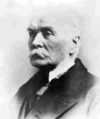
1841 Roberts dispatched Gzowski across Lake Erie to scout out the possibilities of work in Canada on the reconstruction of the Welland Canal. After a quick tour of inspection, Gzowski submitted a

agreed to Canada’s participation in the South African War [see
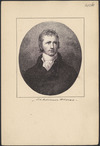
.
This expansion of the firm was prompted by radical changes taking place in the fur trade. Shortly after Canada was ceded to Great Britain in 1763, British traders from Montreal, like the French before
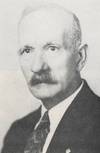
action. Their personal connection would be made evident when Hardie stayed with the McLachlans in Sydney Mines, N.S., on a trip to Canada in 1908
Warwick, Warwickshire, England, second son of John Collett Ryland and Elizabeth Frith; d. 20 July 1838 in Beauport, Lower Canada.
Herman
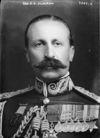
Alderson to Canada as GOC. By the end of 1901, as a brevet colonel, Alderson was inspector-general of mounted infantry with the rank of brigadier-general, a cb, and an aide-de
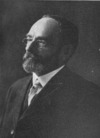
Winnipeg.
William Ashdown brought his family to Upper Canada in 1852. They settled first in Etobicoke Township, but later moved to Weston (Toronto), where
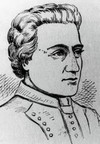
AUGER DE SUBERCASE, DANIEL D’, company captain and garrison adjutant in Canada, governor of Placentia (Plaisance) and then of Acadia
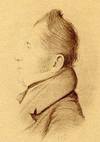
construction of religious buildings in the name of the bishop of Quebec, subsequently granted his patronage to Baillairgé whom he termed the “leading architect in the whole of Lower Canada.” As for his

1798 on Île aux Grues, Lower Canada (although his parents lived on Île aux Oies), son of François Baillargeon, a farmer, and Marie-Louise Langlois, dit Saint-Jean; d. 13 Oct. 1870

-Denis on the Richelieu, Lower Canada.
During the winter of 1756–57 Raymond Bourdages left Acadia with his family to settle at L’Ancienne
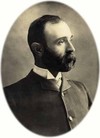
. 1850 in Sainte-Claire, Lower Canada, son of Joseph Couture, a shoemaker, and Delphine Roy; m. 12 Aug. 1873 Agnès Ledoux in Montreal, and they had three sons and three daughters; d. 12
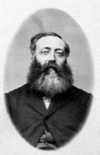
Canada where, in an effort to buttress their weak financial position, they had speculated in canal construction. The elder Creases’ investments did not bear the expected fruit, and though they remained in
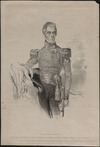
months in Halifax, Douglas proceeded to Quebec City. In the summer of 1796 he commanded a schooner sent down the St Lawrence by the governor of Lower Canada, Robert

Gonzalve Doutre left Canada to go to plead the institute’s case before the authorities in Rome. He arrived there on 6 December. He met the prefect of the Sacred Congregation of the Propaganda, and then
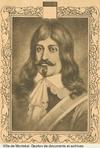
to Canada. During the Thirty Years’ War in Germany he served with distinction as a colonel in the French cavalry and during the closing stages of the war he was attached to the Swedish forces allied to
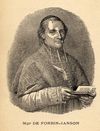
again northwards, visiting various cities in the United States and Upper Canada. Next he went to Quebec, where he gave his first sermon on Sunday, 6 Sept. 1840, in the cathedral. There followed a two
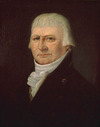
1740 in Halifax, England, son of Joseph Frobisher and Rachel Hargrave; d. 12 Sept. 1810 in Montreal, Lower Canada.
Joseph