

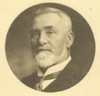
’ Institute in Dundas, Ont., for some higher learning and polish, before enrolling in 1874 to study mining engineering at the Virginia Agricultural and Mechanical College in Blacksburg, Va
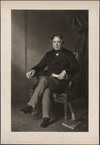
College, Aberdeen, from which he graduated in 1800 with an ma. He entered his father’s London establishment as a clerk and soon became its principal figure; after his father’s
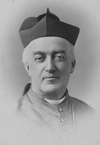
direction of Bishop Ignace Bourget* rather than in the Séminaire de Saint-Sulpice, the main theological college in Montreal. While a theology
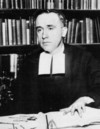
, Marie-Victorin spent a couple of months in Westmount (from 31 August to 23 November) and in December was assigned to the Collège Commercial et Industriel at Longueuil, where his star rose
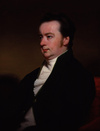
went to Eton College. Although totally uninterested in sports and overshadowed by the talented Theophilus John, he was profoundly happy there. He read Gibbon, Ariosto, Voltaire, and Rousseau for leisure
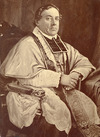
.).
Joseph-Norbert Provencher came from a large family of limited means, and had to wait to begin his studies until a free primary school opened at Nicolet in 1801. He attended the Collège Saint-Raphaël at
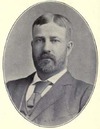
Roblin*. They were Methodists and young Rodmond received his education at Albert College, a Methodist school in Belleville. He began his working life on the family farm, where he built a cheese factory
Acadian education was addressed in a manner he undoubtedly would have approved: in 1890 a small classical college in the French tradition, the Collège Sainte-Anne, was founded at Ste Marie specifically
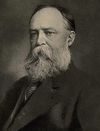
, and it was there that four-year-old Byron began his schooling. He continued at the Central School, finished after grade 6, and at age 12 prepared to enter teachers’ college in Toronto. But
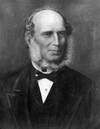
.
Wilmot was educated at the Fredericton grammar school and took a partial course at King’s College. In June 1825 he entered the law office of Charles Simonds Putnam; he became an attorney in 1830, was
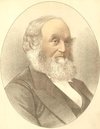
Mary’s College in Halifax, and also in denying to the Baptists a grant towards the capital cost of a building for Acadia College in Wolfville. Thus Young played a part in the alienation of the Baptists
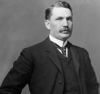
.
Thomas Ahearn grew up in Le Breton (LeBreton) Flats, then a working-class neighbourhood of Ottawa, in a family of Irish Catholic immigrants. He attended the College of Ottawa, but he was expelled for
American press, and for a view of the provincial exhibition grounds. The unaccustomed “Allanson del & sc” on an engraving of the newly erected Trinity College, Toronto, by architect Kivas
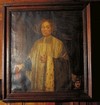
. He had no degree in theology, even though he had studied it for four years with the Jesuits at the Collège Louis-le-Grand. He was doubtless a good preacher, since he was accorded the broadest powers to
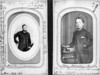
ma by King’s College. The same year he was named rector of Londonderry, where he served the rough-and-tumble mining and industrial community at Acadia Mines
.
Horace Archambeault did classical studies at the Collège de L’Assomption from 1867 to 1875 and completed them at the Petit Séminaire de Québec. He then enrolled at the Université Laval, where he obtained a
he was entitled to receive from the government. Lambert was a clerk with T. Eaton Company, and both she and Armstrong had resided at 274 College Street, she as a boarder, he as a roomer. They were
.
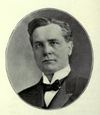
Joseph E. Armstrong attended public schools in West York and later the Business College in Toronto. He was also a graduate of the National School of Elocution and Oratory in Philadelphia, where he met
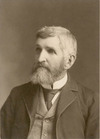
marriage kept Bailey at the University of New Brunswick although he had tempting offers from American colleges. His home became a centre for students, visitors, and neighbours interested in science and
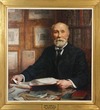
committee on sabbath-school publications from 1903 to 1908 and a member of the senate of Knox College, Toronto. Probably the society that gave him the greatest pleasure was the Muskoka Club, a small informal