

Régime anglais” (thèse de ma, univ. Laval, Québec, 1980). Claude Galarneau, La France devant l’opinion canadienne (1760–1815) (Québec et Paris, 1970); Les collèges classiques au Canada
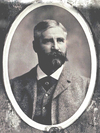
business in 1871 at the age of 16, after attending Trinity College School in Port Hope. The Boyds dealt directly with British agents in the timber trade and in the 1870s they gained access to the New York

, and 1898. Educated in 1883–84 at Woodstock College, a school with a strong Baptist tradition, Boyle often accompanied his father to racing meets, and it was during a trip to New York in 1885 that he ran
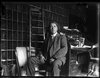
Six Nations Council, which granted him money to help defray the costs of a business course.
Brant-Sero left business college, he claimed, “with a
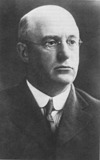
) Baptist Church. She died in 1912, three weeks after giving birth to their fourth child, and Brewster was reportedly inconsolable. When he died, their son was serving overseas, one daughter was at college in
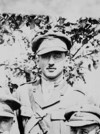
apparently declared he had already served 13 years with this unit. At that time he held the rank of lieutenant. According to Léopold Lamontagne, the historian of the 89th, Brillant had studied at the College
. Dalhousie Univ. Arch. (Halifax), DAL, MS-1-1, C-1 (Dalhousie College, letter-book, 1818–20): 13–30. The matriculation albums of the University of Glasgow from 1728 to 1858, comp. W. I. Addison
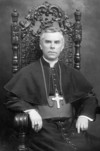
worked as a carter. François-Xavier received his elementary education from the Brothers of the Christian Schools and did his commercial and classical studies at the College of Ottawa, graduating with a

1869 in London, England.
Arthur William Buller received his primary education at Edinburgh and entered Trinity College, Cambridge, where he obtained a
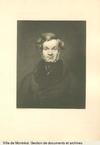
Charles, “a most manageable, intelligent, cheery, and altogether welcome . . . phenomenon.” After taking his ba at Trinity College, Cambridge, in 1828, Charles
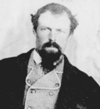
began his career at the Tignish village school in 1851. Eighteen months later he returned to his studies, this time at the Collège de Sainte-Anne-de-la-Pocatière in Lower Canada. He came back to Prince
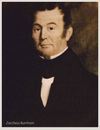
Home District Grammar School, went on to Queen’s College in Oxford, and was ordained an Anglican priest, serving as rector in St Thomas and later in Peterborough. Other relations populated the
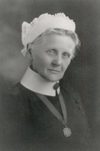
, Sister Frances; AM1102, Sister Frances. Collège des Médecins du Québec (Montréal), Bureau provincial de médecine, Procès-verbaux, 1880–90, 11 mai 1887. GRO, Reg. of marriages, Alverstoke, 26 Dec
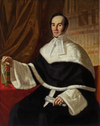
; Les trois comédies du ‘statu quo,’ 1834 (Québec, 1909), 46–47. Douville, Hist. du collège-séminaire de Nicolet. Alfred Duclos De Celles, Papineau, 1786–1871
’histoire contemporaine (Montréal, 1885). N.-E. Dionne, Pierre Bédard et ses fils (Québec, 1909), 221–40, 266–67. J.-A.-I. Douville, Histoire du collège-séminaire de Nicolet, 1803
.
Julien-Augustin Bédard was born into a French Canadian farming family from Upper Canada. He worked for several years before attending the College Bourget in Rigaud, Que. In 1882 he entered the Oblate
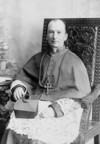
.
The sixth of ten children, Louis-Nazaire Bégin attended the model school in Lévis in 1855 and the Collège Industriel de Saint-Michel (in Saint-Michel-de-Bellechasse) in 1856. In 1862 he received the
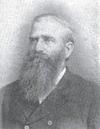
. A former college teacher and an advocate of women’s suffrage, she was the wife who had been chosen to accompany him to Canada. In addition to these concerns Card was involved in developing the first
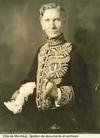
, heart, and mind,” as he would be portrayed by the Montreal newspaper Le Devoir shortly after his death. Doing his classical studies at the Collège de Sainte-Anne-de-la-Pocatière (1879–85
Barnstead*, began at the Ontario College of Education in arrangement with the University of Toronto. The Department of Education continued to assist with financing the school’s operations; thus, the