

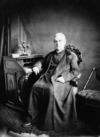
(Northern Ireland). Wishing to become a priest and missionary, he entered the Irish college in Paris in 1832. Tonsured on 20 Dec. 1834 and made a deacon on 17 Dec. 1836, he was ordained to
father made a comfortable living from the business, which enabled Dominique to attend the Collège Saint-Raphaël in Montreal from 1780 to 1786. But the boy possessed his father’s independence of spirit, and
many respects to that of his father. After studying at the Séminaire de Nicolet from 1840 to 1846, and at the Jesuit college in Fordham (New York), he was called to the Lower Canadian bar on 3 May
and finished the program at the Collège de Chambly in 1835. He was attracted to the notarial profession and articled, probably that same year, with Joseph-Narcisse Cardinal at Châteauguay; he then
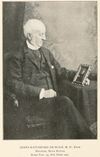
from the Royal College of Surgeons of Edinburgh. While at Edinburgh he was house surgeon to the maternity hospital, clinical clerk to Professor Robert Christison, and a member of the Société de Médecine
-Sulpice in Montreal. From 1771 to 1778 he pursued secondary studies at the college founded at Longue-Pointe (Montreal) by the Sulpician Jean-Baptiste
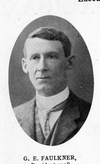
County and then attended but did not graduate from Pictou Academy. He completed his training at a Halifax business school, probably Eaton and Frazee’s Commercial College. Faulkner’s younger brother
-class teacher’s certificate from the Irish Board of National Education, sailed to St John’s to become master of English and mathematics at St Bonaventure’s College, a Roman Catholic boys’ school
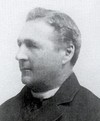
MacKinnon* of Arichat, N.S., for French Canadian priests to minister to the Acadians of his diocese. By September 1863 Fiset was teaching French and higher classics at St Francis Xavier College in
MacDougall*, its author, had stressed West Point’s high moral qualities, which contrasted strongly with what the commission heard about the Royal Military College at Sandhurst. In April 1874, sent by
Fonseca and left the Danish West Indies for New York, where he received business training in a mercantile firm. A few years later he began to study for the ministry at Nashotah House, an Episcopal college
to report on a site for the College of New Brunswick. Like many assemblymen in that era, he also acted as the supervisor of several roads. He was the first president of the Fredericton St Andrew’s
Winnipeg, too, there was only one scanty infantry battalion. These regular troops, called permanent militia, were as badly armed as the volunteers. The founding of the Royal Military College of Canada at
without disappointments. Macdonald refused him permission to found a bilingual classical college in Barachois [see Joseph-Marie Paquet
, on 27 Oct. 1662, he arrived at Quebec, where for three years he taught at the Jesuit college while preparing to serve as a missionary by studying Indigenous languages. On 10 April 1666 he
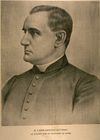
.
Antoine Gauvreau began his classical studies at the Collège de Sainte-Anne-de-la-Pocatière on 6 Oct. 1853, at the age of 12. In the fall of 1861 he donned the soutane and was tonsured
GILKISON, DAVID, businessman, office holder, and college clerk; b. c. 1803 in Sandwich (Windsor
in Quebec City at the National School and the High School of Quebec, and he entered McGill College, Montreal, in 1879 at age 16. In the spring of 1882 he obtained a
, men’s sports and newspapers. After private tuition in Shoreham and some time at King’s College in England (which King’s College is uncertain, but he was a successful rower there), he immigrated to Canada

academy attached to the Presbyterian Free Church College in Halifax, N.S. The following year he studied briefly at the Presbyterian Church’s Theological Hall at West River, Pictou County, N.S., and