

.
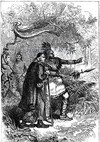
Jacques de Lamberville became a Jesuit at the age of 20 and taught in various colleges of the society in France before coming to Canada at the age of 34. He was immediately assigned to the Iroquois
at the Jesuit college from his arrival until the spring of 1664, when he went to live at the seminary with the bishop and the other secular priests. Officially, however, he was never a member of the
A, H: ff.124, 227–28; 303 CD, II, no.61. ACAM, 901.137. ANQ-M, CE1-51, 27 oct. 1838; CE6-11, 12 janv. 1795; CN6-2, 16 mai 1818. Arch. du collège de Montréal, Cahiers de la congrégation
the colonial disturbances. He briefly attended Dalhousie College in Halifax, then Bay Street Academy in Toronto, before entering the firm of C. and J. McDonald of Gananoque as a clerk in 1840
religious pursuits. He became first president of the Halifax Young Men’s Christian Association as well as a member of the board of management of the Presbyterian College. In addition, he was one of the
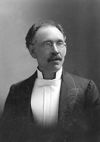
night school after the day’s work that he might be enabled to go to college.” He achieved his goal in the late 1870s by enrolling at the University of Glasgow, where he studied classics, philosophy, and
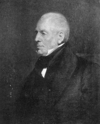
naturalists, particularly for his knowledge of mosses and ferns. In 1799 he had received an md from King’s College, Aberdeen. He retired in 1826 and died in 1842 at the age of 88
townships, toward the endowment of the University of Trinity College in 1851. From 1827, although wealthy, he lived at Bay and Wellington streets in Toronto in a cottage later said to be “scarcely worth

Principal John William Dawson of McGill College the donation of a medal. She gladly accepted his recommendation
straits in the spring of 1775 after the General Assembly of Connecticut, which was dominated by whigs, passed harsh measures designed to suppress dissent. Daniel had been attending Yale College for a few
.
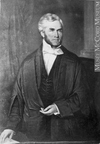
Morris was present on 11 Dec. 1839 at a public meeting in Toronto which proposed the establishment of a Presbyterian college at Kingston. Between 1840 and 1844 he was one of four trustees of Queen’s
whose house William Wilberforce and others of the “Clapham sect” gathered.
While preparing for college, Mortimer studied the church fathers, whose
, France, and at the Royal Scots College in Valladolid, Spain, where he was ordained to the priesthood on 24 Sept. 1796. After teaching for two years at the seminary in Aquhorthies, Scotland, he was
.
Alexander MacDonell did his theological studies at the College of Killechiarain in Lismore, Scotland, from 1803 to 1808. Both he and Colin P
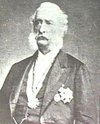
(Republic of Ireland), eldest son of the Reverend Richard MacDonnell, provost of Trinity College, Dublin, and Jane Graves; m. in 1847 Blanche Anne Skurray of Brighton, England; d. 5 Feb. 1881
formal education before accepting their call. He attended Williams College at Williamstown, Mass., completed his education at Union College in Schenectady, N.Y., and was ordained in 1797 by the Classis of
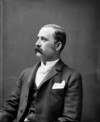
.
After a grammar-school education, George Valentine McInerney entered the College of St Joseph in Memramcook, N.B. Having obtained a ba in French literature and
ba and the prize in oriental (biblical) languages, he enrolled in the Toronto Baptist College. In 1887 he completed its course in theology, winning a church history scholarship in competition
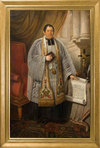
College, Carlow, and around 1817 immigrated to Lower Canada with a large family group. By October of that year he had begun teaching English at the Collège de Saint-Hyacinthe, where he also studied for the
other places of interest, as well as toured colleges and high schools to inform himself about teaching practices. His tour of France naturally included a visit to his friend Bouchy