

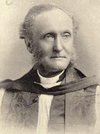
him for life. So too did his fine scholarly performance at Trinity College, Dublin, where he studied under eminent divinity professor Charles Richard Elrington, the premier expositor of the 17th-century
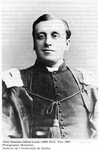
Pâquet*, who would become, as it were, his mentor. Sent to further his education in Rome, he spent two years there, specializing in theology at the college of the Sacred Congregation of Propaganda

attending the Academy of St Joseph in Clondalkin and, in 1835, the Lazarist St Vincent’s College at Castleknock. In 1837 he entered the seminary of Saint-Lazare in Paris and four years later took
instructor in fieldworks at the Royal Engineers Establishment, Chatham, and 12 months later was appointed professor of fortification at his old college at Woolwich, a post he held until his resignation early
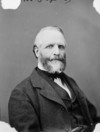
led by the Reverend Alexander MacDonell* of Scothouse. After completing his education at Iona College in St
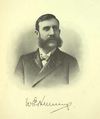
evident in the estate’s donation of a hall and library to the Ontario Agricultural College and Experimental Farm. As an executor he took pains to protect his father’s reputation and his own prestige
attended grammar school in Exeter, England, before completing scientific and medical studies at King’s College, University of Edinburgh, and at the University of Aberdeen, where he received an
attended the Free Church Academy in Halifax, from which Robert graduated in 1852. He then studied at the Free Church College, graduating in 1857. In September 1858 he received a licence to preach from the
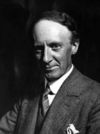
School, and he taught at summer schools held by the Ontario Society of Artists and the Ontario College of Art. Active as a lecturer, he also contributed articles and poetry to such journals as the
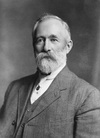
, John McDougall attended various mission schools, and he learned to speak Ojibwa at an early age. In 1857–58 and 1859–60 he studied at Victoria College, Cobourg, but he left to accompany his father to a
Prevost.
In 1792 Pigeon entered the Collège Saint-Raphaël in Montreal. He soon displayed an aptitude for study and the life of the mind. His scholarly
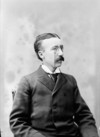
he pursued classical studies at the College of St Joseph in Memramcook, training that he believed determined the shape of his future. Through the intervention of Camille
, the Methodist coeducational preparatory school that became Victoria College in 1841. Richey was installed formally on 18 June 1836 and remained in office until 1840
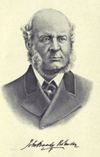
Beverley Robinson showed an inclination towards public life. However, unlike his father, he relished the rough-and-tumble of politics. Between 1830 and 1836 he had attended Upper Canada College, where he was
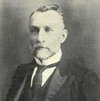
undergraduate at Mount Allison Wesleyan College (ba 1868, ma 1871) in
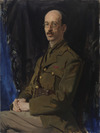
Presbyterian Church until about 1883, when he became a professor of divinity at the Presbyterian College of Montreal. Although they were anglophone, both parents spoke French and made sure that Frank became
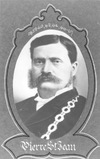
College of Bytown. In 1850 he left Bytown to study medicine at McGill College, Montreal, and five years later he obtained a licence from the College of Physicians and Surgeons of Lower Canada. He briefly
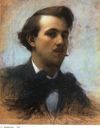
business college of the Brothers of the Sacred Heart. At the time the village was home to the young Liberal mla and lawyer Wilfrid
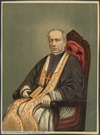
two important and related questions: the affiliation of the classical colleges with the Université Laval, and the proposal for a Catholic university in Montreal. Without repudiating his predecessor’s
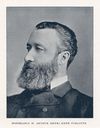
.
Arthur Turcotte studied with the Jesuits, first at Collège Sainte-Marie in Montreal and then at the prestigious Stonyhurst College in England. Following his return to Canada, he began law in the fall of